
Downtown's forward motion
The goal is to improve the downtown experience by 2028 by "linking key locations with safer, cleaner, and greener streets, parks, public spaces, and transit hubs"
The goal is to improve the downtown experience by 2028 by "linking key locations with safer, cleaner, and greener streets, parks, public spaces, and transit hubs"

We've got to improve the way we deliver transit information before millions more people get here
Since 2024, the Oscars have provided a new path forward for shouldering the policing costs of major events
The goal is to improve the downtown experience by 2028 by "linking key locations with safer, cleaner, and greener streets, parks, public spaces, and transit hubs"

Squinting in the sun, I searched valiantly for shade and a good place to sit in the heart of downtown Los Angeles. It was noon on a Tuesday, a time you might expect such a place to be swarming with office workers on their lunch break. But I counted exactly three people here in Pershing Square, the neglected five-acre park with an aesthetic that Councilmember Ysabel Jurado had just described to a crowd of downtown boosters as "hungover Barbie."
This was my first stop on the DTLA Path of Progress, officially launched at a DTLA Alliance breakfast that Jurado had spoken at that morning. The goal is to improve the downtown experience by 2028 by "linking key locations with safer, cleaner, and greener streets, parks, public spaces, and transit hubs." I'm a downtown fan always in search of more reasons to visit. So on a sweaty afternoon — downtown's high was 95 that day — I walked the route to see which way things were going.
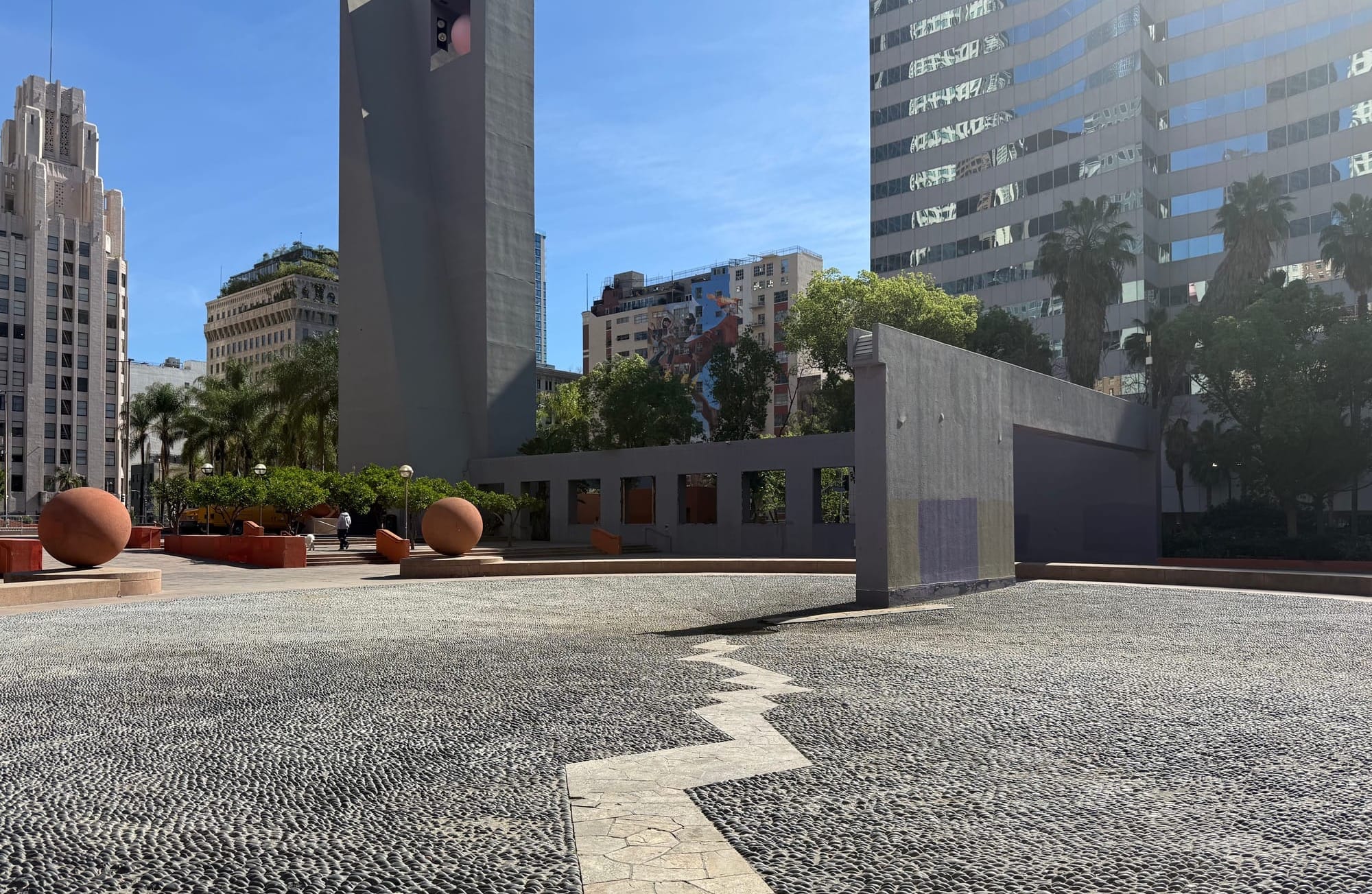
I started with Pershing Square because it was the downtown location with the most potential that had also become the biggest disappointment: an ambitious competition-winning overhaul had been gradually scaled back into an underwhelming half-assed revamp that will undo the best parts of its totally '90s design. City crews were busy working on the park that morning, but maintenance already seemed to have dropped off the radar. I counted five brand-new trees injuriously rammed into planters that had already died. (WHY WOULD YOU DO THIS.) The new elevators were nice. But not feeling very hopeful here.
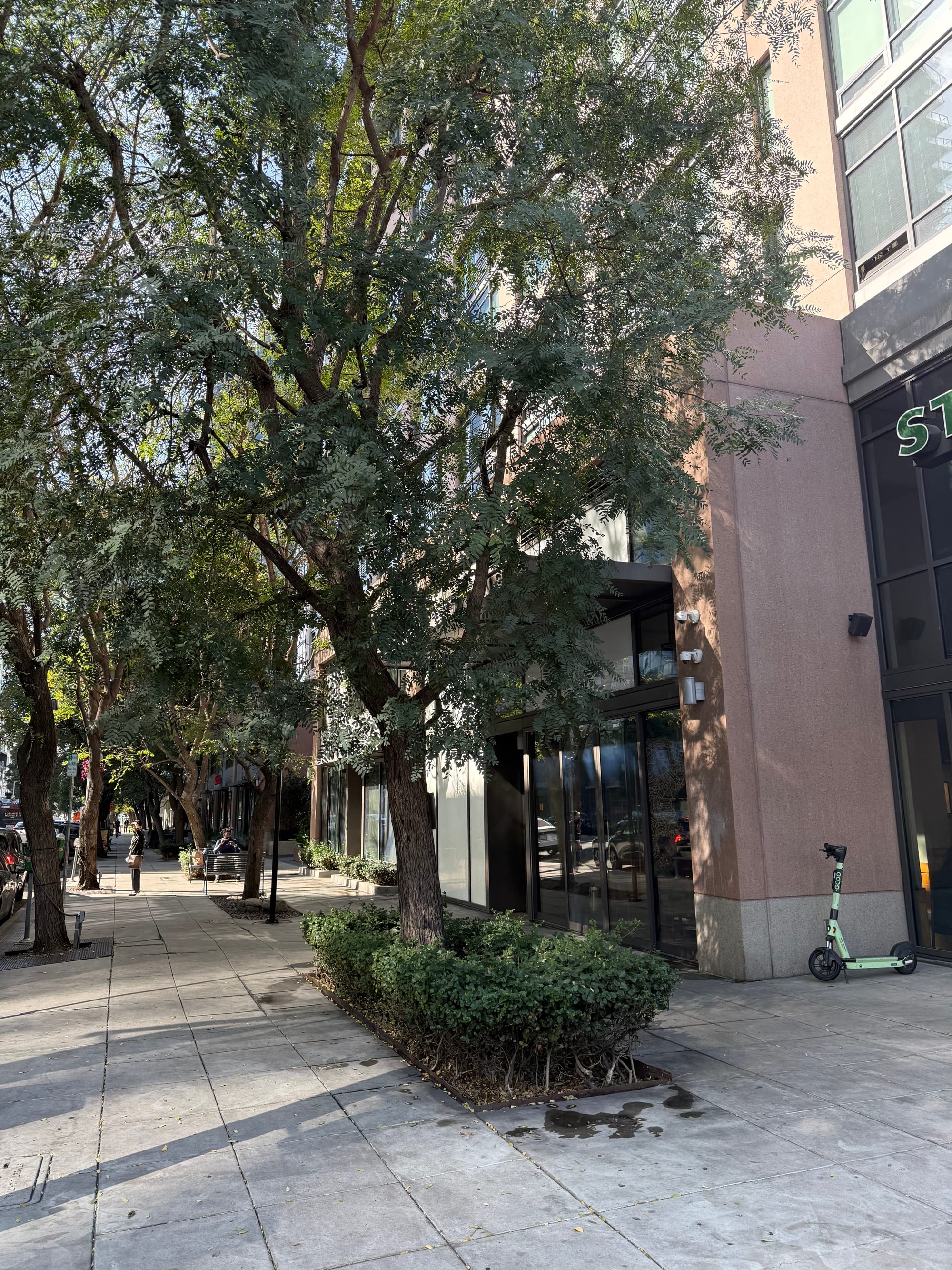
Walking and talking with a few people who work and live downtown, simply activating the existing public spaces seems to be their key desire. But that seems impossible with such poorly maintained infrastructure. It would be easy enough to copy the improvements on 11th Street, the most progress-minded part of the path, where sidewalks, seating, and shade all manage to share space equitably. I've said it before: these blocks along and adjacent to 11th should serve as the model for dense, multimodal streets all over the city.
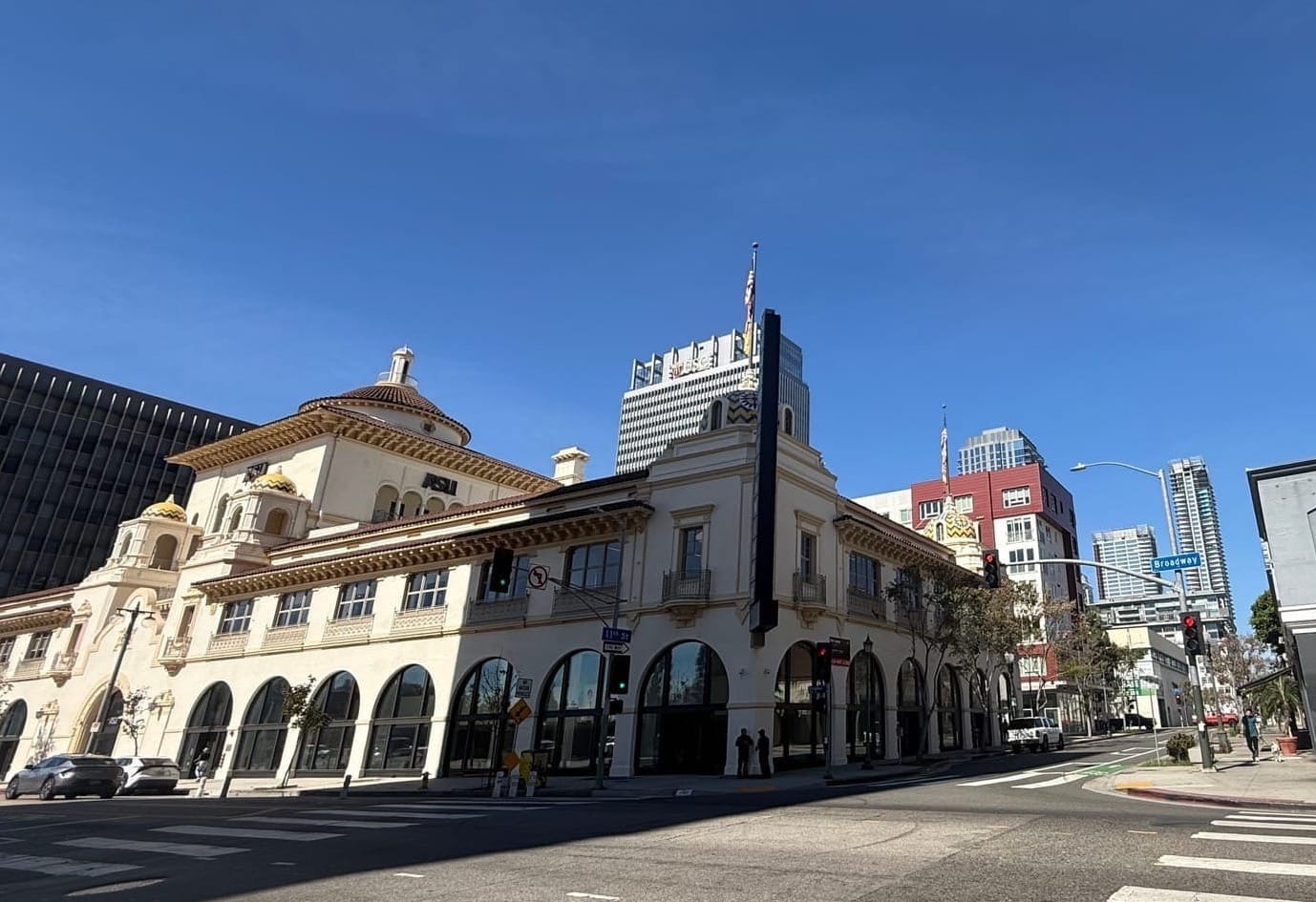
Vacancies are a problem everywhere in the city but there's a pretty obvious fix for downtown: rent out empty storefronts for cheap to local businesses, something even Rick Caruso endorses. (Why not just put him in charge of the whole thing?) I walked by a good example: the Julia Stoschek video-art takeover of the Variety Arts Theater. But I'd go a step further and fill Broadway specifically with popups for local breweries, bars, restaurants, trucks, and vendors so you could transform the entire street into an entertainment zone, like Santa Monica has done with the promenade. This would then become a natural extension of Grand Central Market at the northern end, where you can already carry your drinks from stall to stall inside.
Seeing so many vacancies was actually quite surprising to me as the two malls along the route, The Bloc and FIGat7th, felt full, lively, and well-programmed. Maybe there’s a better way to connect them and all their activity to the sidewalk. Because while 11th Street is nice from an urban design perspective, 7th Street has the potential to be the best street in all of LA if we just kicked out the cars and let the bikes and buses rule. Downtown could accommodate multiple car-free streets; as I wrote about last year, Grand Avenue's got its own grand plans.
At the southwest end of the path there are a bunch of projects that the DTLA Alliance will claim as evidence of progress, although I wouldn't necessarily agree: the Graffiti Ghost Towers which will be cleaned up soon (sadly), the convention center expansion (no comment), and LA Live's new pedestrian plaza (fine, but otherwise it's the same old faceless fortress). I was tickled, however, to see a new building audaciously tagged just on the other side of the 110; wake up, babe, a new graffiti tower just dropped. At least they're already converting it to housing!
My last bit of feedback is more an olfactory note: the entire path of progress smells like urine. Perhaps it was the heat that teased the latent scent out of the pavement. But maybe in addition to the Metro stops highlighted along the way, there should also be a concerted effort to locate and increase the number of publicly accessible bathrooms. Now that's what I'd call progress. 🔥
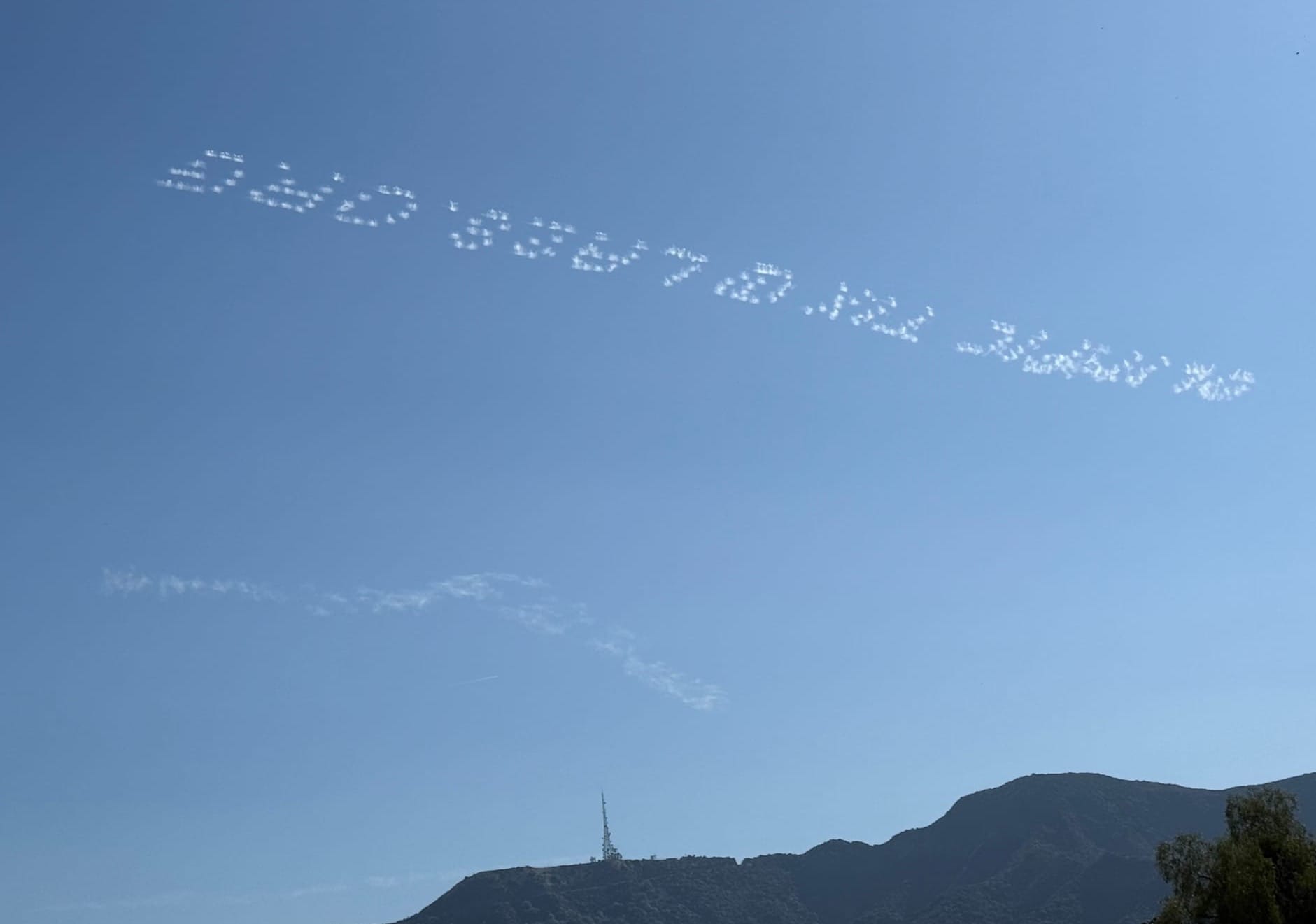
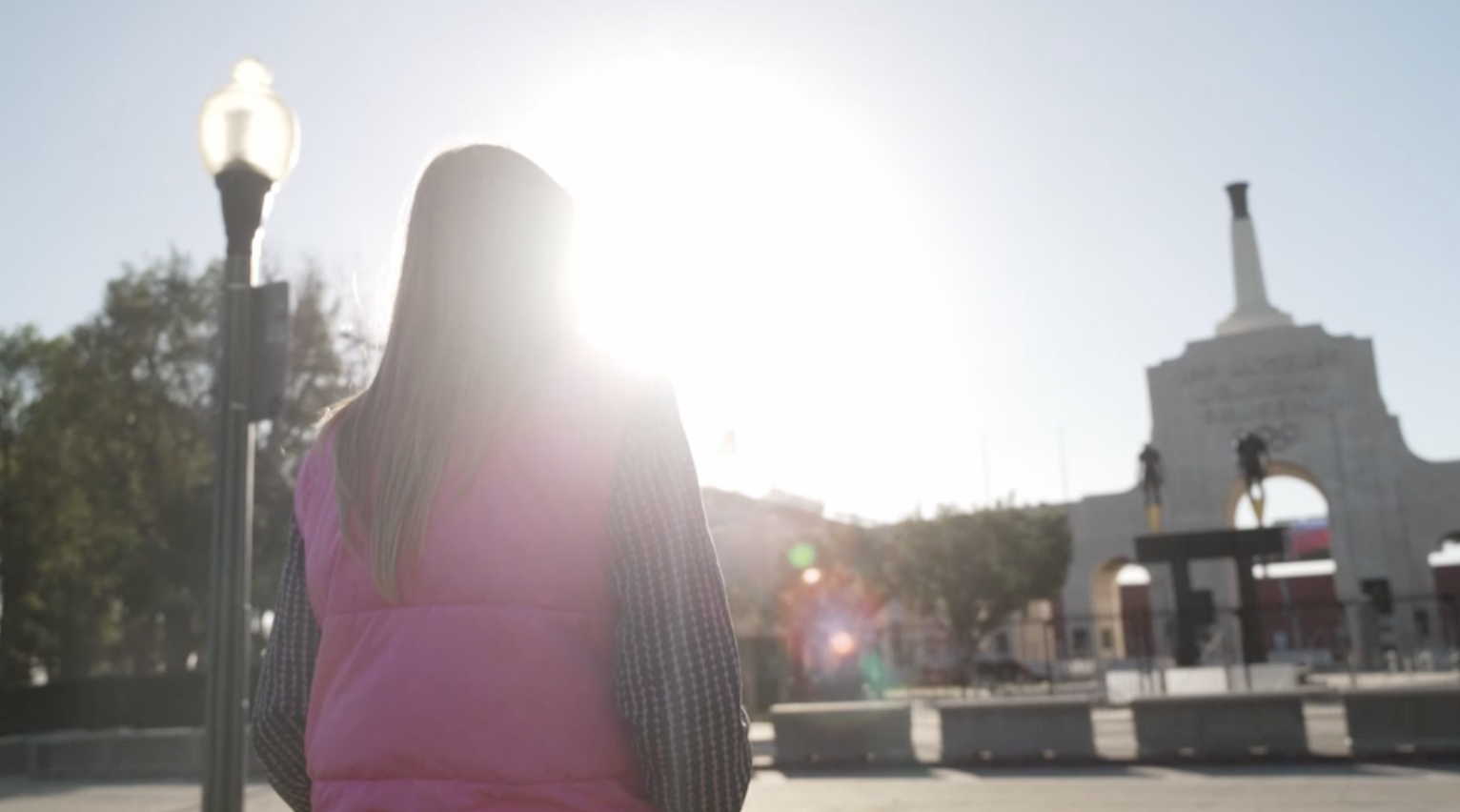
LA28's first ticket draw closed this week, but not before skywriting planes did their best to get the word out all over LA last Saturday. They did land at least one legible message over the Coliseum for the LA28 Instagram account. What happens next? You'll get an email next week letting you know if you've been assigned a timeslot. If not, you get bumped to the next draw. Locals get access to a special presale window April 2 through 6. 🦋
FIFA says no venue change for Iran's World Cup matches. Iran's request to relocate its matches, two of which are in LA, has been denied by FIFA. The idea was to shift Iran's games to Mexico after Donald Trump said the U.S. could not guarantee the safety of the team when it travels to the U.S. This seems like a reasonable request. But if FIFA doesn't accommodate Iran's demands, is the next step boycotting? And if so, what other countries will join?
Meanwhile, Trump's war resulted in another sports shuffle. Earlier this month, Tom Brady's Fanatics Flag Football Classic tournament was quickly relocated from Kingdom Arena in Riyadh, Saudi Arabia to LA. The games will be played today at BMO Stadium, which will also host flag football in 2028. As I've written before, our wide range of spiffed-up venues make LA a very attractive backup, with leaders that are always eager to offer our services in a crisis.
A major Metro outage is still causing headaches for transit commuters. On Thursday I published my story about a "technical issue" at Metro that was impacting real-time updates, TAP card payments, and online access to meetings — and how crowdsourced rider data on the Transit app was filling in some gaps. Metro sent me a statement after the newsletter went out, acknowledging "unauthorized activity," but there haven't been any additional updates. I thought we'd hear more about it from Metro's board members, but then I remembered they don't actually ride transit. Good luck out there, and hope you encounter more zombie buses than ghost buses. 🦋
 Alissa Walker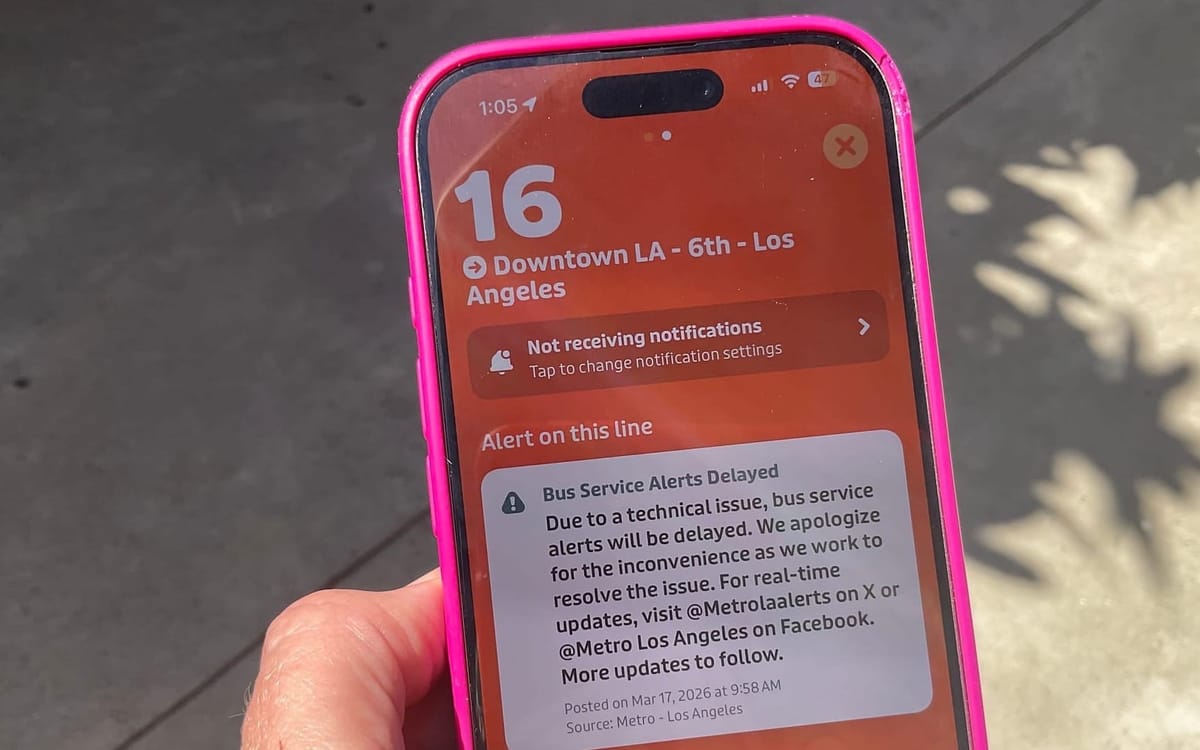
 Alissa Walker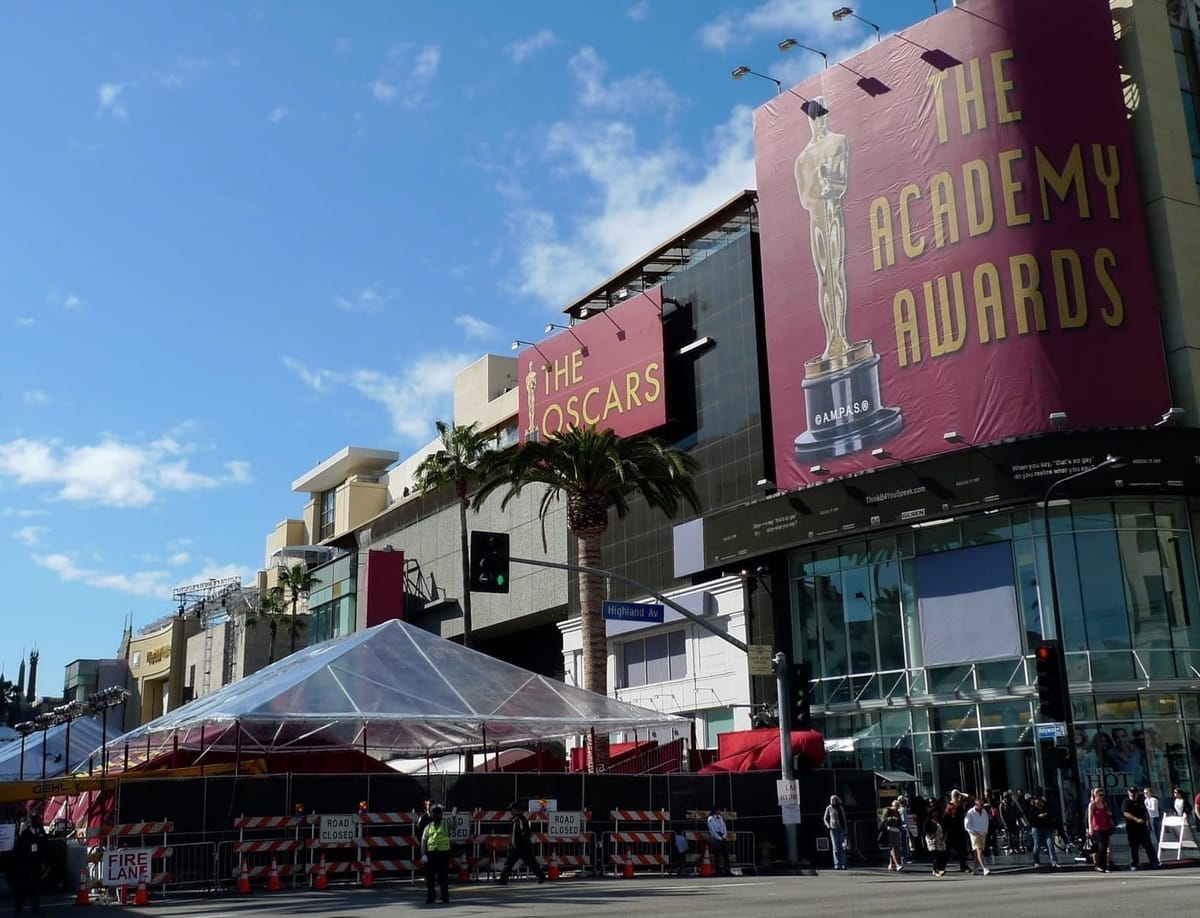
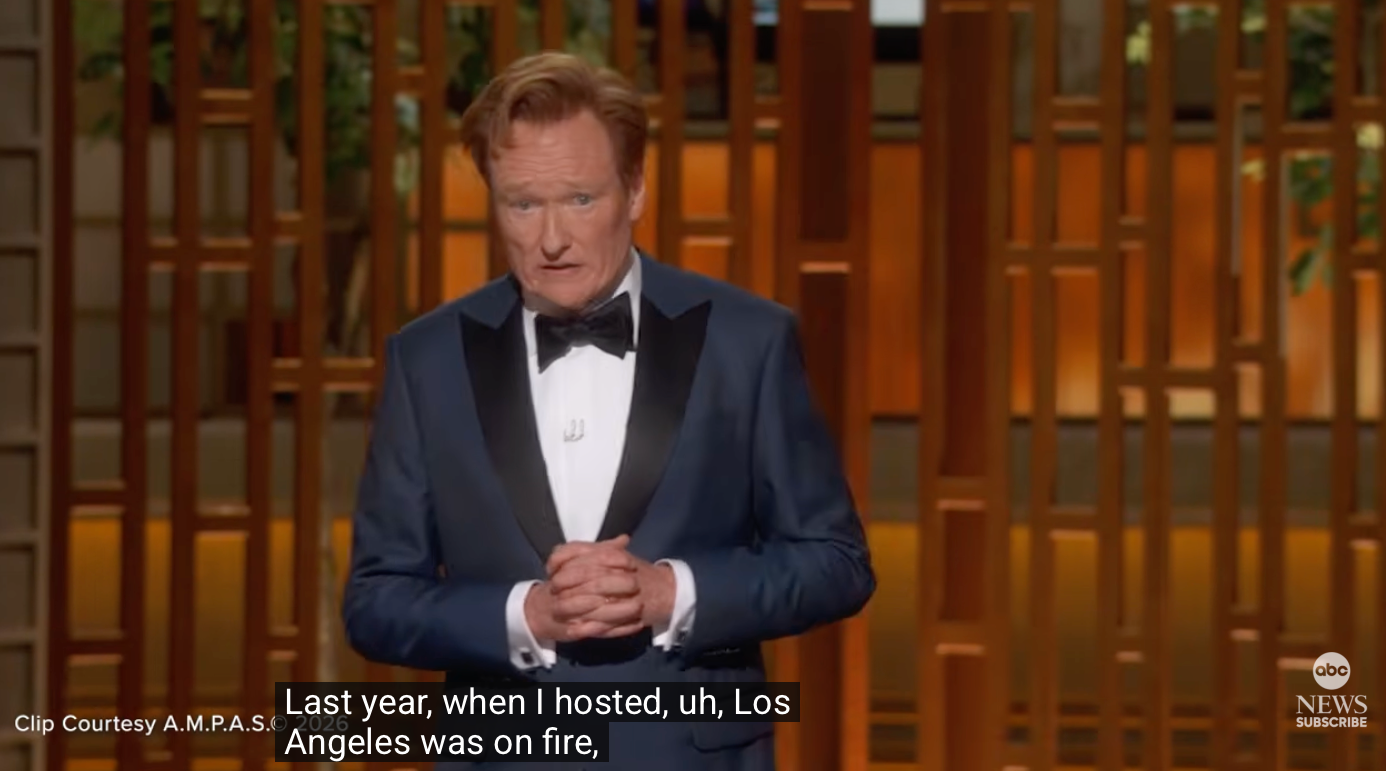
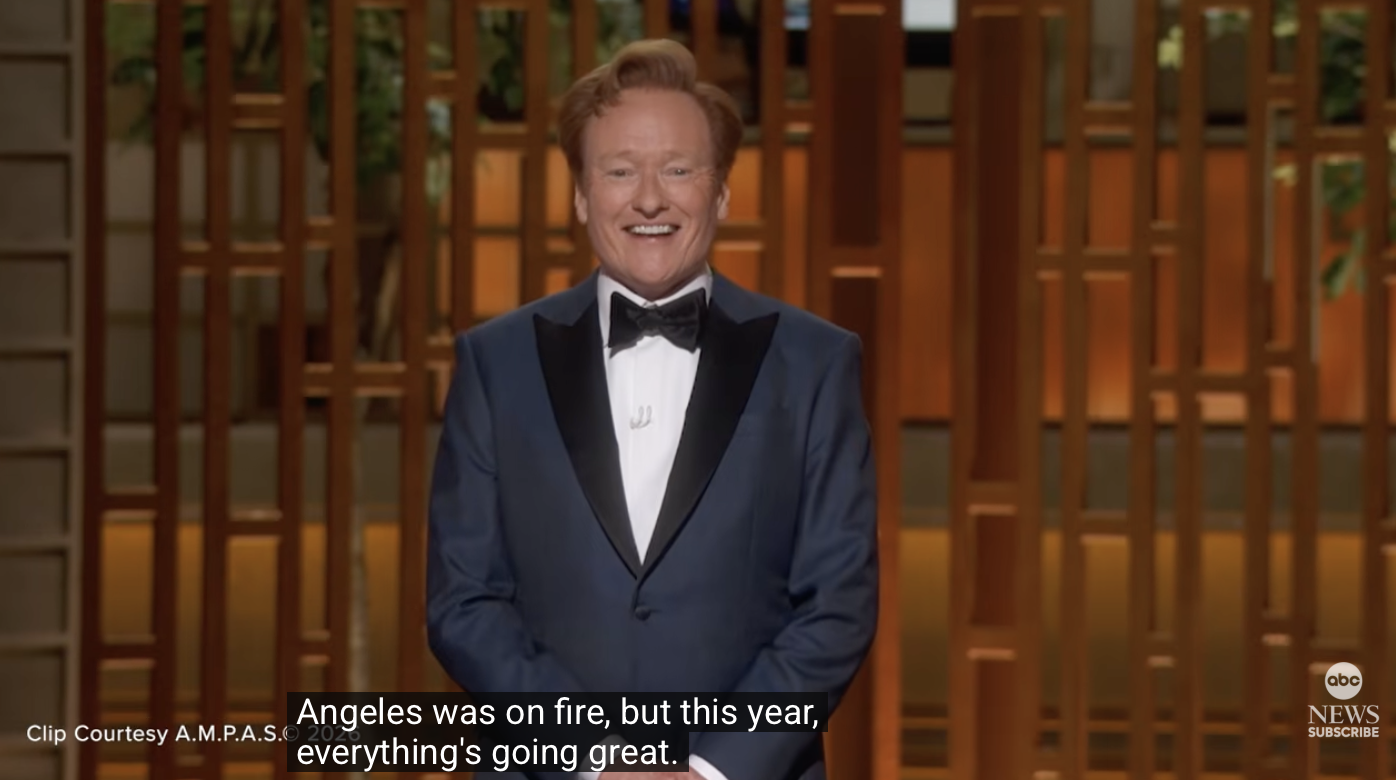
This part of the Oscars monologue felt a little too real
Amidst so many horrific media industry headlines, there have been a few really bright spots. This week I met the staff at The LA Local who are putting out phenomenal hyperlocal reporting, like how vendors along the Salvadorian corridor are keeping each other safe from ICE and the eyebrow-raising way that Inglewood's city council votes. There's been lots of praise for the rule-breaking editorial team at Wired, headed by my former Gizmodo editor Katie Drummond and featuring many of my former Gizmodo colleagues. And yet another brand-new LA publication launched a few days ago: LA Material, featuring Julia Wick's must-read feature on the five days in February that upended LA's mayoral race. You won't be ready for the ending.
This is all to say: support local, bold, and independent newsrooms! Like this one!

Since 2024, the Oscars have provided a new path forward for shouldering the policing costs of major events

When you've committed to holding a Summer Olympics, a marathon route becomes a guaranteed death march

"It will literally be your best selling t-shirt, it will get you so much PR, and if anyone interprets this inappropriately that's a them problem"
