
"The surf took the beach we planned this on"
A hurricane canceling a 30,000-person megaevent demonstrates the future that's coming for us
A hurricane canceling a 30,000-person megaevent demonstrates the future that's coming for us

This mayoral endorsement is setting up an even bigger fight about who will stand with workers as they turn the heat up on LA28
The point of the hearing was clearly to elevate the lawmakers' pleas for $2 billion in federal transportation funding requests
Two experts evaluate the shade interventions at this summer's tournament

Los Angeles remains at the mercy of an uncharacteristically steamy summer — thanks, monsoonal moisture! — making life outdoors pretty much unbearable. As you modify your own behavior to adjust to the exceptional humidity, just keep remembering: this is what LA could very feasibly feel like just two short years from now, right as we're hosting the Olympics in July — or Paralympics, which will be held in a historically muggier August.
After hauling my sweaty self to World Cup activations all over the region, I'm even more concerned about our ability to keep people cool at large events. Luckily, smart people are working on better solutions. ShadeLA, the new coalition I wrote about last year, is focused on pilot projects in three LA communities they've identified as particularly vulnerable to the impacts of heat and megaevents: South LA, East LA, and Inglewood. So I invited two of ShadeLA's experts — UCLA's Edith de Guzman and USC's Michelle Barton — to evaluate the shade interventions I saw at this summer's tournament to explain why each of these attempts at optimizing thermal comfort are hot (derogatory) or not (complimentary).
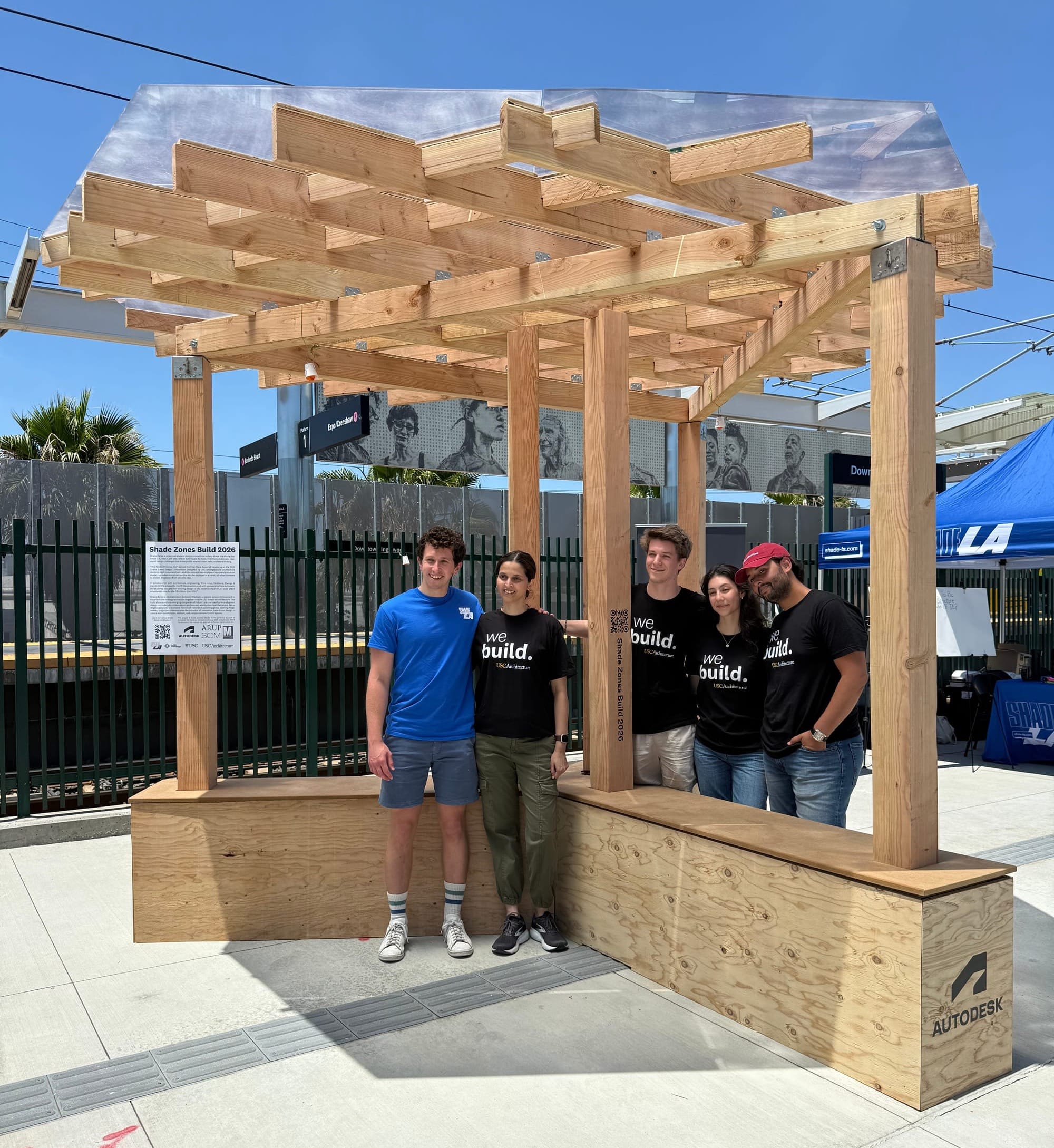
Michelle Barton: This structure is really special because it came out of our Shade Zones student design competition. The idea behind the design competition was to create temporary modular shade that could be pieced together. It was nice under there. We saw people going there to eat, sitting on their laptop. You still had some daylight, but it does actually shade and block the sun. It’s so airy because of that transparent but still effective shading from that top plexiglass.
Edith de Guzman: What I really like and why I'm so impressed with the USC Architecture team is that this shows we can blend a bottom-up, community-generated solution, and have it apply to public space. We do not have to solely wait for public agencies to take care of public infrastructure. We can engage in that ourselves in creative ways that are imaginative.
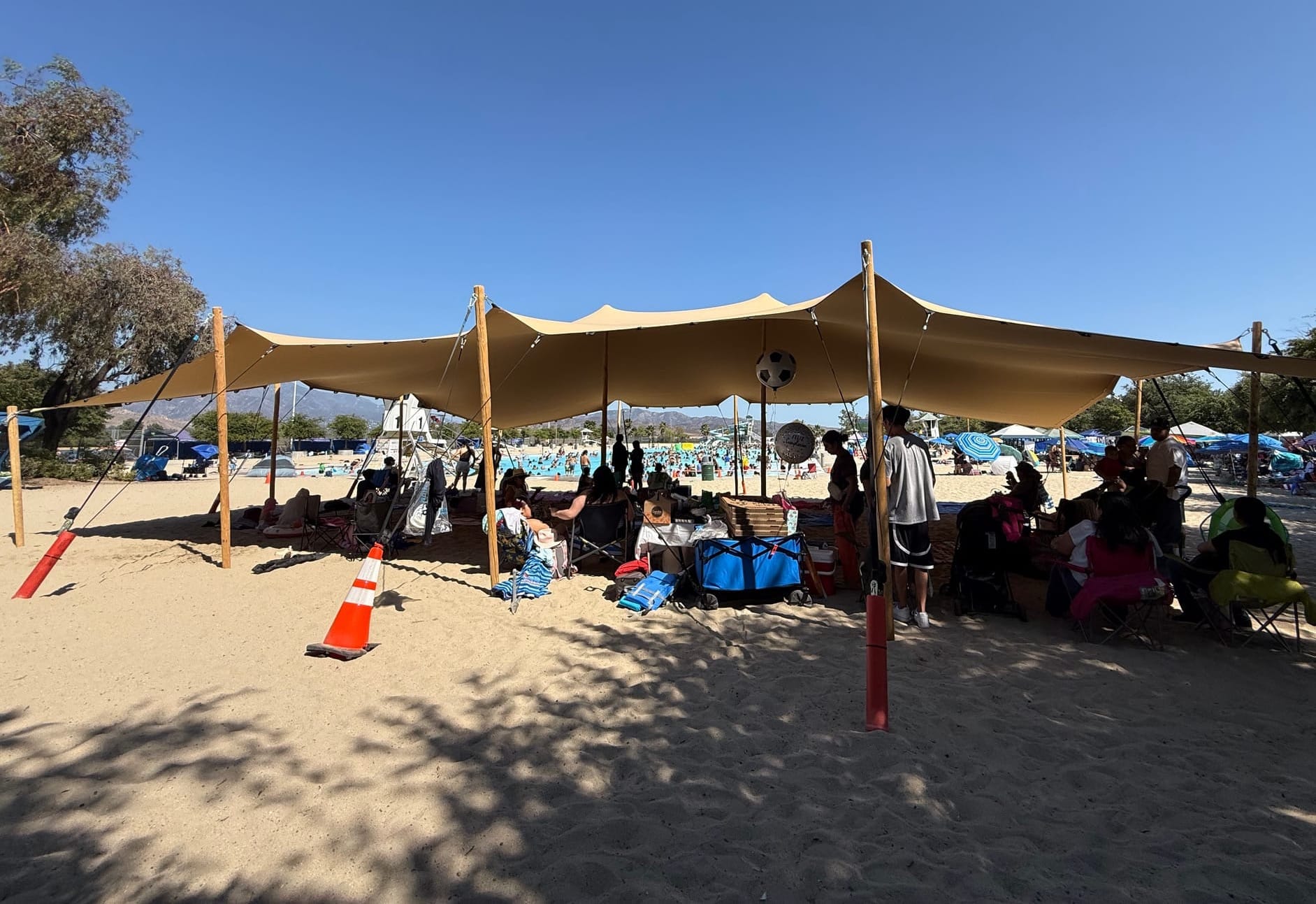
Barton: What we're trying to do with our shade oasis pilot is not only create the opportunity for deployable shade for community events like these watch parties, but figure out ways to make that really easy to operationalize. We purchased the tent — with some funding from Blue Shield — and we had Recreation and Parks staff and Los Angeles Conservation Corps staff trained on how to put up the tent so that they now can redeploy it in the future. That was actually a big reason why we landed on this configuration — this structure stuffs down into a duffel bag and then the 13-foot poles. So it's easy to store. It's easy to transport. You don't need special equipment. Our park staff can do this.
de Guzman: The other thing I like, practically speaking, is that this is low. If you want to shade people under a structure, that structure cannot be super high up, like some of our public shade-giving infrastructure. Case in point: palms. This gives you shade right where you need it.
Barton: Something that's so important in thinking about shade is how inviting it is, and I think that this one really proved to be an amazing gathering space where it wasn't too closed off. People wanted to be under there, and it created this sense of even greater community.
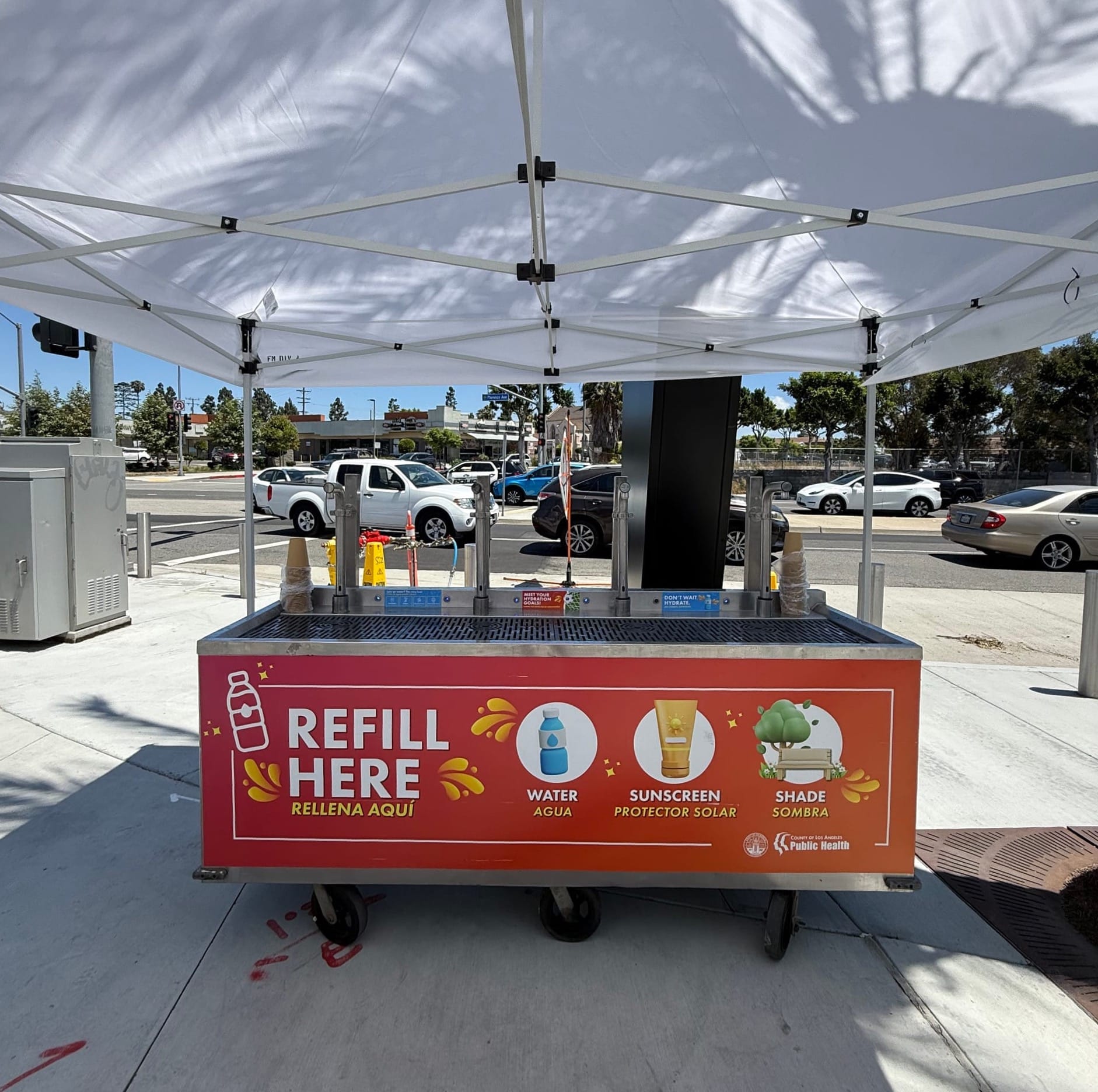
Barton: These are the quintessential pop-up tents. This one is also nice because it has a white canopy, which will help keep things more cool. Some of the tents are darker-colored, and I think that also adds to that feeling of trapped heat. These are easy, they're accessible. They're also just not that inspired.
de Guzman: Not all shade is created equal, so you're not going to get the same heat burden alleviation under this as you will under something that's more opaque. With the park activations you have some evaporative cooling because you've got vegetation and you don't have that reflectivity happening off of the ground that's coming back to you. You're going to have a different kind of experience here. But I love that we're coupling multiple cooling solutions and bundling them into something that puts people first — instead of cars first.
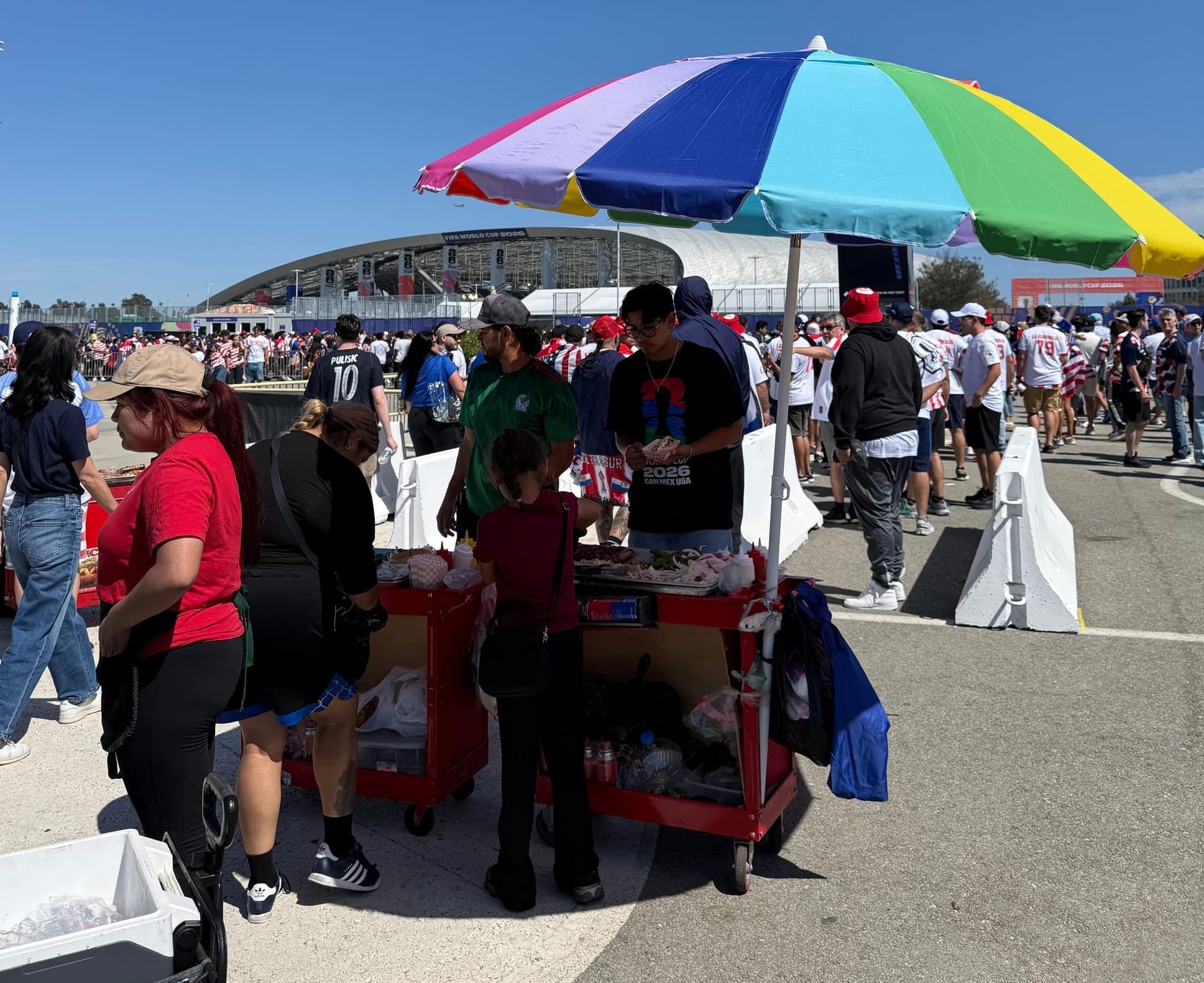
de Guzman: This is an example of a failure to provide a public good. This is a demonstration of not valuing shade as civic infrastructure or a civic resource. If you want it, you have to provide it yourself. Luckily, it is a simple thing to provide, so that's a good thing. But it makes me sad. We have a visceral connection to why shade matters. Unless we plan for it personally, unless we think about it ahead of time, we may do without it. And that's not where we should be when we have a large number of people who work in these types of street vendor jobs who are vulnerable to so many factors. Can't we alleviate just this one very simple need in some way?
Barton: A rainbow umbrella is a very quintessential type of LA shade. I think in some ways it's an advertisement for something delicious, but I do also feel a bit saddened by this photo. Yes, there's this bright, fun rainbow umbrella providing a little circle of shade, but everything else here looks barren and hot and miserable. And the stadium is so far away from this little circle of shade. Really, to Edith's point, this is a failure. There is absolutely nothing, just desolation, between this little tiny umbrella hot dog oasis and the stadium, and I think that's a huge opportunity for something that can be deployed. How many activations a year are there at SoFi? Whether it's games or concerts, there should be shade anytime people are out in this.
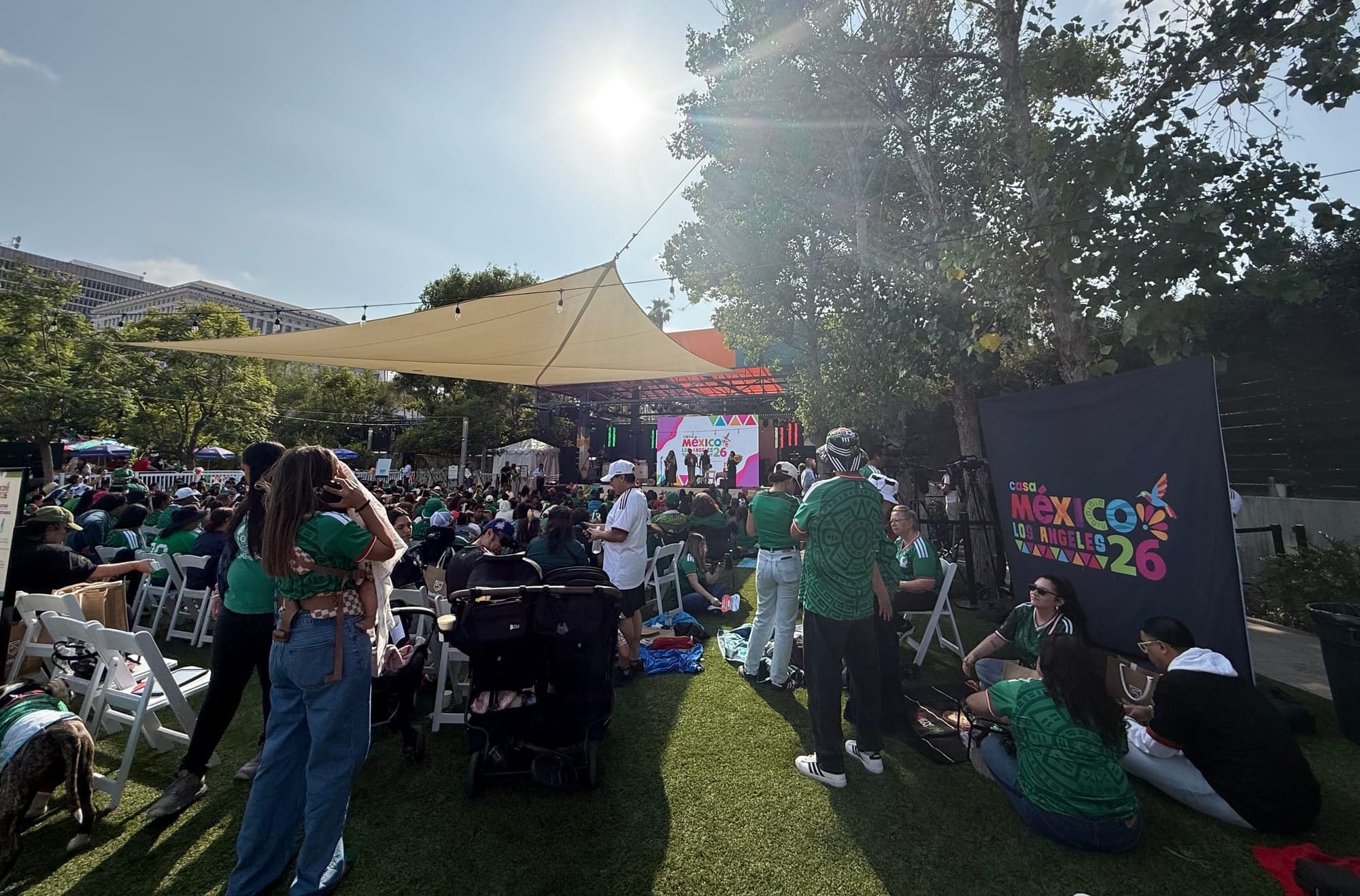
de Guzman: I do love that you've got trees right there and they're being used as part of the solution, but there's an acknowledgement that their canopy probably isn't wide enough to provide the shade that you need in the middle of the space. So it's a combined solution celebrating the fact that we've got natural shade, but also recognizing that in this urban context we need to go beyond that. It can be simple and effective. But we have to think about materials, too: what are we actually producing these kinds of things out of, and what is their shelf life? How long do they last? How quickly do they degrade? Because they're absorbing all this solar radiation — and then what do we do with them at the end?
Barton: One of our ShadeLA coalition partners, Climate Resolve, is looking to do some research into the different kind of built shade materials and some evaluation to understand some of these material considerations, both in terms of durability and also in terms of quality. I think shade sails are amazing for the reasons Edith described. They're flexible. They're easy to put up. They can be squashed down and stored if you aren't using them all the time. But I think that there are differences in the materials that maybe aren't fully understood yet.
I think the other thing that's tricky with shade sails is you do need things to tether to. Whether it's a tree or a building or some sort of post, you need something there, and so these only work in spaces that have some built elements or some trees already. They're not going to be effective in really vast areas like the SoFi parking lot we were looking at earlier.
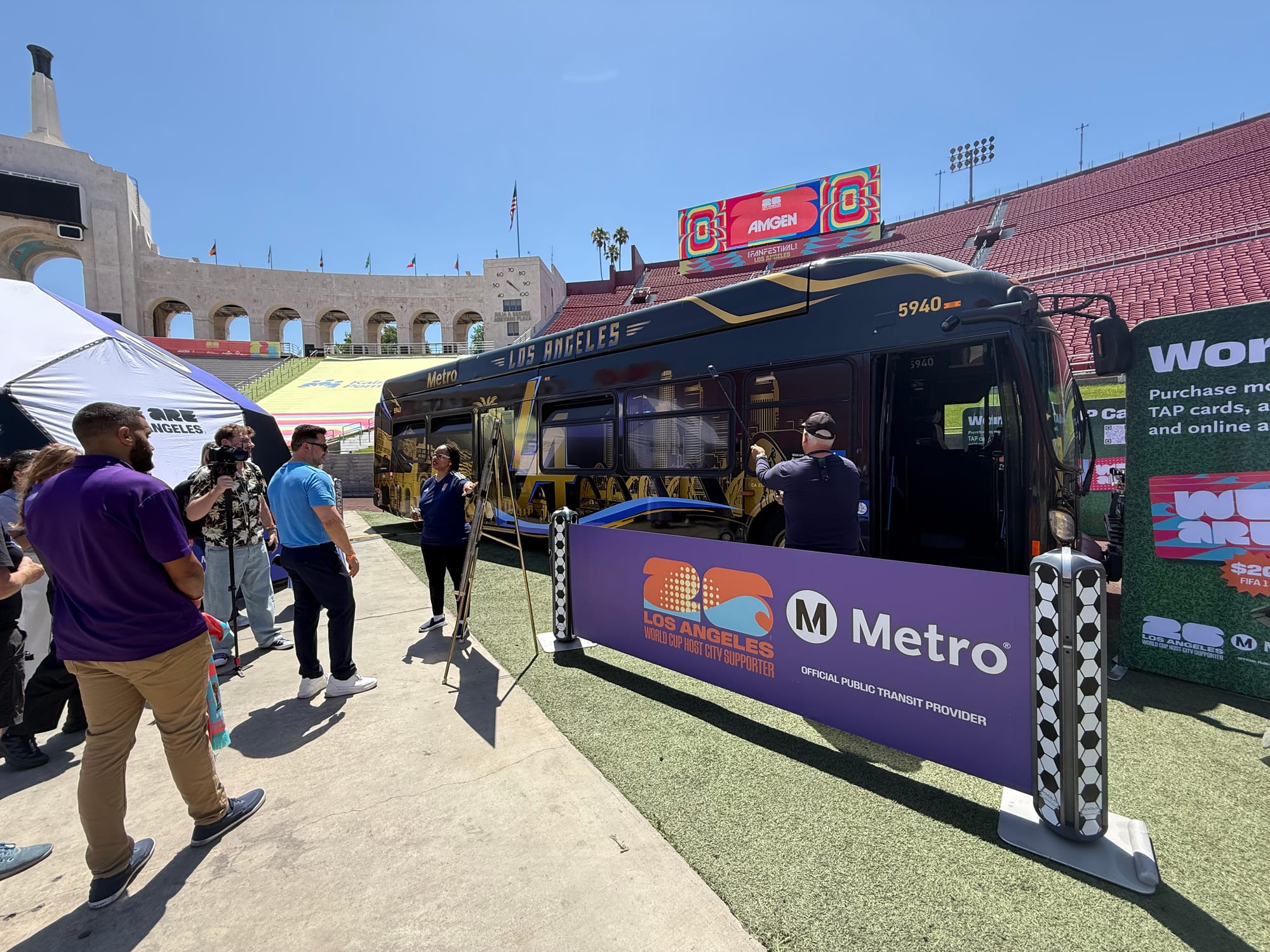
de Guzman: Metro has been really thoughtful about this stuff, and they're trying to come at it from all directions. The hydration station from earlier, they're behind all of that as well, in partnership with others. It's super clever. Look, they're the transit agency, so they have access to these buses. They have the ability to move it conveniently to whatever location. I'm a bus rider myself. I take the bus to and from work. And on a hot and sticky day like today, it's a 12-minute walk to the bus. When I get in the bus, it's going to be relieving.
Barton: A bus is a mobile cooling center, and in some ways, even better than getting in a personal vehicle because that bus is going to be icy cold the minute you cross that threshold. If you're taking a car, there are those uncomfortable first few minutes of waiting for the AC to kick in, where you're just miserable and sweaty.
A couple of critiques of the bus as a cooling, shading space. If you're not inside the bus, but you're near the bus, you're potentially dealing with fumes and noise, and I think the general environmental impact of this shading mechanism is certainly going to have a bigger carbon footprint than all the other shade examples we looked at. That's another consideration, both in terms of what it means for that shade and for the people around it.
de Guzman: Think about what tools you have as an agency, as a nonprofit, as a landowner, as a business, whatever, and get creative. That's the thing about shade, right? There's no wrong way. Do what you can with what you got. And here's a great example of that.
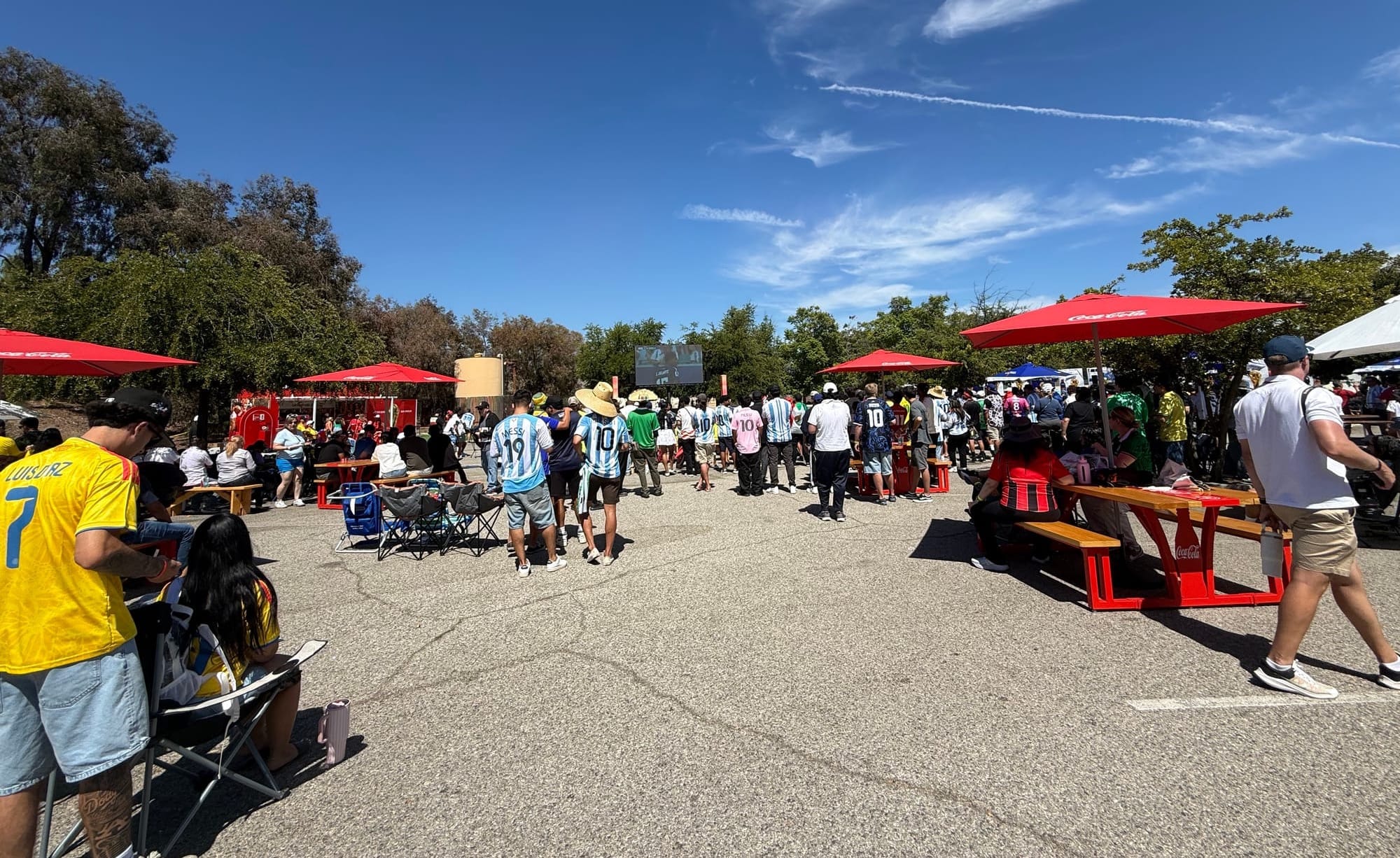
de Guzman: This is demonstrating that we don't value the the safety aspect that shade brings. It's a little bit like our friend under the rainbow umbrella; in the absence of having publicly provided infrastructure, the need gets filled either privately or, in this case, through some corporations. I'm sure the people that are enjoying the shade under it don't really care who paid for it or how it got there, but it's few and far between. Most of the folks in this photo are not benefiting from shade, and even those that are in the shade are probably dealing with a lot of reflective heat from the surrounding asphalt. It's something, but it's not really solving much of a problem.
Barton: I feel like umbrellas with tables are simple; they're effective. I do like the pairing of the seating with the umbrella, but in this case, because the umbrellas are not tracking with the sun, the seating becomes super hot because those surfaces look like they're not going to be comfortable to sit on without shade. So I think a more thoughtful pairing of how to keep your seating and your people cool and comfortable would be great.
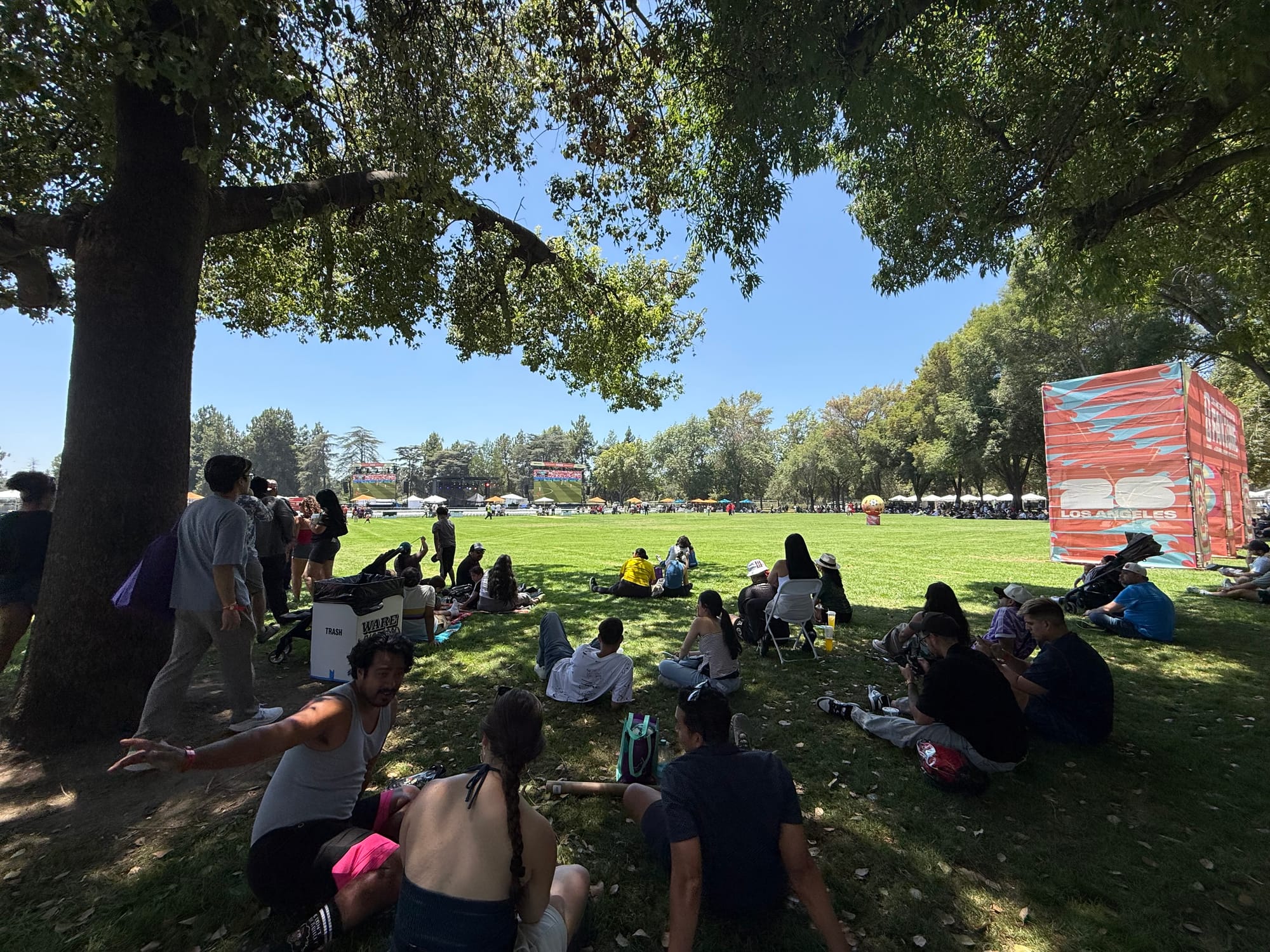
Barton: This feels like it is an advertisement for shade. Like there's no denying that this is the only choice for a comfortable viewing experience, and so I love this. I love this for the trees, and I love that it was available to the people that were out there because that sun, while it is on grass, still looks hot. I would sit there, too.
de Guzman: Leafy is better, green is the best. I love it. And you're getting cool from above and below in this case. I suppose my comment is, why did they put the screen so far away? Why didn't they just put it by the shade? That seems like the error here. The shade itself is great, but the screen is not positioned to maximize shade.
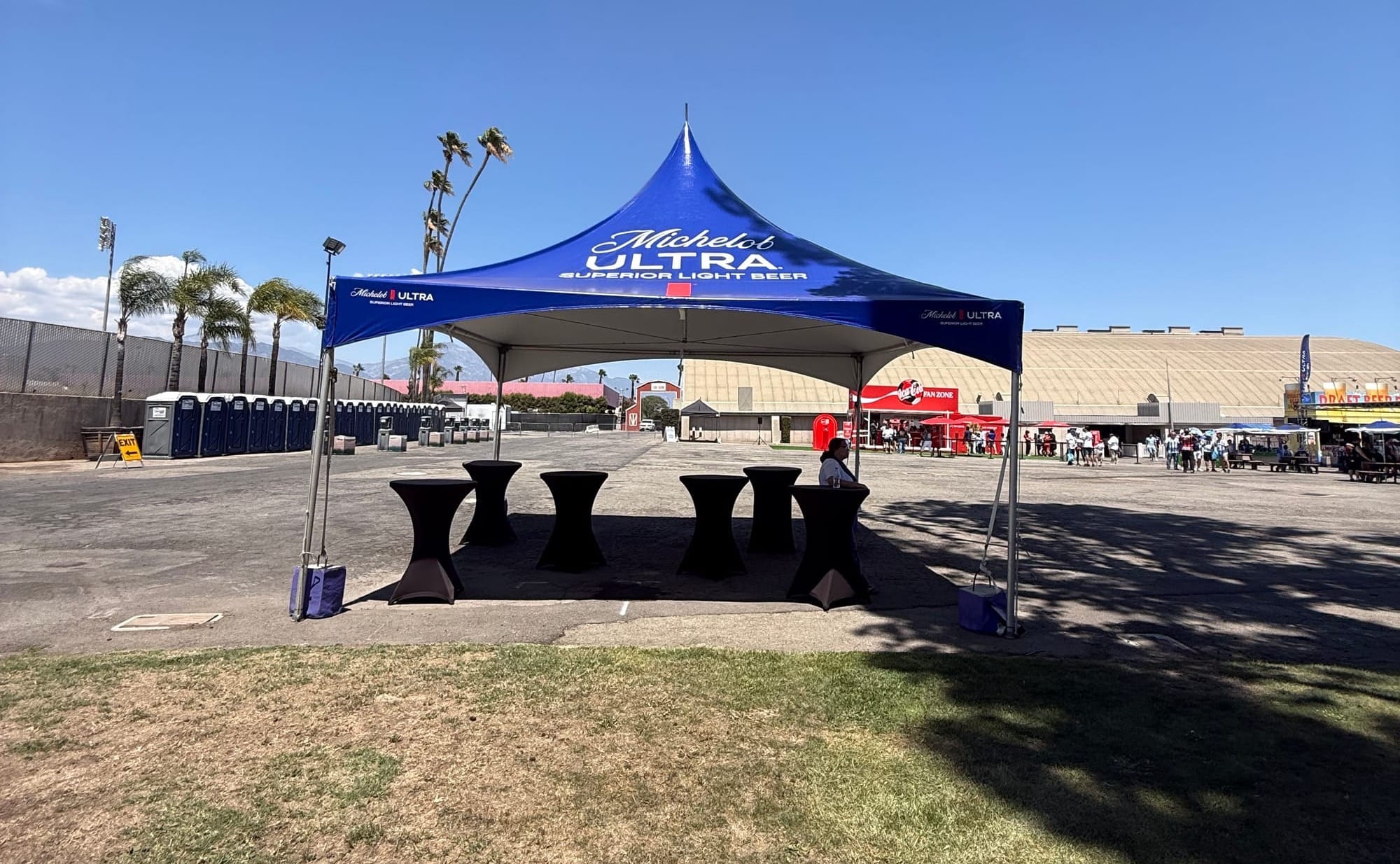
Barton: This is interestingly placed on the blacktop, which would be hotter in terms of radiating heat up from the asphalt as opposed to putting it on the grass. That would help complement some cooling. One thing to say is that it does look bigger, in this photo, than a standard pop-up tent. So I think that the size and the scale of shade it could provide for people, if this was a place people wanted wanted to gather, could be wonderful. But I think the location here is is a double miss in terms of proximity to action and being so close to the grass, but not quite there.
de Guzman: The one thing that I wonder about though is that there's maybe an accessibility question? Maybe that's part of the reason why they would have decided to place this here on this surface. Again, shade is simple, but then deployment is not always simple because we have to think about all sorts of needs that that tie into it. So, yeah, the placement makes you wonder what the thinking was, but maybe they had really good reasons.
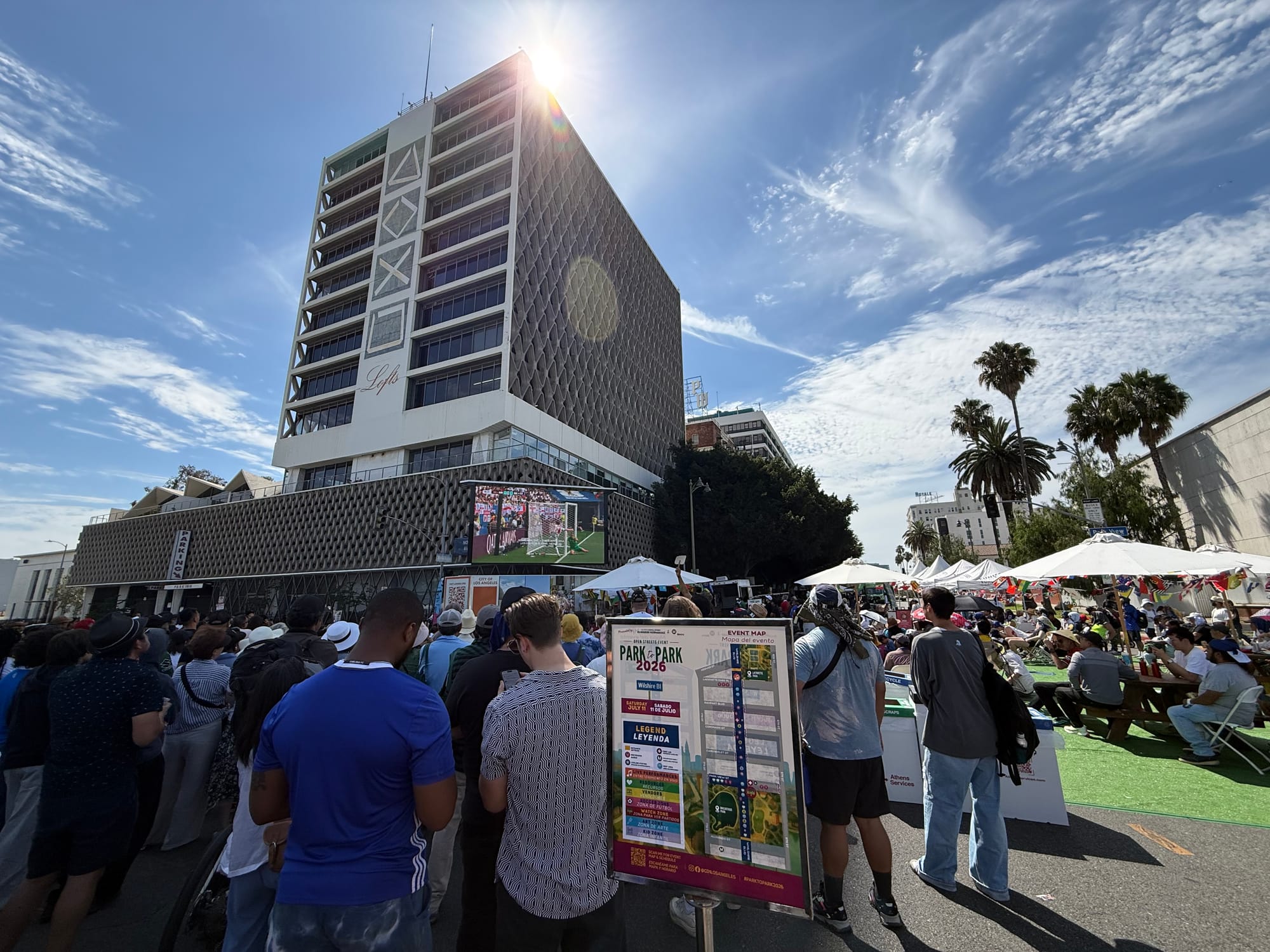
de Guzman: We know through the shade data that shade grows dramatically throughout the day almost exclusively because of the built environment. Earlier in the afternoon, trees are doing the heavy lifting, and by late in the afternoon, we've got buildings that are doing that work.
Barton: This is smart shade. Some of our bigger buildings can provide shade for hundreds if not thousands of people by creating these canyons. If there's height on both sides, depending on the time of day, those spaces can be shaded for big chunks of time, especially during the hottest parts of the day. Using some of the tools and data we have at our fingertips, we can pair that with event planning to figure out where we can get some free shade.
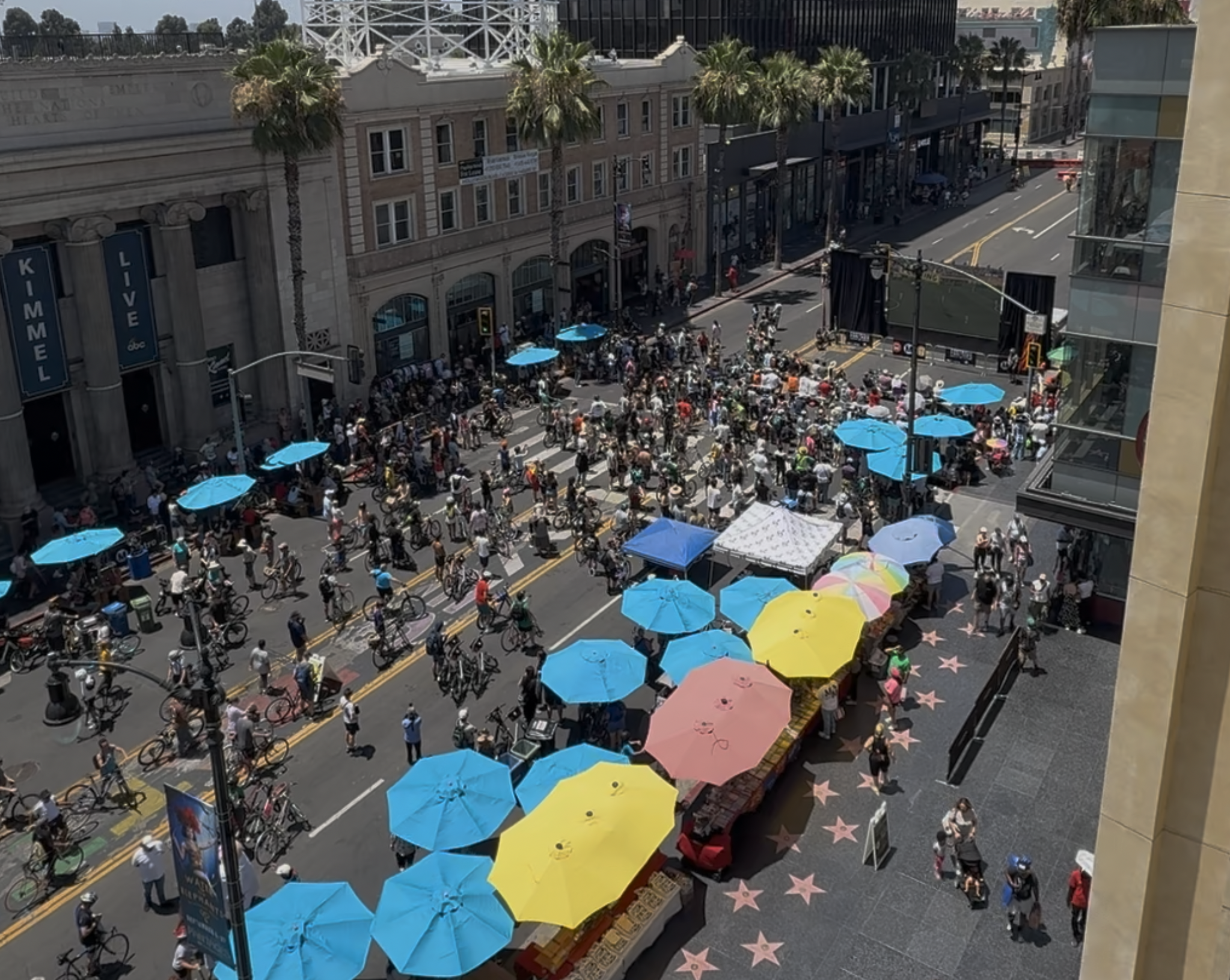
de Guzman: I love the vibrancy that the umbrellas add to this scene, and they probably brought some respite to people at the event. However, the preponderance of asphalt and other heat-retaining surfaces in this photo means that these little pockets of shade were overwhelmed by their surroundings. In this scene, the score is Heat Island = 1; Colorful Umbrellas/"Shade Archipelago" = 0. What's needed is larger scale, contiguous, high-quality shade — and some popsicles would be great, too!
Barton: I love the idea of integrating a World Cup watch party into an open street event like CicLAvia’s Meet the Hollywoods! So cool! That said, this watch party looks hot! It was held on a paved, treeless city street in the middle of a hot summer day. The umbrellas and misters are cute, but not super practical for an activation of this size and scale, especially if you want bikers, skaters, and bladers to lock up their bikes and skates and linger to watch the game. Given Hollywood and Highland’s iconic status, and a long history of street closures for glitzy events like the Oscars — which often include large tents! — I would have loved to see a bit of Hollywood magic transform the hot, barren asphalt into something cool and glamorous. 🔥
 Alissa Walker
 Alissa Walker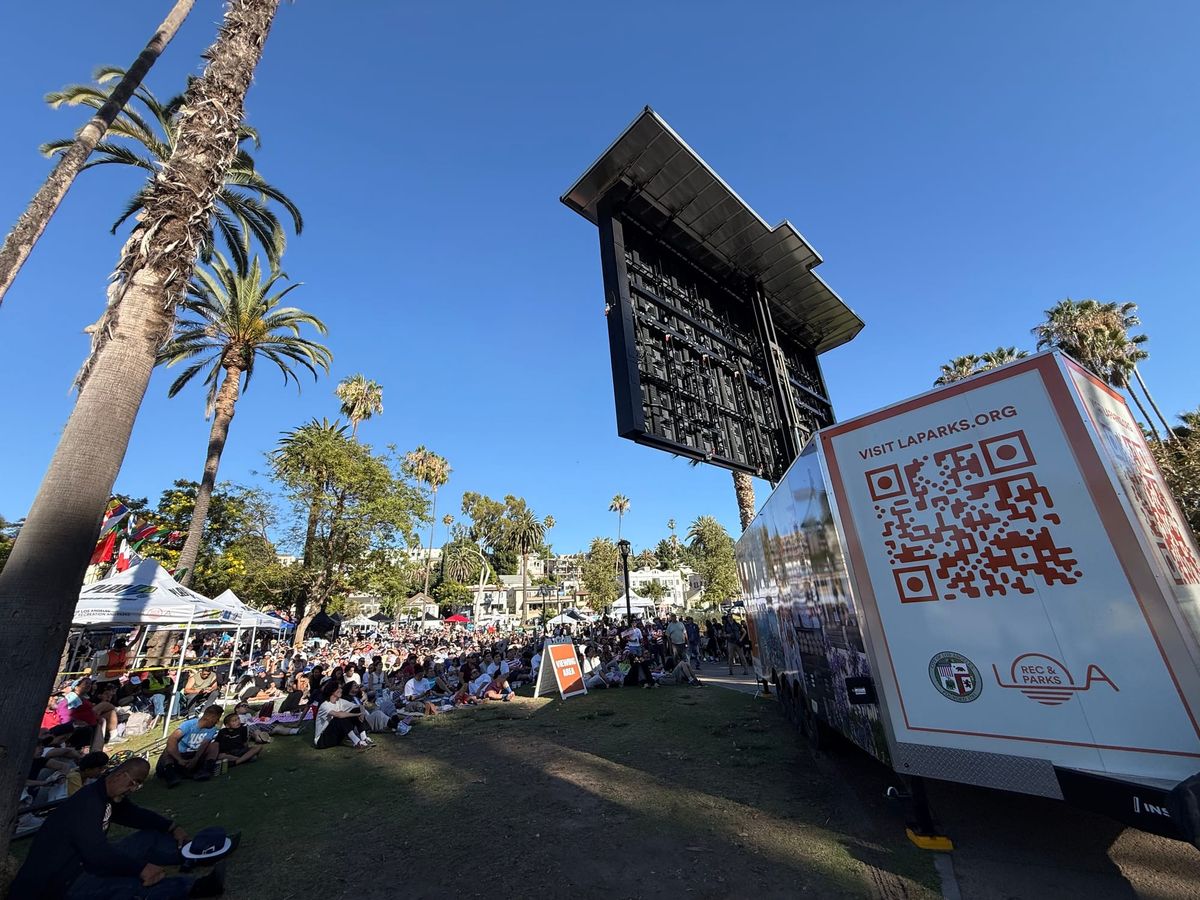

This isn't like rebranding a soccer field for the weekend. When it gets hot, Angelenos rely on pools to survive


Paris's school streets are effectively sculpting out instant parks in the locations where they'll provide immense public health benefits to the city's most vulnerable populations

The official look and feel for the games shows, once again, that LA28 doesn't really understand our city