
Why IOC partner Airbnb is trying to buy your vote
The powerful Olympic and Paralympic sponsor is spending over $7 million on LA races — and you can probably guess why
The powerful Olympic and Paralympic sponsor is spending over $7 million on LA races — and you can probably guess why

Plus: LA28 got served and more people mover delays in this week's Hot Links
In some ways, there are now three major cultural festivals planned for 2028 — and there will likely be even more
Paris's school streets are effectively sculpting out instant parks in the locations where they'll provide immense public health benefits to the city's most vulnerable populations

On the morning of my 11th day in Paris, I woke up with a pounding headache. It wasn't the pét-nat I'd been putting away the night before — everyone knows the wine in France doesn't give you hangovers — there was something far more sinister happening in my sinuses. I was sneezy and wheezy, spacey and sleepy; but my malaise also felt vaguely familiar. Then I opened up my weather app. Hovering over Paris was a bright red splotch of an air quality warning, like someone dumped a spit bucket of Beaujolais directly over my daily running route. I suddenly felt like I was right back home in LA.
As bad as Paris's air was that day, it was overall much better than the last time I'd visited. The reduction in vehicular traffic is real — down by half, by the city's estimates — and you can almost taste the difference. Gone is that signature two-stroke engine smell I've always associated with European cities; the diesel that hangs in the air and dissipates on your morning croissant. And the data proves it out: over the past two decades, the levels of fine particulate pollution known as PM 2.5 and nitrogen dioxide have plummeted by 55 percent and 50 percent, respectively. When former mayor Anne Hidalgo declared cleaner air as a priority for Parisians, it ended up becoming one of the most universally significant legacy improvements from the 2024 Summer Olympic and Paralympic Games.
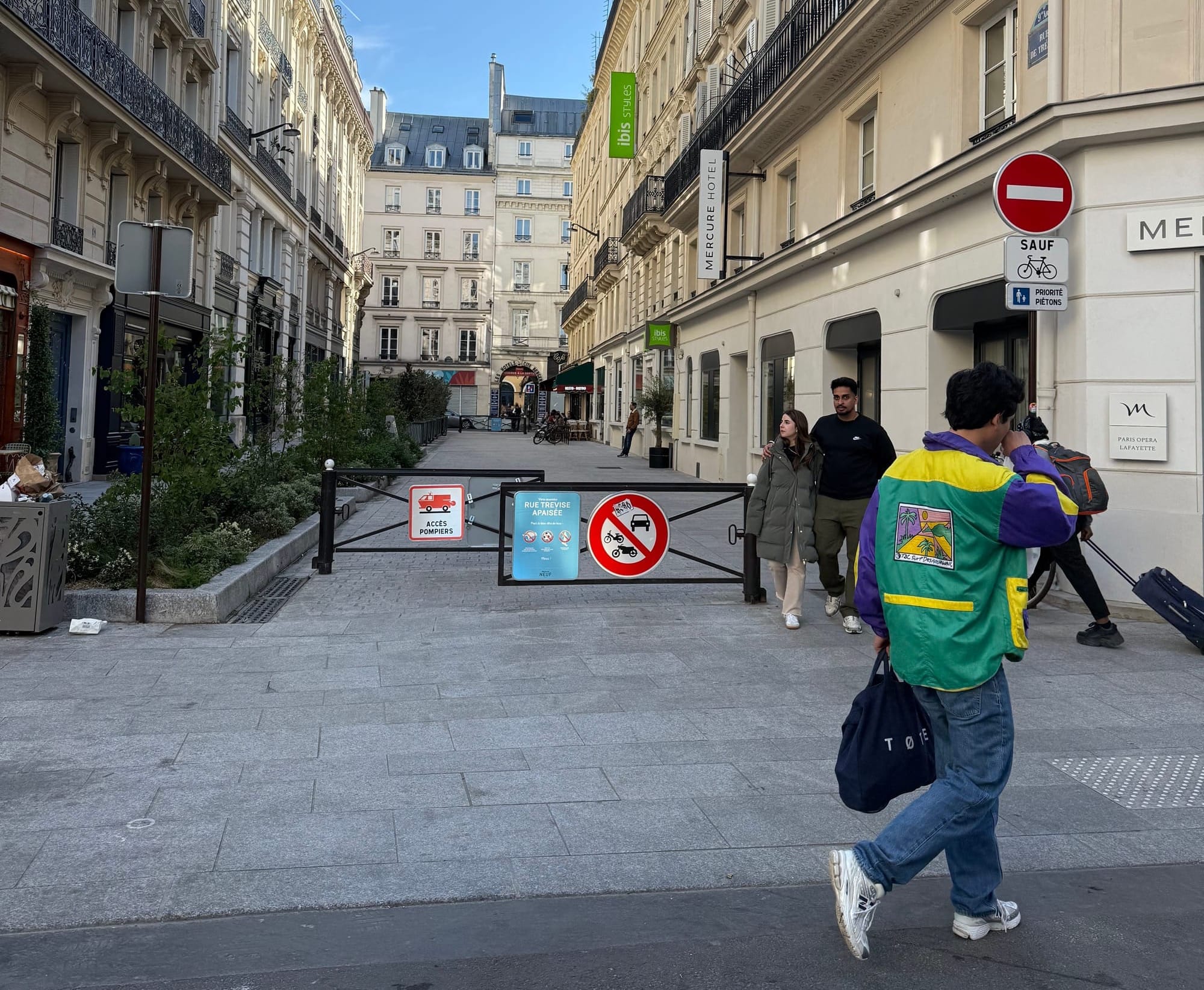
The problem is that all that progress gets mucked up by certain weather conditions. The second week I was there, temperatures hit 78 degrees — pretty steamy for early April — and I knew from writing about air quality long enough that hot days can send the AQI sky rocketing. The cloudy, chilly days weren't helping either. "Heat can create the ground-level pollution, and colder days can create temperature inversions that hold in the pollution," says Marcel Moran, an assistant professor of city planning and spatial science at San Jose State University who has been studying heat and air quality in the city. But Paris's signature urban form — narrow streets, near-uniform building density — is also to blame, he says. "This is the nature of the ground-level pollution that gets trapped in this vestige of a city not built for automobility." To keep its air clean, Moran says, what Paris needs is fewer gas-powered vehicles, yes, but also less heat-trapping pavement, and also more trees and urban greenery — which not only create shade to lower temperatures on warm days, but can also absorb those pollutants on any day of the year.
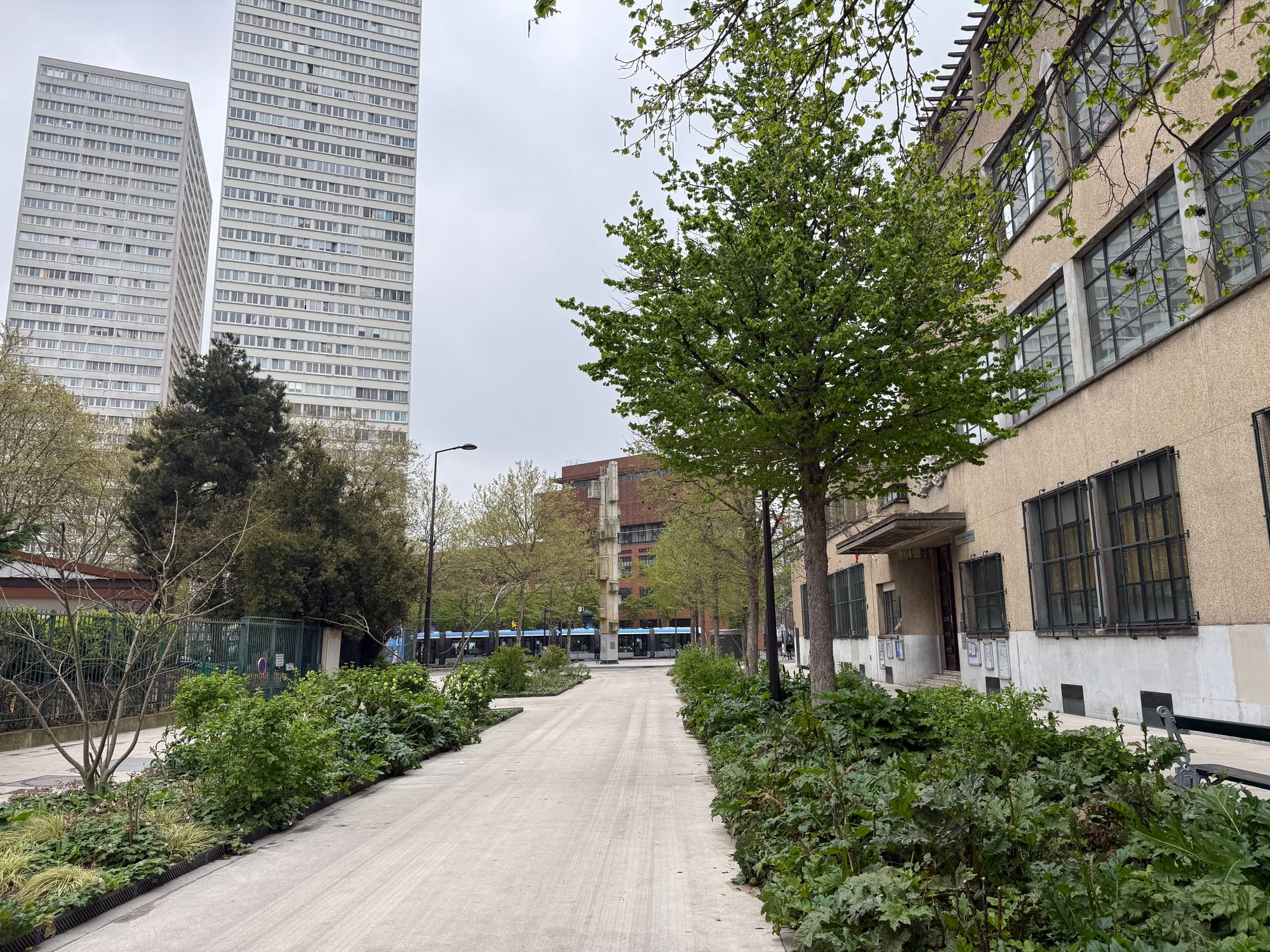
Which is why Paris is doing exactly what I've been begging LA to do forever: planting trees not just in cramped sidewalk wells, but in the very places previously used to drive and park cars. The big depaving push started a decade ago, when Hidalgo began planting a few of the city's signature plazas to combat extreme heat. The most spectacular example of these new urban forests is right outside l'Hôtel de Ville, the center of Paris's municipal government. Wandering through the feathery spring shade was a living demonstration of the city's climate goals: biodiversity increased, benches cooled, stormwater absorbed — which helps to keep the Seine clean; it's truly all connected!
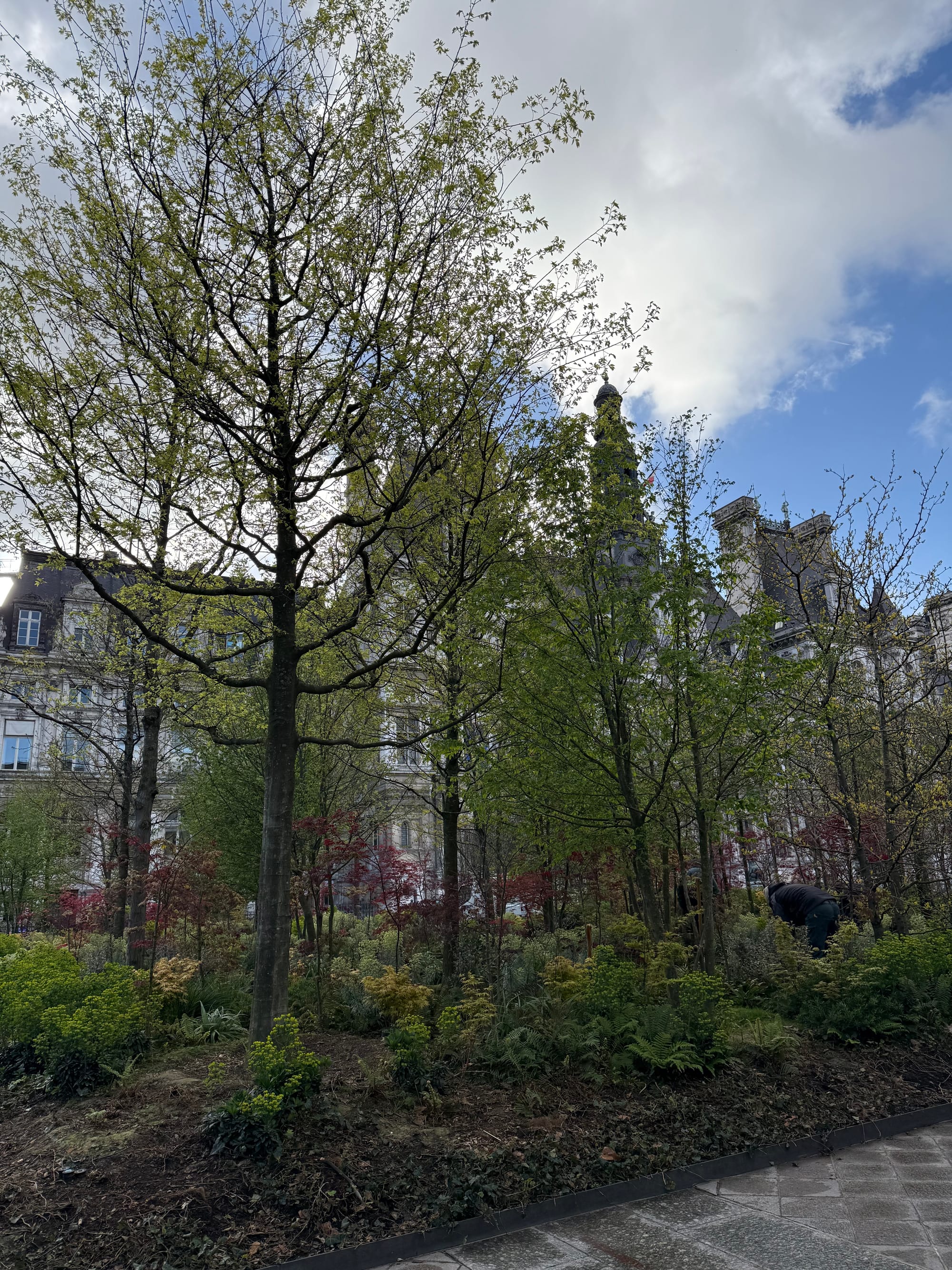
In 2025 — yes, after the games — Parisians approved another referendum to pedestrianize and plant 500 additional streets, removing another 10 percent of Paris's on-street parking; about more 10,000 spots. (About 50,000 parking spaces have been converted to better uses so far; other streets are closed to cars periodically as part of Paris Respire.) But no one calls these car-free streets, rather, they're rues-jardin — literally, garden streets.
As you walk — actually, let's be honest, I was probably biking — around town, the new garden streets are easy to spot; I got good at clocking the new plantings and recognizing the new paving schemes. (I quickly realized I could fire up Google Street View for confirmation, which is a pretty fun game in itself.) I also encountered a lot of construction. I saw walkways being widened and trees being planted that were significantly larger than saplings. When they go into the ground, they're fenced off to protect them and accompanied by signage explaining the improvement to you, owner of lungs.
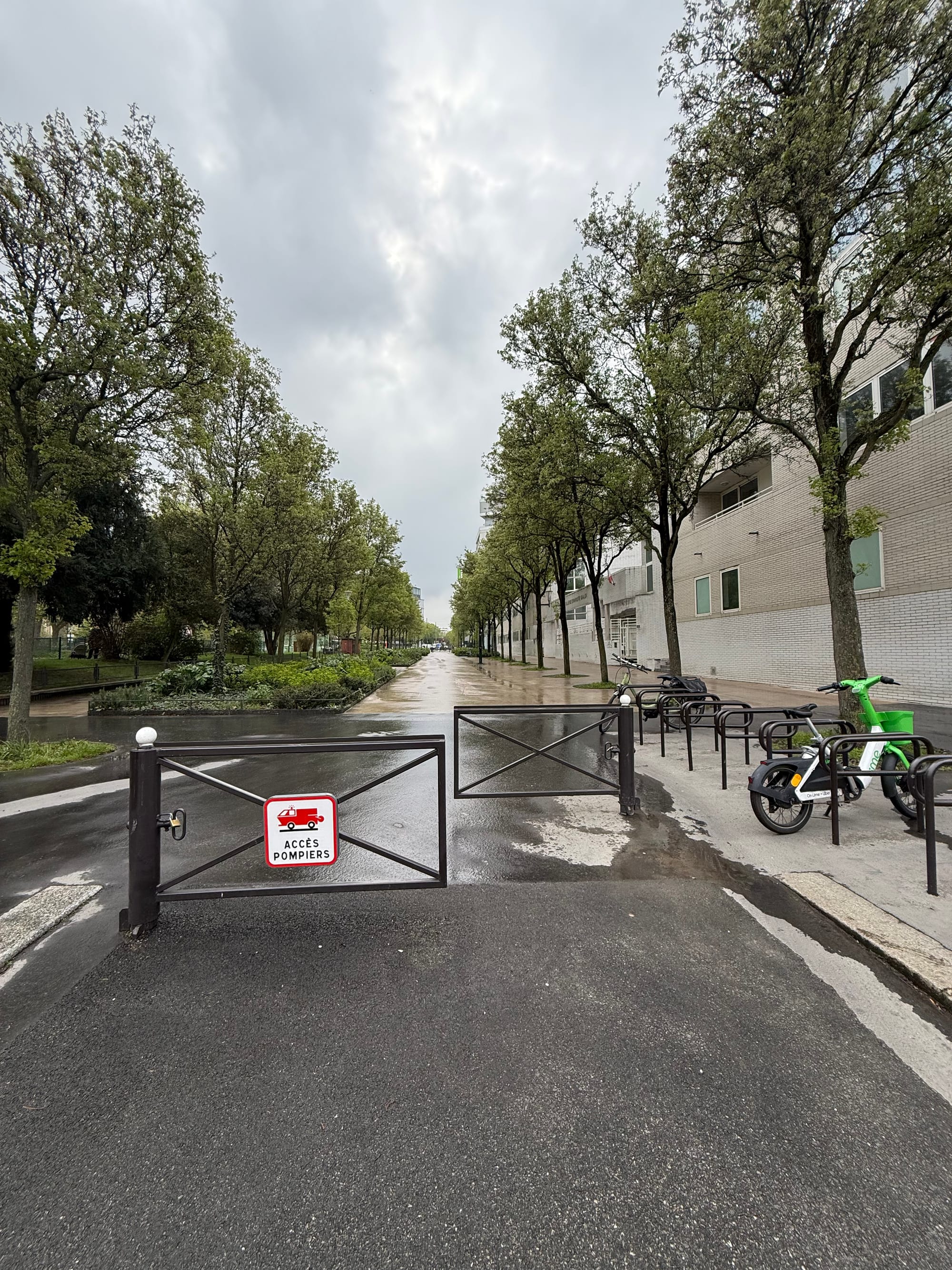
But the most important place that Paris has done all of this work is in front of its schools. Since 2020, the city has installed over 300 rues aux écoles which I had to stop and photograph pretty much every time I saw one. Closing a street to cars immediately adjacent to a school delivers a myriad of obvious safety benefits, and on top of that, Paris's version perfects the triple whammy to combat pollution that Moran describes: fewer cars, less pavement, and more trees. But these school streets are also effective at cooling down the neighborhood. Armed with a thermal camera, Moran spent last summer visiting 272 school streets and found that ones with the full treatment — trees, gardens, light-colored pavement — were on average, an astonishing 9 degrees (Fahrenheit) cooler than nearby non-school streets, a differential that even Moran was unprepared for. This summer, Moran will be investigating how much the parked cars on the non-school streets serve as heat amplifiers in the surrounding area — and as someone who's been burned by a Subaru on a 95-degree day I think I can make an educated guess about that outcome.
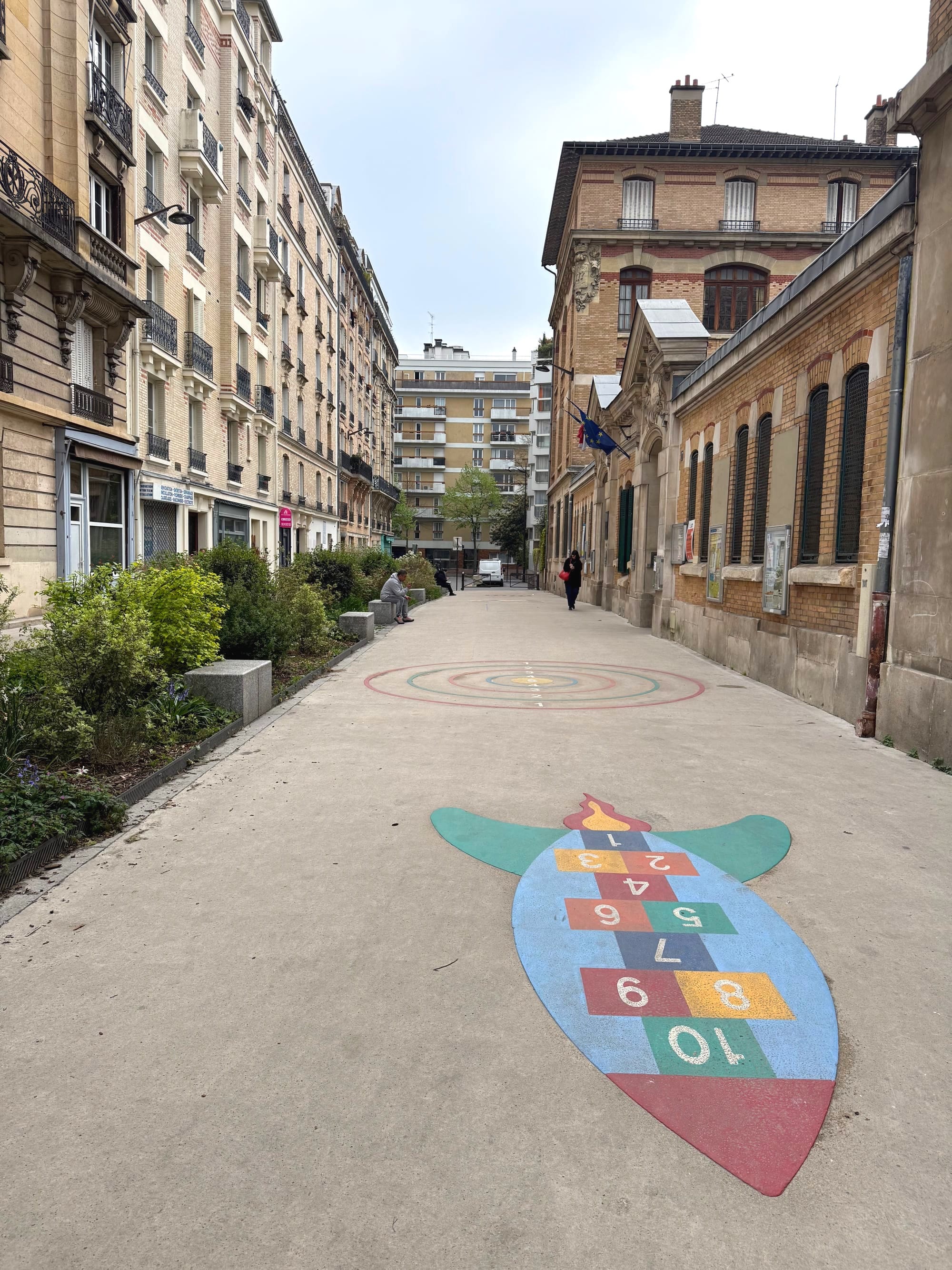
What struck Moran was how Paris went all-in with permanent infrastructure, relocating utilities and water mains. "These are not tactical urbanism, they're not pilots, not rubber and plastic," he says. "The American experience is, oh, we’ll put cones down and a barrier you can run over. But there’s something really different here in the materiality and the ambition — these are aspirational spaces." Moran only knew of two projects that had to be reinstalled due to community feedback; overall they've been enthusiastically embraced by the city. In a fantastic Fast Company story about Hidalgo's legacy by Adele Peters, AREP's Hiba Debouk, who has designed many of the city's school streets, told Peters that during construction, neighbors wave down from adjacent apartments to thank her for making the changes.
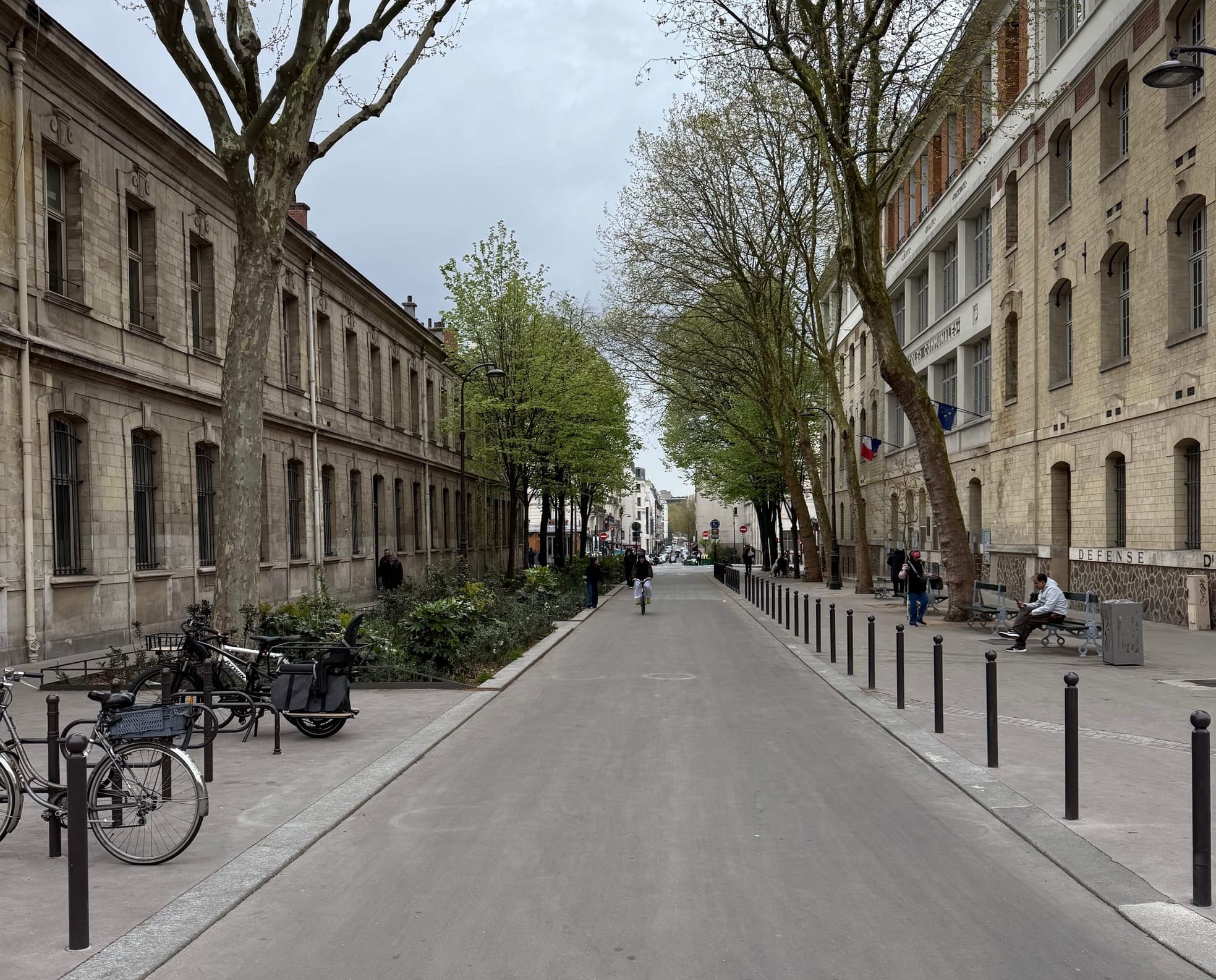
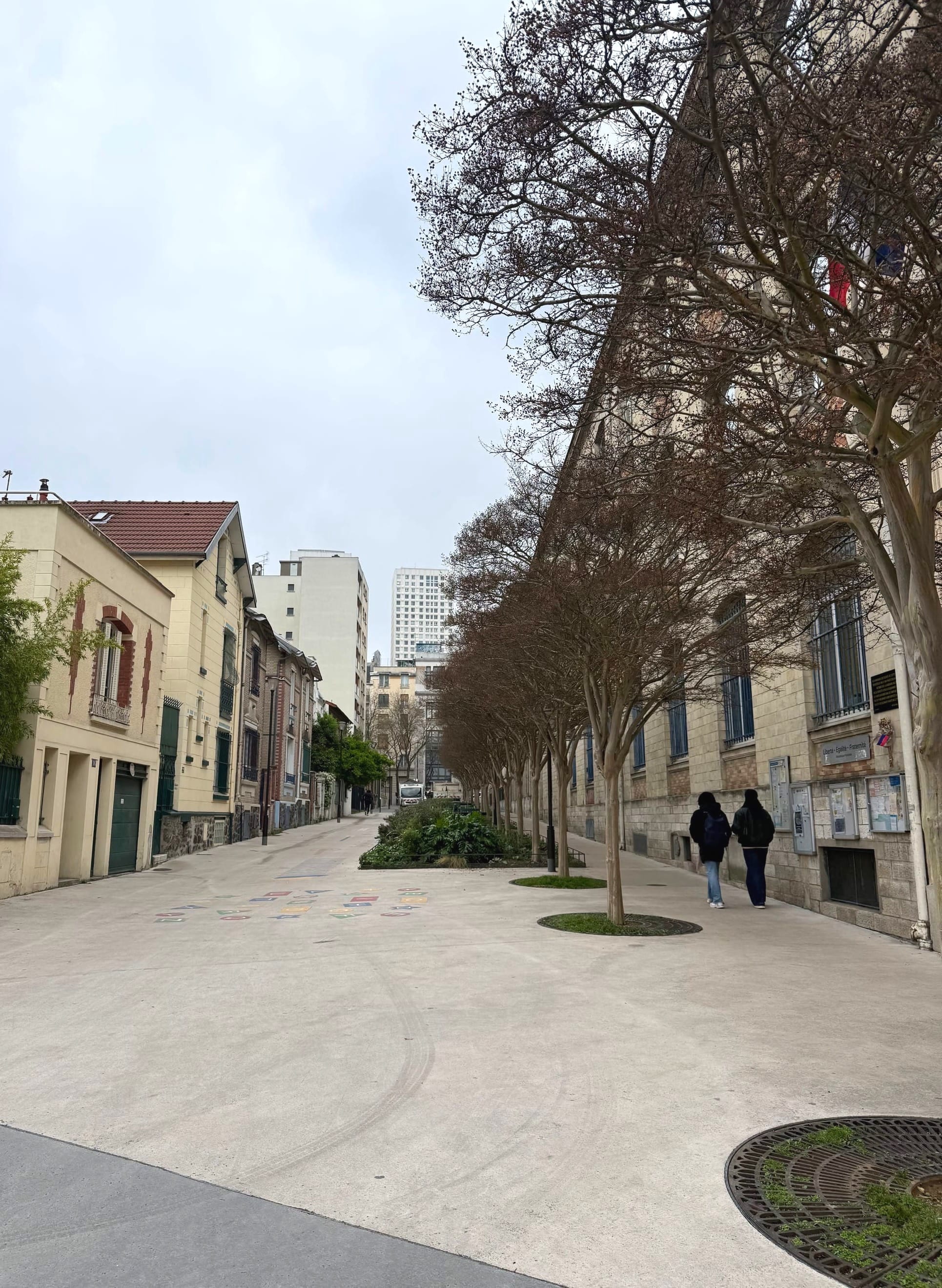
As it turned out, there was another LAUSD mom who thinks a lot about heat and kids who was in Paris at the same time as me, and we met up on the southeast edge of the city to tour as many school streets as we could cram into an afternoon. UCLA associate professor of urban planning and geography V. Kelly Turner has long been my go-to expert when it comes to depaving and shading our asphalt schoolyards, which, as I learned from her research, are often the hottest places in LA neighborhoods. Turner was there to meet with Paris officials to hear more about the success of these projects as LAUSD struggles to cool its schools and LA struggles to cool its streets. As each school street came into view, we'd get giddy spotting the amenities. Some are just gates, but most have trees, gardens, benches, and hopscotch graphics. Others had more comprehensive seating, cargo bike racks, even drinking fountains with little misters atop them. Many were co-located next to parks, maximizing their benefits. Some had stores and cafés inside the gates, with chairs spilling out into the awninged plazas. On a hot day, we imagined heading towards the nearest school, knowing you'd find a guaranteed place for rest and respite — the exact opposite of the way we think about LA's schools now.
Turner and I had both left LA in the midst of a heat wave. We traded stories of students at our respective schools repeatedly getting sick with the very same symptoms I'd woken up with on that garbage air day in Paris — and worse. We know LA's extreme heat is particularly dangerous for kids. But that hasn't seemed to make LA's officials snap into action like Paris. "We tend to focus, rightly so, on the elderly," says Turner. "But it seems to be harder to make the case for children, because it's subtle things like cognitive outcomes." The way Paris officials framed school streets as a government mandate, aligned clearly with the city's climate goals, had managed to shift the paradigm. "Everyone was on board to prioritize children, and everyone had a stake in it. And that's very different than the narrative in LA." The school streets then become signposts for a society that's shifted its attention, she says. "It's more of a signal about what our values are."
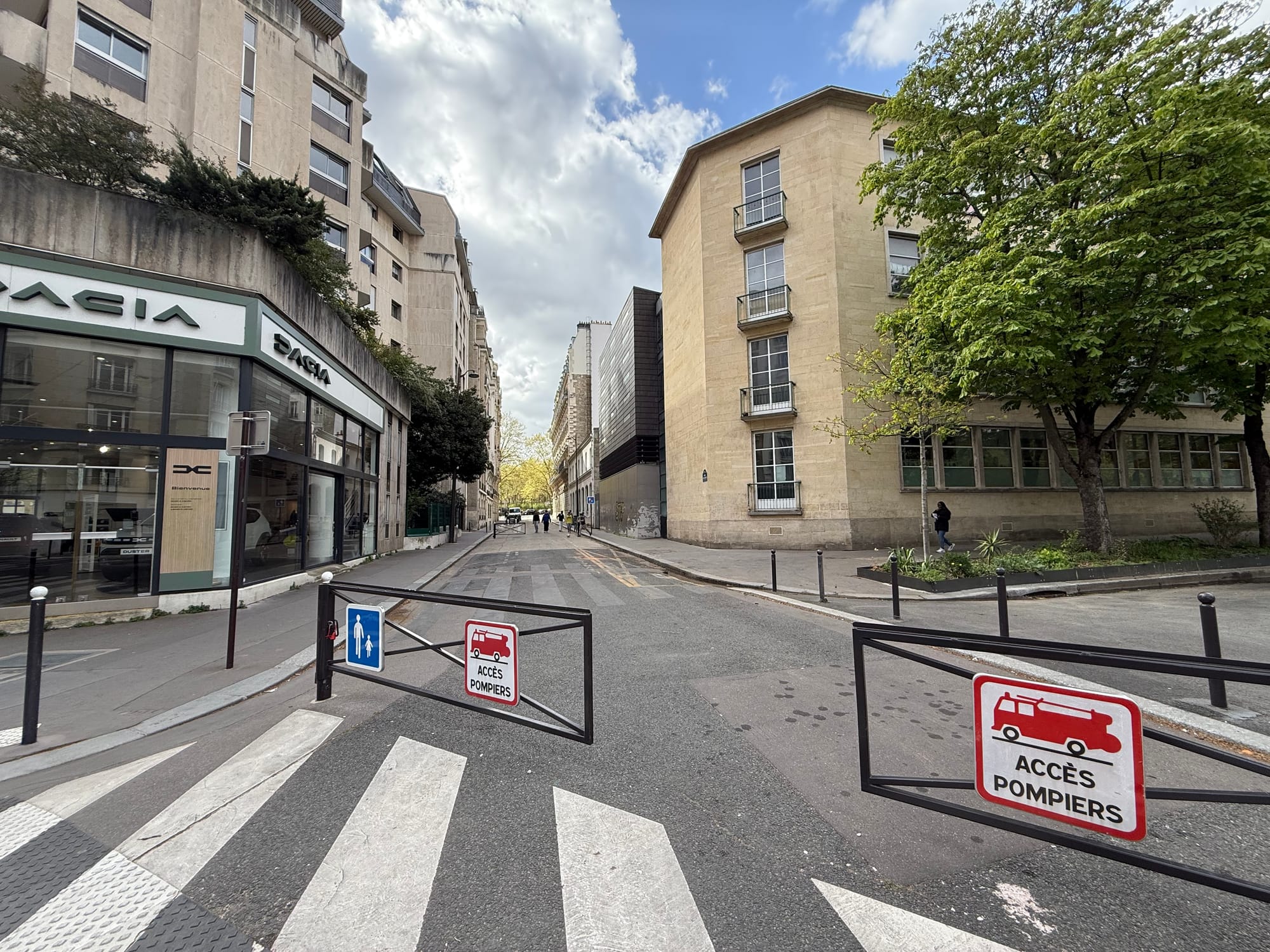
And those signals are now literally everywhere, reinforcing the message. Like Moran, Turner was impressed with the speed, the scale, and the depth of the implementation. "A lot of these went in within two to three years," she told me. "And they did about 100 within two to three years." I stood at the edge of one relatively simple school street and tried to envision LA adding 100 of these by 2028 — or even LAUSD greening 100 schoolyards by 2028 — and how much just that tiny change would impact the city's park-deprived households. My reverie was interrupted by three zig-zagging kids on kick scooters who came sailing around the corner, their parents trailing by a block. Paris's school streets are effectively sculpting out instant parks in the locations where they'll provide immense public health benefits to the city's most vulnerable populations. But it's true, they really stand for something else entirely: a city brave enough to prioritize children. 🔥
 Alissa Walker
 Alissa Walker


Two experts evaluate the shade interventions at this summer's tournament


This isn't like rebranding a soccer field for the weekend. When it gets hot, Angelenos rely on pools to survive