
State of the art
In some ways, there are now three major cultural festivals planned for 2028 — and there will likely be even more
In some ways, there are now three major cultural festivals planned for 2028 — and there will likely be even more

You might not have noticed Burbank's new airport project flying under the radar because it went a lot faster than some other airport projects in the region
Hear from a Olympic and Paralympic expert on October 19 at noon on Zoom
Ensuring that the Seine was safe enough to host a handful of Olympic and Paralympic swimmers was only the beginning of the story

Our river cruise started beyond the western edge of the city, where the Seine curves into a U encircling the Bois de Boulogne. We jetted past primary-colored high-rise apartment towers, houseboats sprouting spring greenery, barges distributing building materials to be transported to construction sites by water. As the Eiffel Tower loomed into sight, I saw a familiar spot I'd recognized from photos: the location of Bras Grenelle, one of three places in the city where the river had been opened for public swimming last summer for the first time in a century — perhaps the most audacious legacy of Paris's 2024 games.
Torched readers will remember Paris Mayor Anne Hidalgo's pre-Olympics dip in 2024, just nine days before the opening ceremonies — or the threats of poop protests that preceded her test swim. But ensuring that the Seine was safe enough to host a handful of Olympic and Paralympic swimmers was only the beginning of the story. Still in her swimsuit, Hidalgo reminded everyone that cleaning up the river wasn't just for the athletes: "This will allow us to swim in it after the Olympics and will become a major legacy."
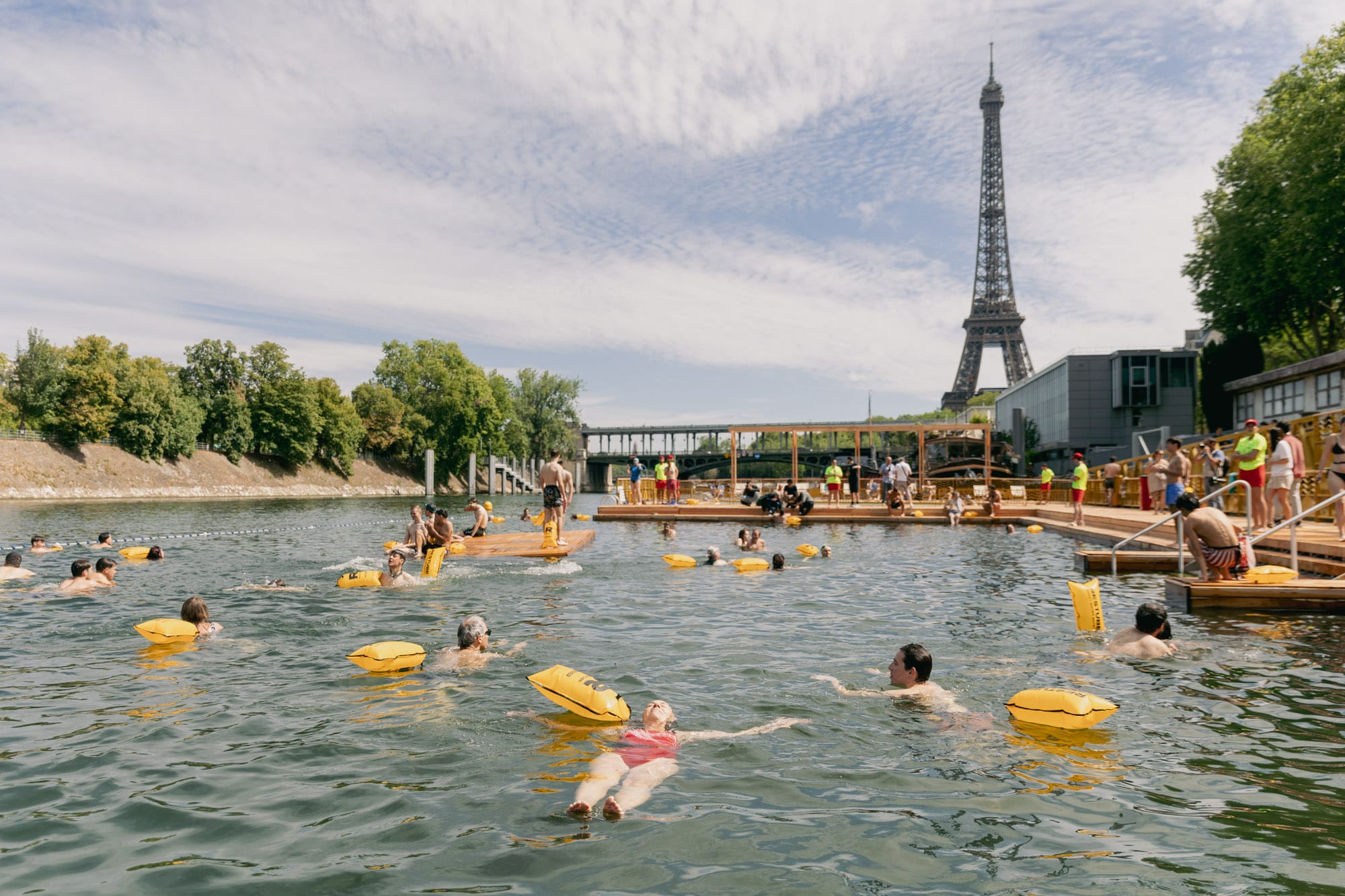
You can read entire stories about the decades-long, multi-jurisdictional movement that Paris led to ensure the Seine was swimmable: the construction of a massive underground cistern, a public campaign that rerouted 25,000 plumbing connections — including many of those houseboats — to prevent discharge of untreated wastewater, the cooperation across agencies to reduce stormwater runoff. The cost — $1.5 billion — seems like a steal when compared to U.S. infrastructure prices. The impact also reached far beyond Paris proper, with a total of 17 swimming sites opened in the Île-de-France last summer. But as Hidalgo hinted at in her remarks, the real legacy was an unprecedented regional collaboration — something LA has yet to discover — and the political maneuvering that united stakeholders behind a firm deadline.
"Without the Olympics, we couldn't achieve this," said Nicolas Londinsky, director of Paris's water and sanitation department, as we stood in his office in the 14th arrondissement. Posters from 2024 lined the walls, with my personal favorite showing the mascot Phryge touting the potability of the city's tap water: C'est du haute niveau! In Londinsky's office, an autographed poster from Olympic and Paralympic triathlon technical advisors thanks the city's department for making the water safe for them to compete, cheekily noting the target E. coli levels.
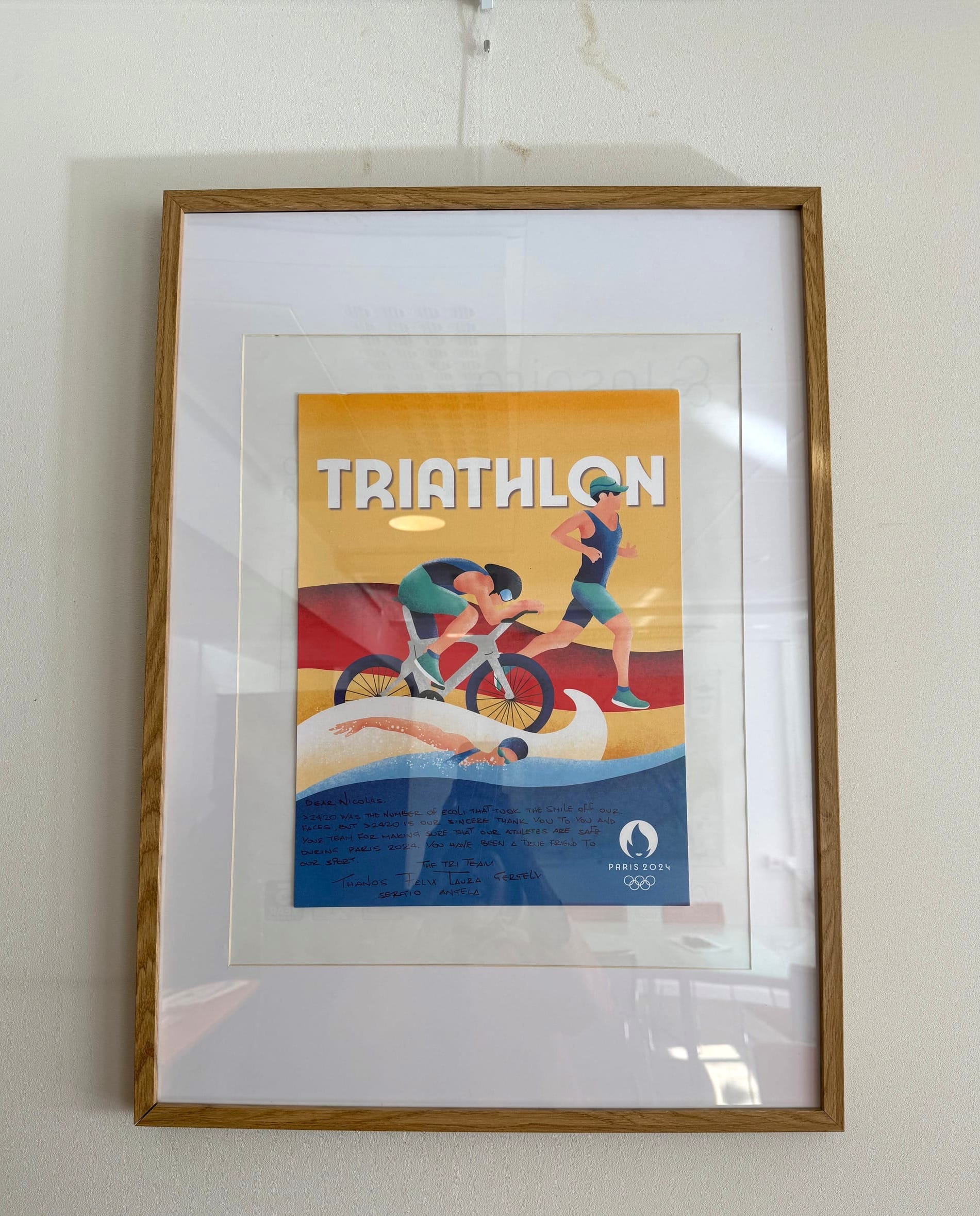
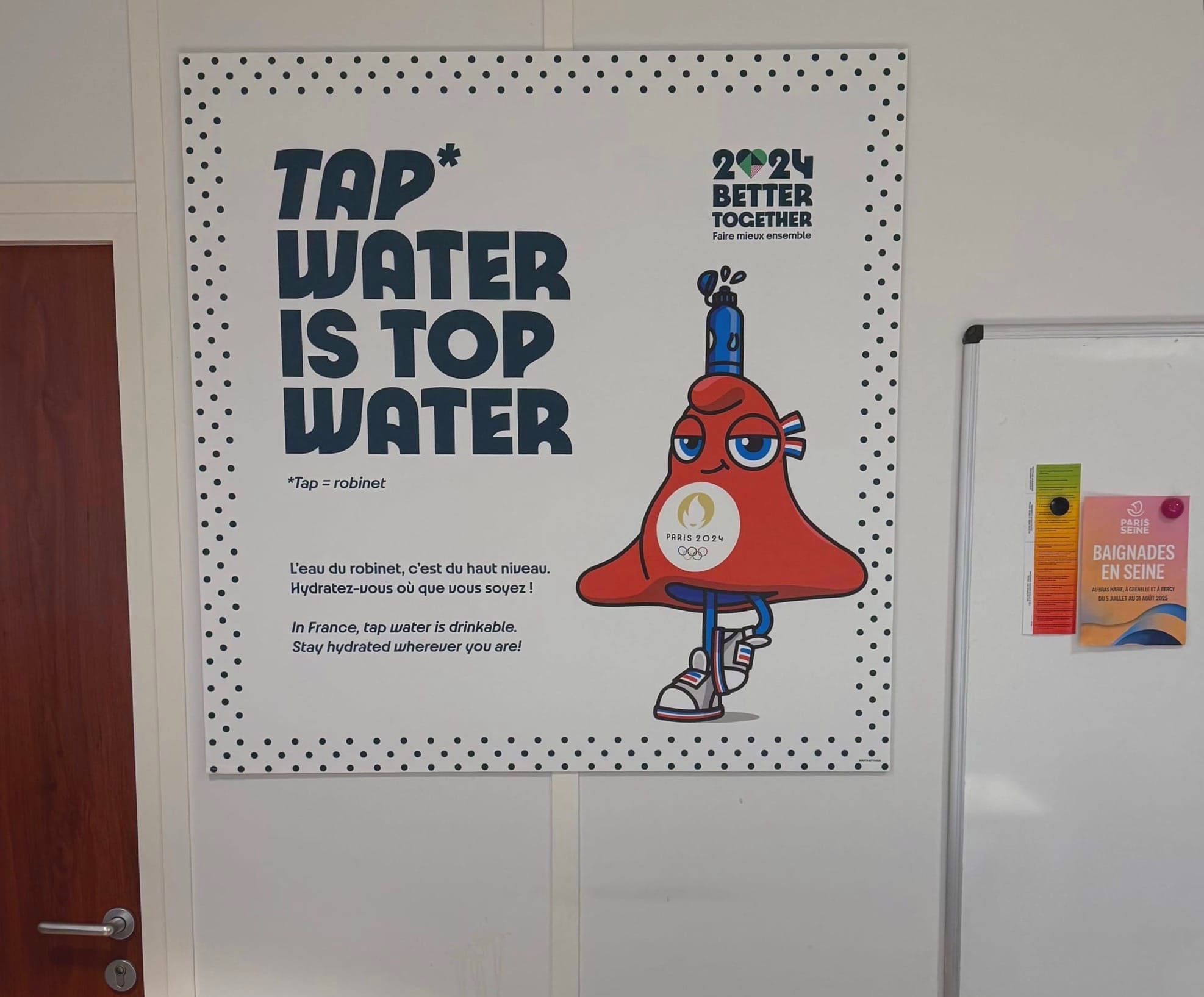
Water quality humor in the office halls of the city's water and sanitation department
Swimming in the Seine for the games almost didn't happen. The week before the Olympics, the area was hit by a major storm that raised bacterial levels beyond what was safe to compete, canceling training runs. (A test event planned for 2023 was also canceled.) After postponing the triathlon twice, yet another storm was forecasted before the final day that the triathlon was to be scheduled. The heavy rains held off, and the events were held, but the team spent the night in the office, tracking the radar, said Londinsky. "We didn't sleep very much." (A few weeks later, the paratriathlon was also delayed one day due to water quality.)
But while seeing the Seine front-and-center for international competition was thrilling, the rigorous testing at the public swimming sites tell Parisians a different and engaging story about the day-to-day health of their city's waterways. "It is all about communication," said Anita Ravlic, director of international relations for the water and sanitation department and for Le Musée des Egouts de Paris, the city-operated sewer museum. (I WANT ONE.) "You can trust if we're open, it's because the quality is okay. But we won't be open every day, and for good reasons." Rainy days can still trigger a closure, but sunny days help clean the water because UV light kills bacteria. And the closures are not only for bacterial reasons; sometimes there's excessive oil pollution — yet another reason for transportation, nautical or otherwise, to go electric. Explaining these factors presents an educational opportunity for Parisians to connect their actions to their river. "When you talk about sewage systems or other technical problems, people don't understand," Londinsky said. "But if you show them that you can swim in the river, that shows what's possible."
The green and red flags that denote if a swim site is open also serve as a mini science lesson
And overall, the water just keeps getting cleaner. As the team prepares to open the program for the second season, the river is healthier than it was the season before. One key way to measure the incremental improvement is the abundance of aquatic life. In the 1970s there were only three species — now it's over 30. To me, this was an underreported benefit of a swimmable river that seemed directly aligned with Hidalgo's biodiversity initiatives.
Parisians have always embraced their river — you could almost gauge the temperature by simply counting the number of rosé bottles opened for impromptu picnics — but as the water quality improved, so did access to the river itself. Before the bike highways and swimming holes of the Hidalgo administration there was Paris Plages, the summertime "beaches" that took over streets along the river starting two decades ago. Within that context, Hidalgo's pandemic-era decision to close these freeways and tunnels to cars were not necessarily dramatic one-off actions, but building upon a very popular summer pilot program. And now they're permanent. In addition to the cycling infrastructure, the quais are dotted with playgrounds, widened sidewalks, benches, and newly planted trees.
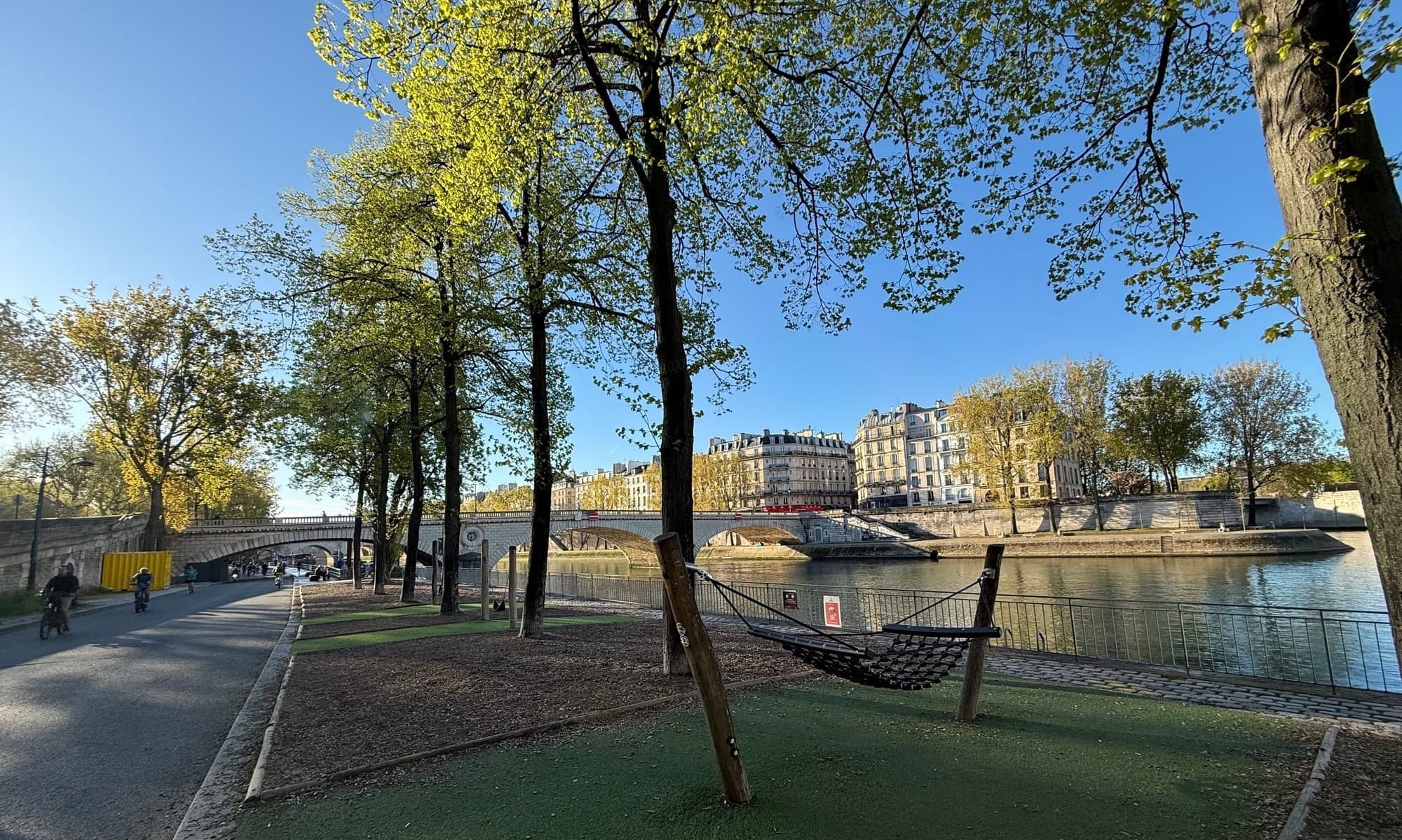
While LA was bidding for the games — WHICH. WERE. AWARDED. THE. SAME. YEAR. AS. PARIS. — we were promised vast improvements to our namesake waterway. Not only was a cleaned-up LA River supposed to play a key role in the events themselves — like, we might have potentially hosted canoe slalom instead of Oklahoma City??? — we were also told we were getting a 51-mile bike and pedestrian greenway and an Olympic Village delivering thousands of affordable housing units along its banks. (All of which Paris technically delivered.) And while there are no shortage of LA River plans, including a legally contested master plan that includes water quality goals, very little is set to change in the next two years. The various interventions that will be completed by 2028 mostly sail high over the channel, doing nothing to connect Angelenos to their river. LA's paths remain too narrow, our banks too steep, our bridges too sporadic. But our river remains full of other possibilities: a kayaking route, an art exhibition, a boat show, a concert stage, and a dance party, which the organizer captioned: "I'm gonna tell my kids this is the Seine River in Paris."
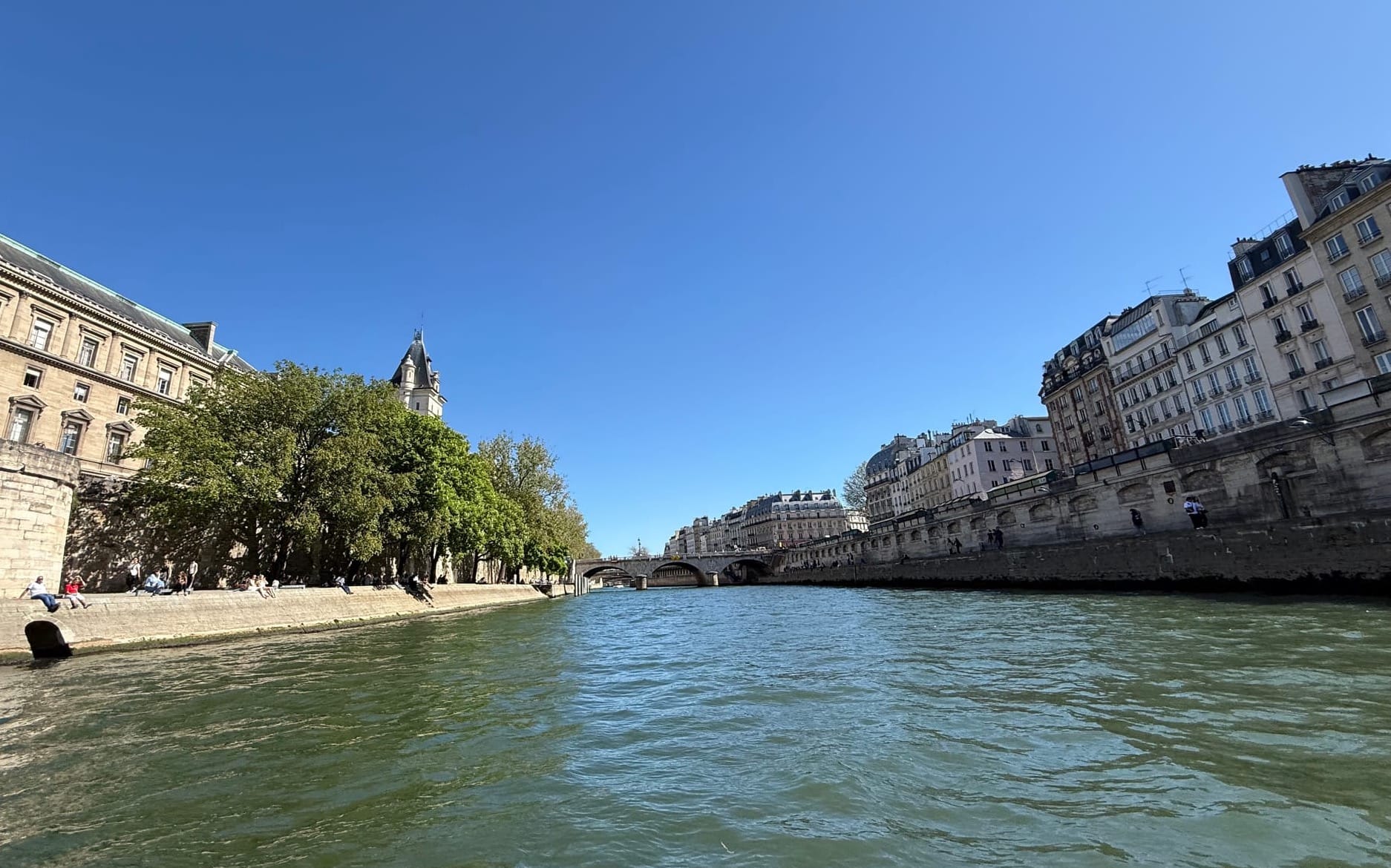
As we drifted peacefully through the busiest part of the Seine, our cruise almost over, the scene was idyllic. Bikes whistled past, the barge bars milled with tourists, and there was even a legitimate dance party: we spotted a group practicing polka, as one does on a weekday afternoon in Paris. Variable water volumes aside, I kept marveling at how similar the LA River is to the Seine: a simple hardscape channel that juts through the center of a busy city. As both have proven, it can take decades for the infrastructure to catch up with the way residents actually want to use their rivers. But on a 70-degree April day, Paris was doing just fine: blankets splayed, shirts knotted around waists, legs dangling over the edge, reclaiming the banks for the people. 🔥
 Alissa Walker
 Alissa Walker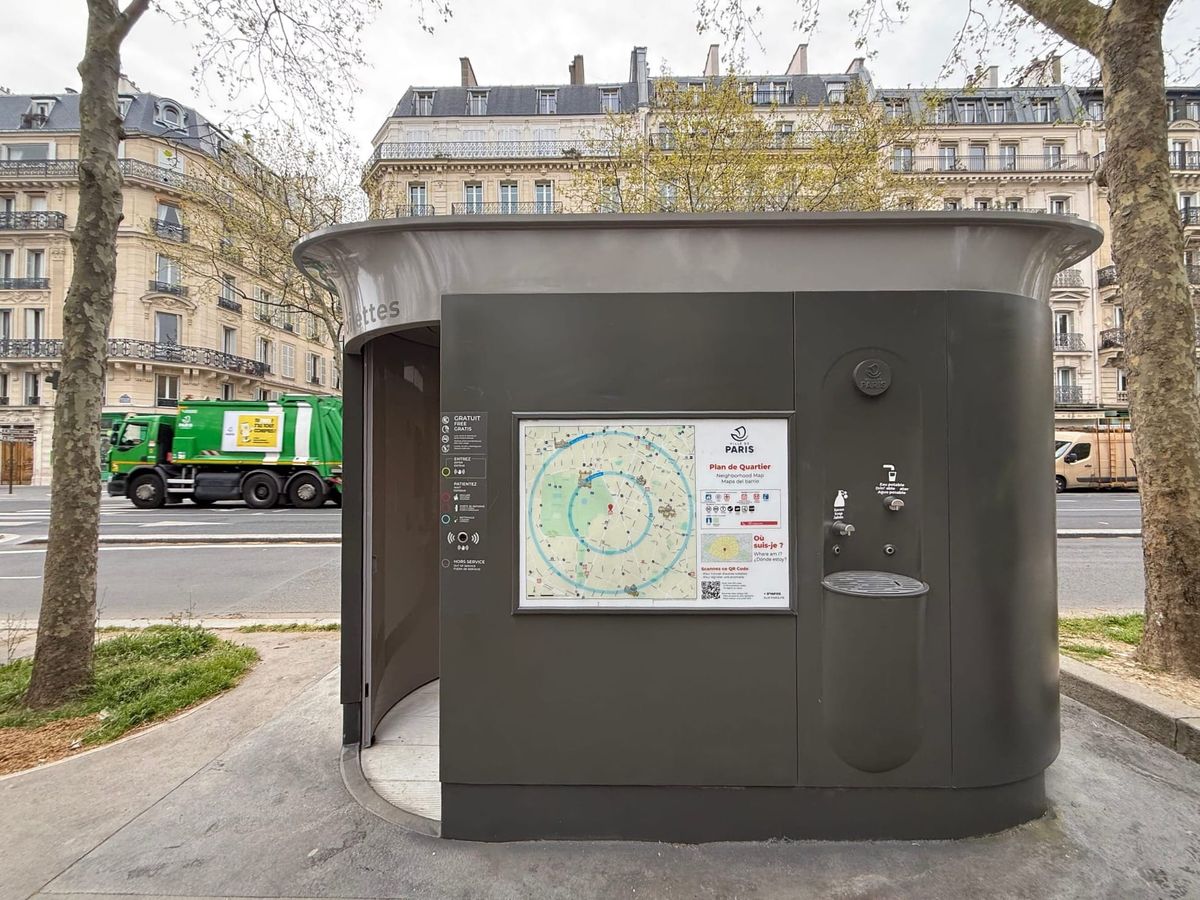

Paris's school streets are effectively sculpting out instant parks in the locations where they'll provide immense public health benefits to the city's most vulnerable populations

It's a public bathroom, yes, but it's really a piece of infrastructure that unlocks access to the city

