
State of the art
In some ways, there are now three major cultural festivals planned for 2028 — and there will likely be even more
In some ways, there are now three major cultural festivals planned for 2028 — and there will likely be even more

You might not have noticed Burbank's new airport project flying under the radar because it went a lot faster than some other airport projects in the region
Hear from a Olympic and Paralympic expert on October 19 at noon on Zoom

For someone who doesn't watch soccer, I've sure looked at a lot of screens over the last five weeks. The World Cup matches have beckoned as a way for Los Angeles to come together, in private or in public. But there has been one requirement: a way to see the action. Although, to be honest, I was usually standing behind the screens, staring back at the fans, watching their reactions. That was often the very best view.
There was no wrong way to watch. I saw plenty of TVs dragged out of apartments; one outdoor living room in Koreatown had hauled the entire sofa sectional into the parkway. I loved seeing strangers crowding around a phone at a bus stop, their faces that telltale green glow. I was having a conversation at a watch party with a few guys assembling burritos inside a taco truck when they screamed in unison with the crowd around me. We laughed as they showed me how a tablet was propped up to show the match inside, just above the window.
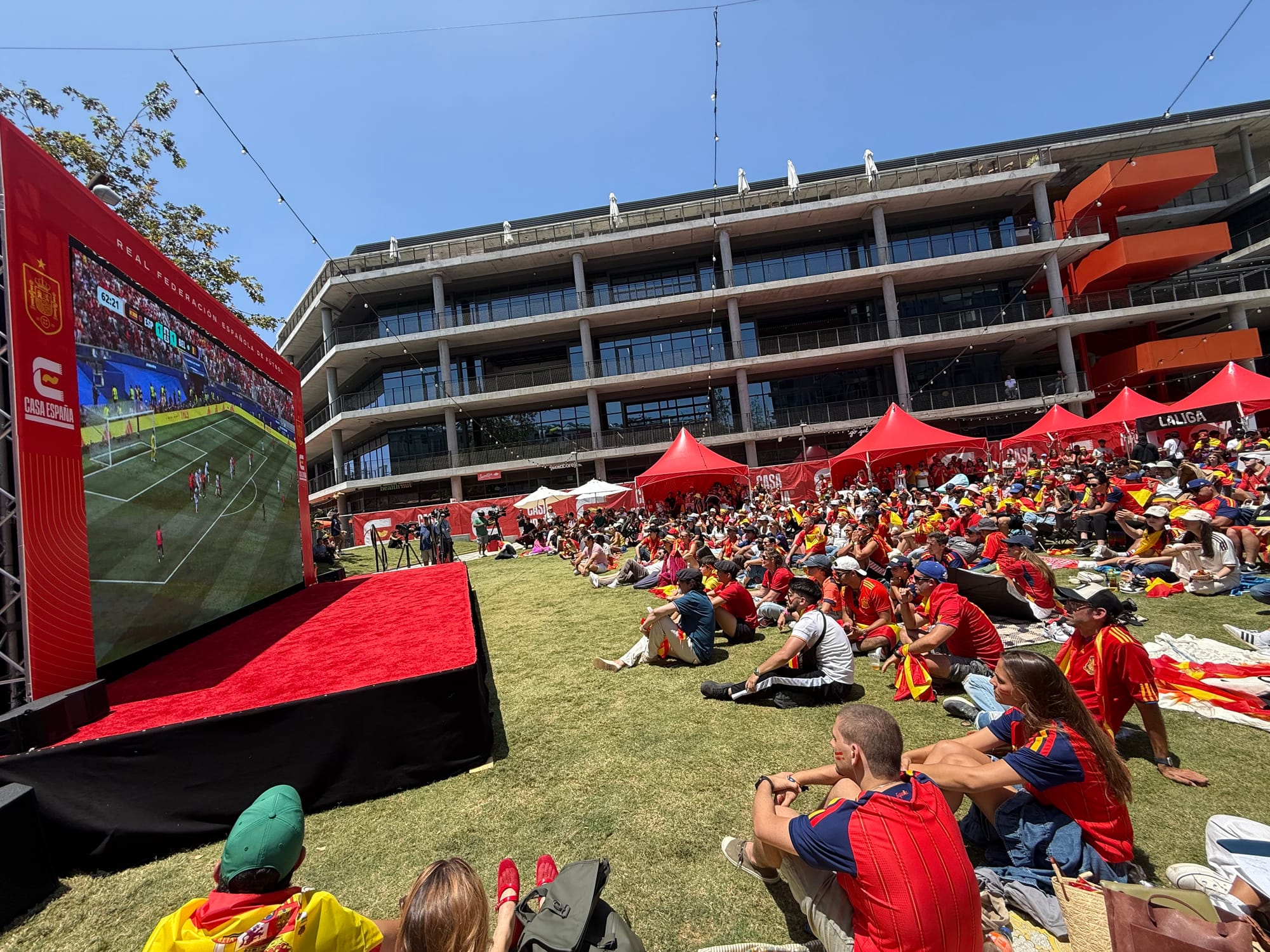
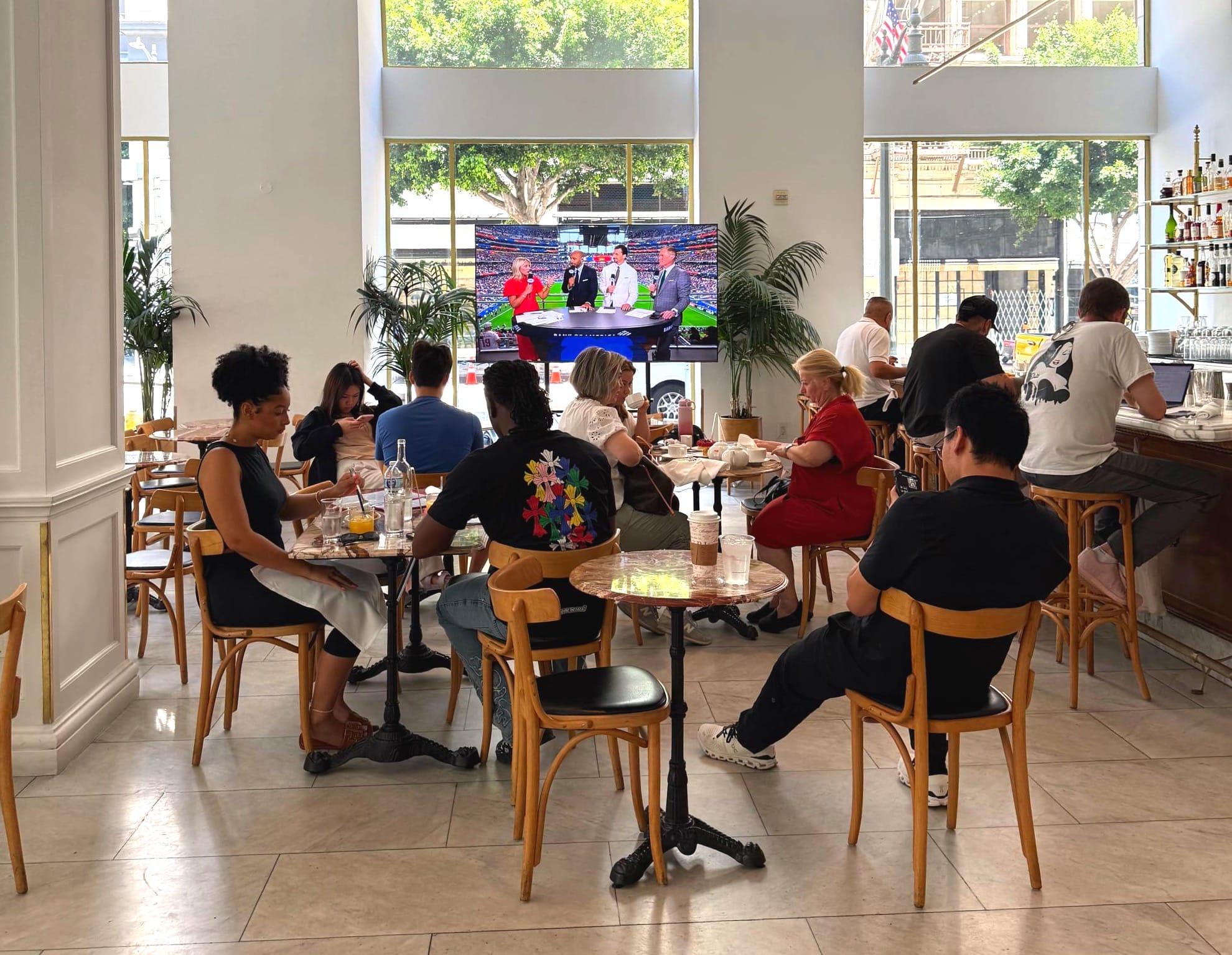
Some of the temporary viewing experiences were quite fancy. I saw a lot of branded wraps and screens outfitted with stages, prepared for the inevitable after party. And then there were the places I never, ever thought I'd see soccer. I wrote last month about seeing watch parties crop up in unexpected spots like museums and libraries. For 39 days, so many establishments that had previously eschewed televisions suddenly sprouted big screens.
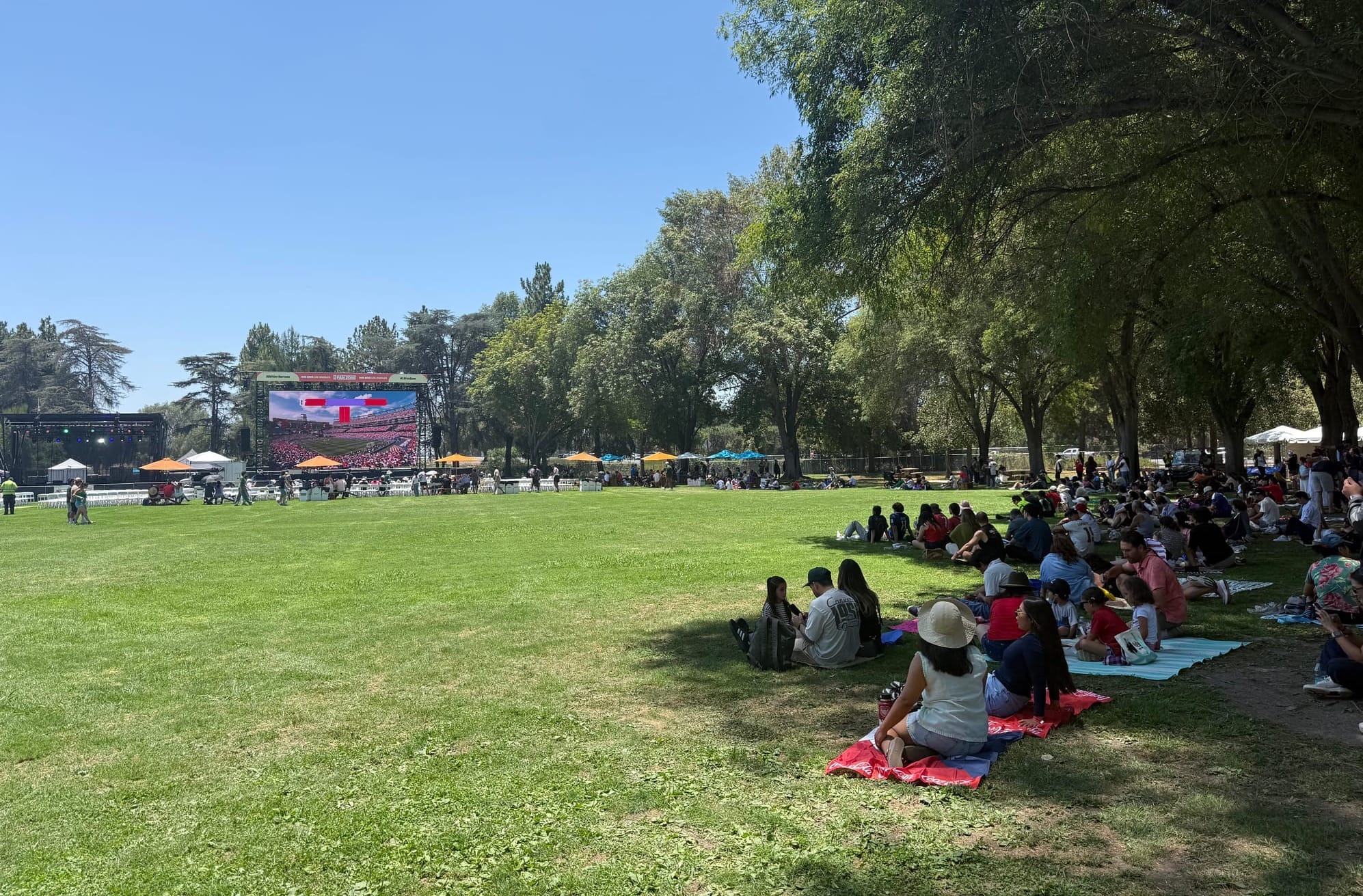
Size mattered for large crowds, but so did the screen itself. With so many daytime matches, the typical ways we might show video in public — projection on walls or screens — just wouldn't cut it. Giant LED screens were in high demand. I got good at spotting the most popular extra large version: a 37-foot by 32-foot behemoth that fan zone organizer Aaron Paley dubbed the "drive-in screen."
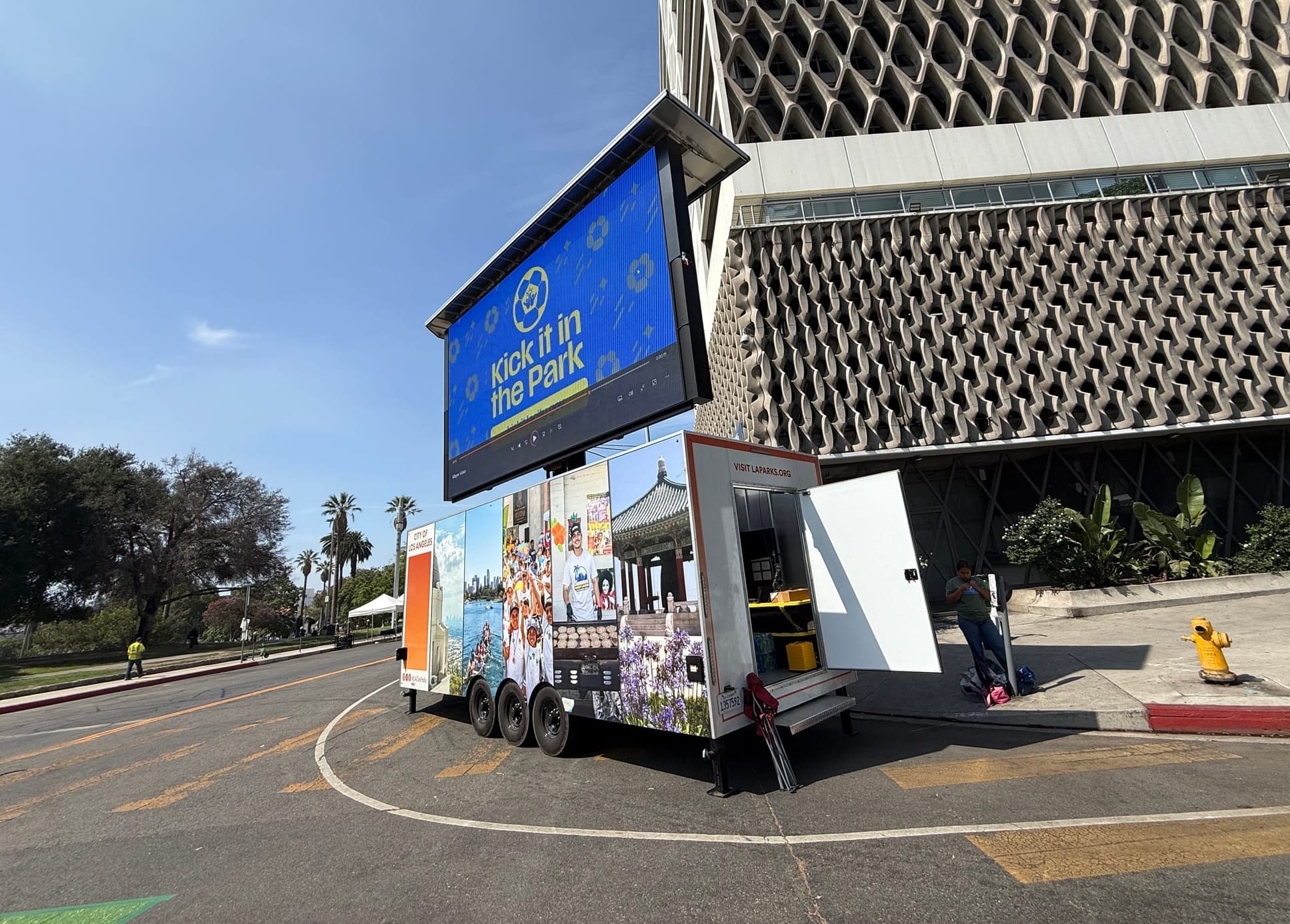
But as World Cup screens went, nothing topped the pure delight of seeing LA's parks employees roll up to the city's free watch parties in their branded trailer which telegraphed an LED monitor from its roof like a municipal Transformer.
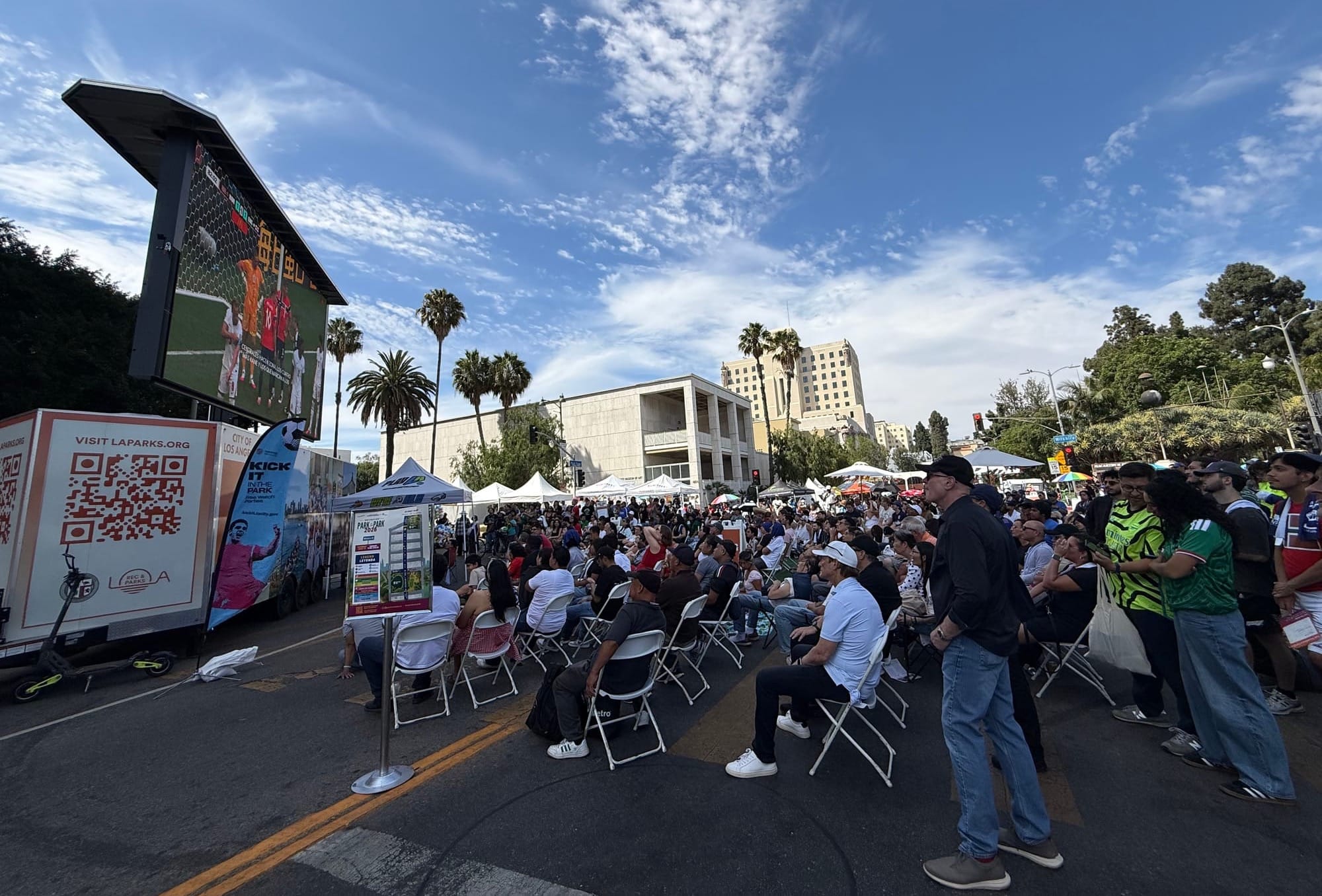
I was so intrigued I met the team at the next MacArthur Park Kick It in the Park — okay, this one was not technically in the park, but on the adjacent Park to Park open streets event — to go behind the scenes.
As a special event coordinator for the city's parks, Cesar Valera oversees the programming at Pershing Square. He had long wanted to invest in high-quality mobile screens to complement the park's programming, and a few years ago, he saw a promising model demonstrated at a parks conference in Nashville. When conversations about the World Cup rolled around, Valera reached out to the company, named Insane Impact (now named Musco), to dream up what LA's viewing experience might look like. "It's all customized," he tells me. "Normally they're just on flatbeds, and the screen is exposed. We wanted something a little bit more secure, so they created this custom encasement." LA's model is a 23-foot by 13-foot screen — actually it's two screens that are latched together — hoisted up using a hydraulic system that's installed inside a 35-foot trailer. Setting up the whole situation takes about 20 minutes.
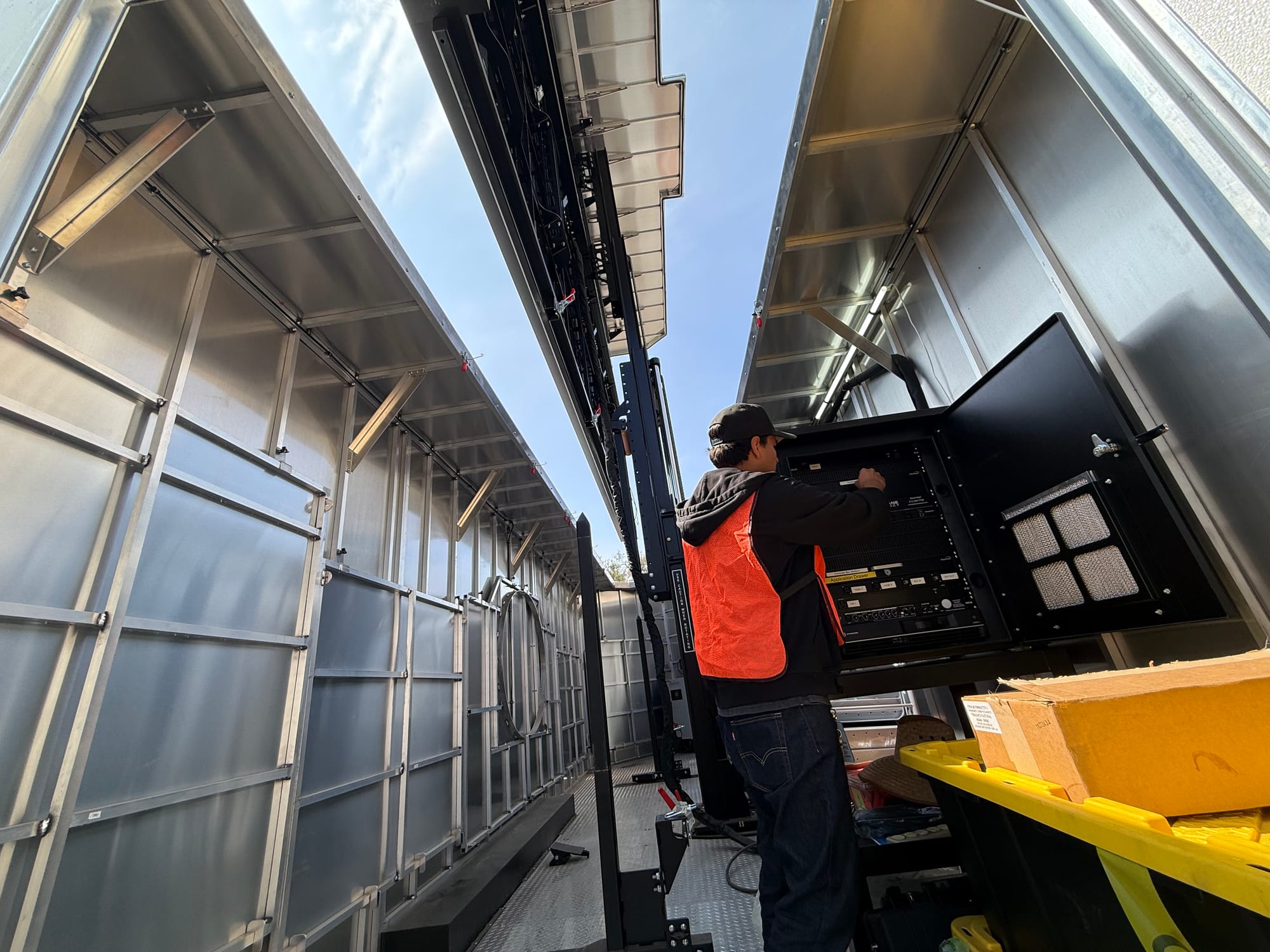
A total of four screens have been scooting around the city for the past month. Each evening, the trailers go home to the Rec and Parks yard in Atwater Village, where they're charged overnight. By Sunday, Kick It in the Park will have ended up showing over 100 matches on all 34 days of competition at 19 different parks — that's roughly three screens at three different parks per day, but on some occasions, all four screens have hit the road.
As we stood in the middle of Wilshire watching the team do a tech check, Valera and I kept marveling at the video quality — even in the bright morning sun. "Even when the sun's hitting it directly, you'll still be able to see it pretty well," he says. "On average, I think we we're only about halfway on the luminosity, maybe 60 percent. We've never gotten to 100 percent. So even with that 60 or 65 percent and the sun hitting it, you're still crystal clear." The sound, from built-in speakers on either side, is also excellent — and they haven't turned the volume all the way up either.
At the beginning of the tournament, each park would play three matches per day, supplemented by cultural programming, soccer clinics, giant inflatables for kids to tackle, resource fairs, and food vendors. But as the tournament went on, with only one or two matches per day, the long programming gaps meant people didn't have as much to do. At MacArthur Park, the versatile screen provided an easy solution: parks staff plugged in an Xbox and let fans play soccer against each other.
For Valera and his team, he sees the screens expanding their roles as city employees to bring their communities something they normally wouldn't be able to experience in public. "Seeing a world event right there at their doorstep, and they don't have to worry about whether they have a subscription to Fox," he says. "It's the middle of summer, we're here in the middle of LA, right in MacArthur Park, with this giant screen. What's a better way to spend a Saturday?"
And yes, of course, this is all a pilot program for 2028, where watch parties will be even more logistically complicated due to the sheer breadth of events. While your mind might also immediately go to the Super Bowl or our imminent World Series three-peat, these screens don't only have to show sports. Imagine the possibilities for cultural festivals, after-school programs, summer camps; imagine when movie nights no longer have to be at night! And while these screens are for the city, the parks department could also rent them out to anyone — revenue our park budgets would certainly welcome — which Valera was totally open to trying.
In a city besieged by megaevents that's desperate for basic parks funding, the question remains: are we putting this money in the right places? These types of screens cost around $250,000 each, plus the additional funding to host the watch parties themselves, and the staff needed to move and monitor the screens. (Don't worry, I'm getting a full list of all these World Cup costs.) Buying the screens outright instead of renting them indefinitely is how the city should be planning long-term — including building municipal capacity when it comes to training experts to operate them. And if these four screens are bringing tens of thousands of people out to our city's parks, this may already have proved to be a smart return on investment.
So — what's on next? 🔥
 Alissa Walker
 Alissa Walker
 Alissa Walker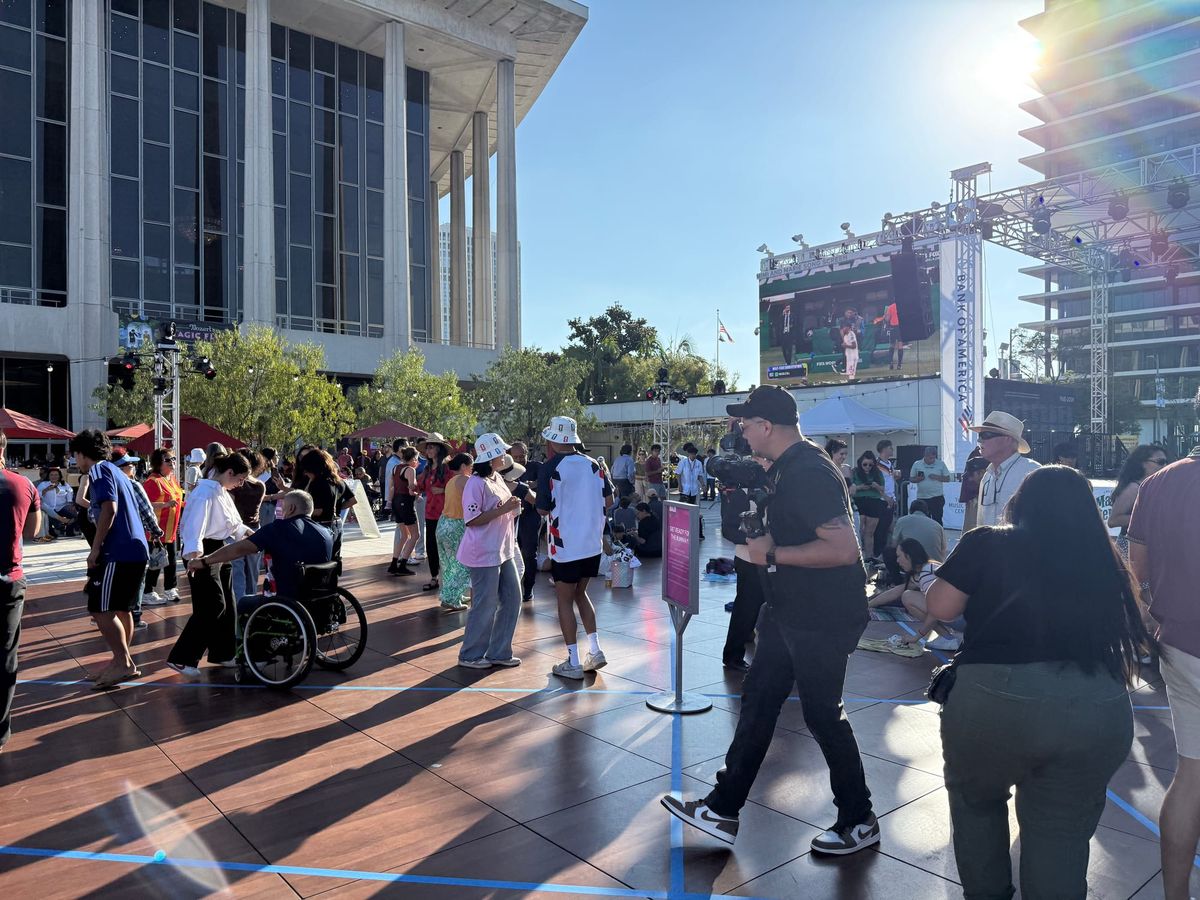
 Alissa Walker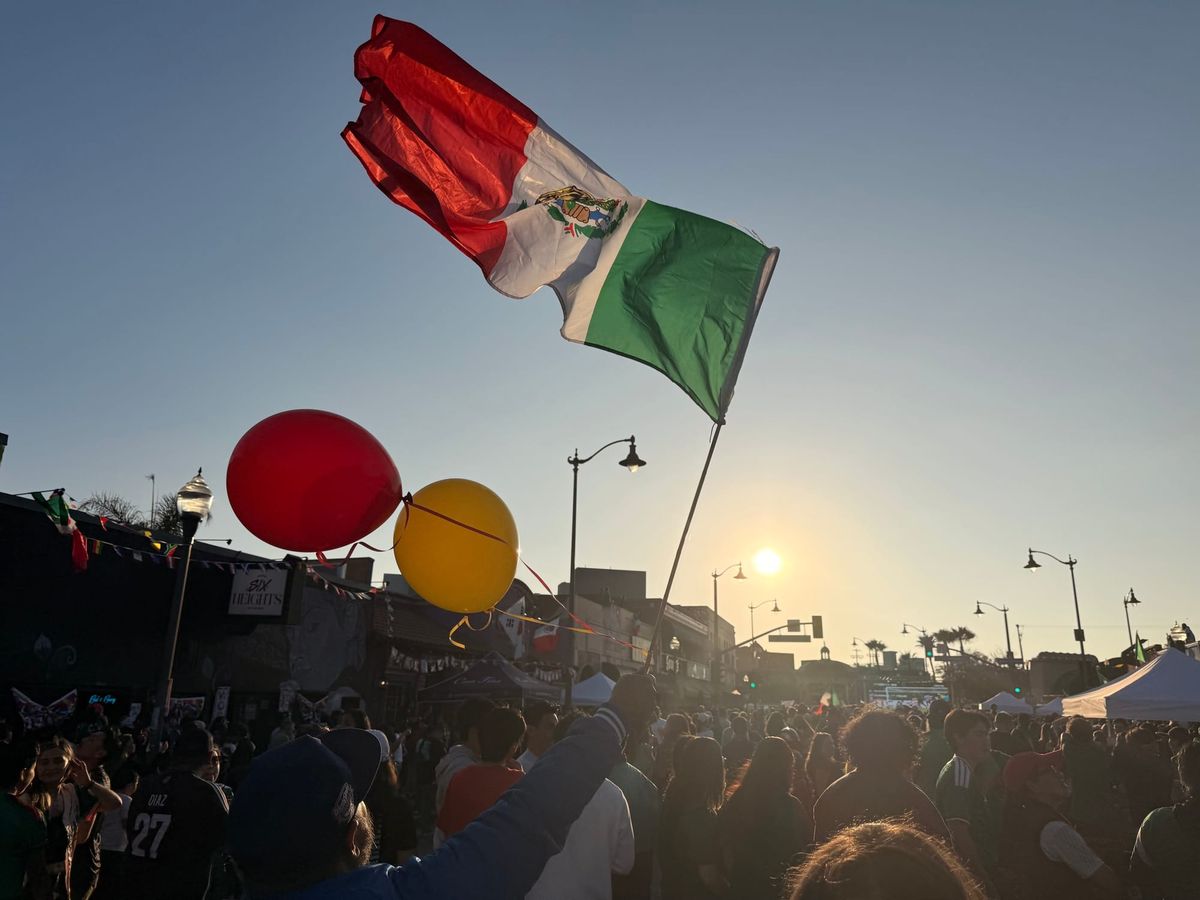
 Alissa Walker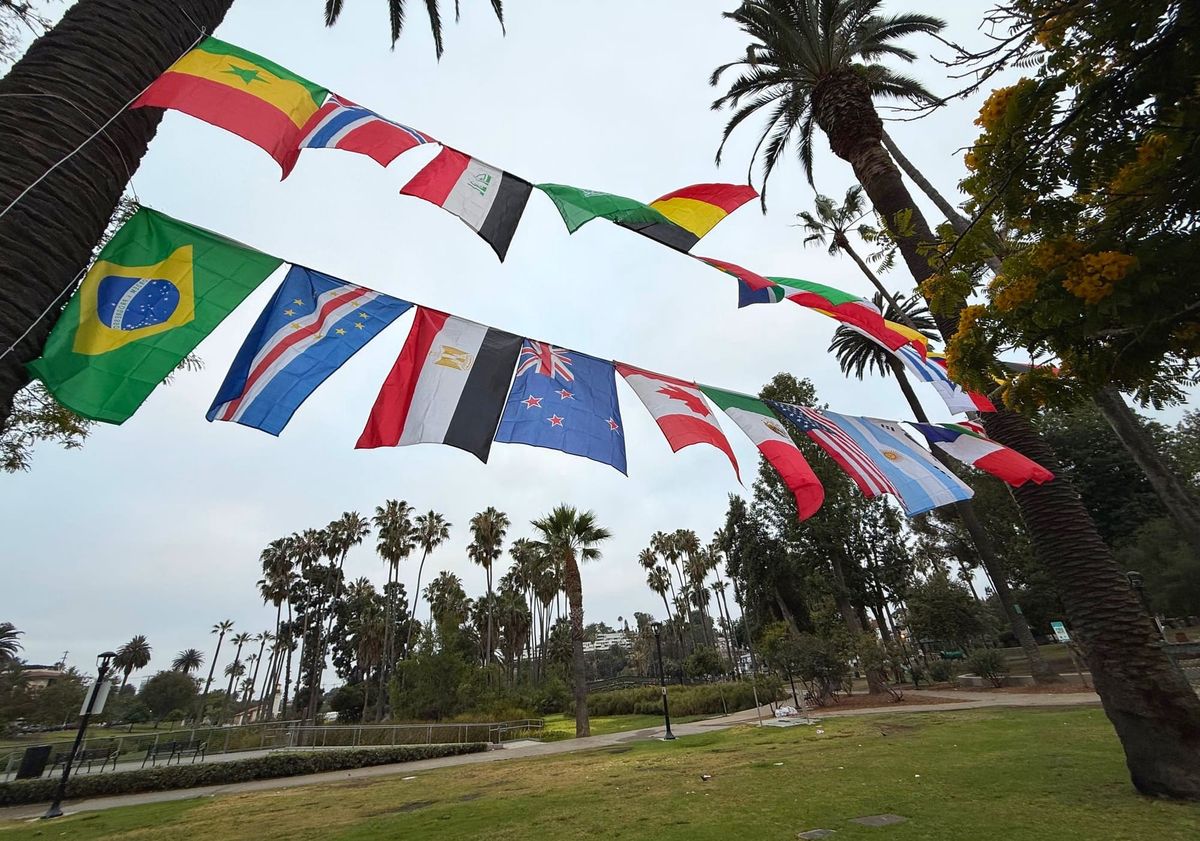
 Alissa Walker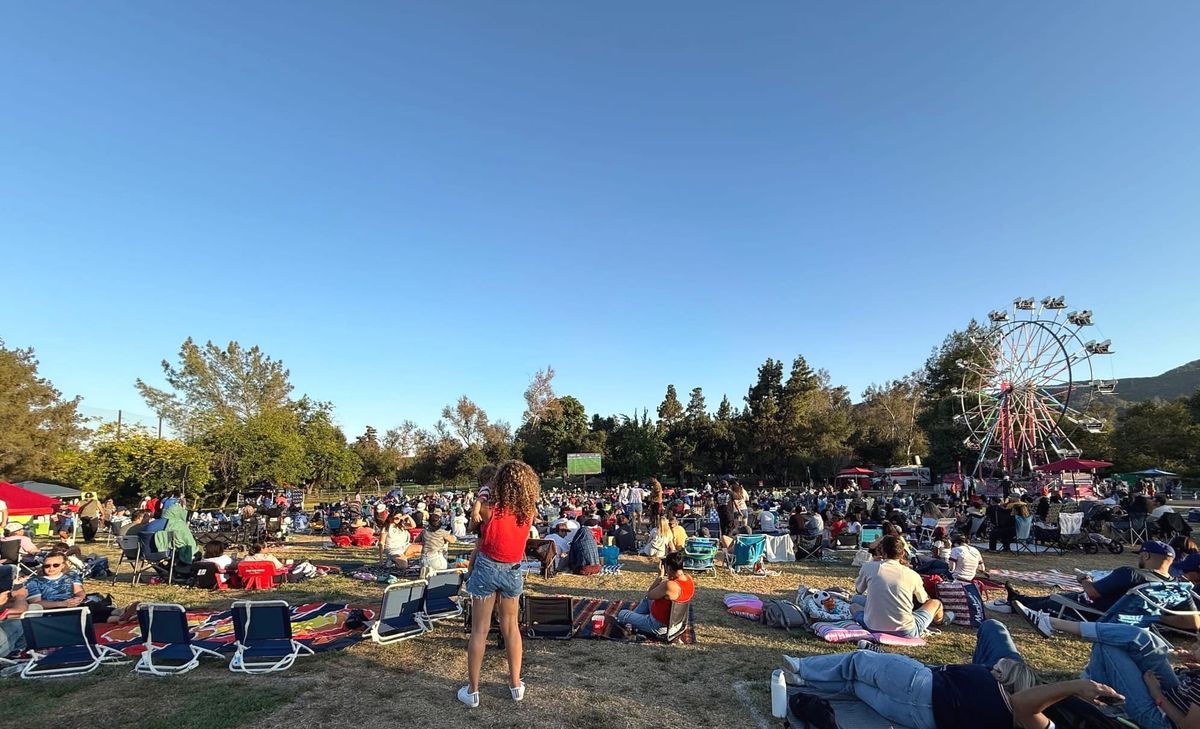

And 38 more reflections on LA's summer of soccer

This isn't like rebranding a soccer field for the weekend. When it gets hot, Angelenos rely on pools to survive


As we reach the midpoint of our World Cup journey, here's my survey of the best of LA's celebratory urbanism