
Hot Links for this week
Early access for paid subscribers! Everyone else gets the latest news at the end of the week
Early access for paid subscribers! Everyone else gets the latest news at the end of the week

A hurricane canceling a 30,000-person megaevent demonstrates the future that's coming for us
This mayoral endorsement is setting up an even bigger fight about who will stand with workers as they turn the heat up on LA28
We always knew these megaevents weren't going to fix our public spaces, but we didn't expect our councilmembers to abandon them as well

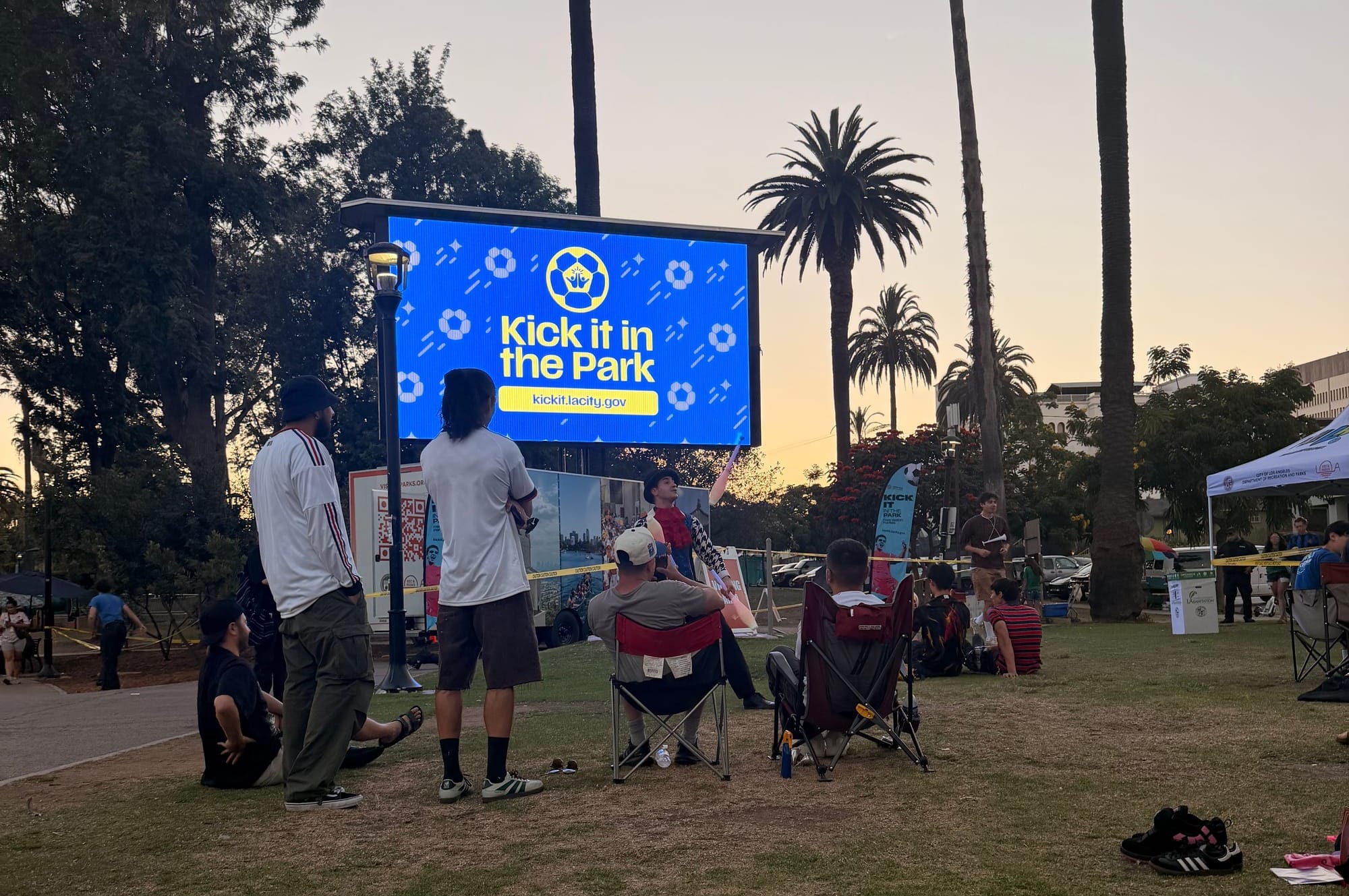
Echo Park Lake was ready to welcome the world. The big screen was hoisted atop a Recreation and Parks-branded trailer, set to broadcast the inaugural Mexico vs. South Africa match. The grass had been recently reseeded. The gardens handsomely mulched. Even the pathways seemed less saturated with goose poop. Standing on an astroturf-carpeted boardwalk before last Thursday's game, LA Mayor Karen Bass talked about how megaevents would bring even more legacy improvements to the city's parks. "I'm focused on ensuring that Angelenos benefit from these once-in-a-generation sporting events like the FIFA World Cup in LA for generations to come."
As one of 19 city parks hosting Kick It in the Park, the city's 100 free watch events, Echo Park Lake has become a World Cup hot spot — over 800 people showed up to watch Lionel Messi's hat trick last night. But a peek behind the party prep reveals a park fraying at the edges. Even LA's most highly resourced public spaces are falling apart due to staff shortages, slashed budgets, and $2 billion in deferred maintenance. And for the 400 or so city parks that weren't picked for watch party spiff-ups, this will be a particularly cruel summer. Torched readers are well-versed in LA's declining park status: in the Trust for Public Land's annual rankings out last month, LA has fallen to 93 out of 100 U.S. cities. That's 15 spots LA has slipped just during Bass's tenure alone.
At Monday's LA City Council rules committee meeting, Sakae Koyama, co-president of Friends of Elysian Park, recited the year-by-year tumble in rankings to audible gasps from the chambers. "Pretty soon we're going to be off the charts," she said. "And not in a good kind of way."
Lack of investment is the single-largest reason for LA's slumping park scores, says Los Angeles Neighborhood Land Trust executive director Tori Kjer, who also spoke at City Hall on Monday. "LA spends $92 per person on parks while peer cities average $283." That's why, for two years, park advocates mobilized to get a funding measure on the 2026 November ballot to avert a fiscal crisis. But then the council — which allowed the previous parks funding measure to expire without a replacement — didn't approve the measure for the ballot, despite sponsoring a needs assessment that showed the city exactly how and where to spend the money. Luckily, another funding mechanism was recommended by the city's charter reform commission: doubling LA's parks department's budget allocation from .03 percent (where it's hovered for nearly a century) to .06 percent, mirroring a similar allocation for the city's libraries. This week, councilmembers are set to reject that recommendation as well.
We always knew these megaevents weren't going to fix our public spaces, but we didn't expect our councilmembers to abandon them as well. The contradiction stings as money pours into our public spaces via brand activations — Nike throwing a soccer party in the empty Griffith Park Pool was a particularly wrenching gut-punch — leaving behind dubious benefits. The original Summer Olympics bid promised "new community green spaces" for LA, but the only guaranteed legacy coming from LA28 — youth sports lessons — actually expires in 2028. Even the details of LA's World Cup legacy program with U.S. Soccer, announced by Bass last week, are perplexingly vague: "strengthening youth soccer opportunities and supporting affordable, community-based programming." (A previous "investment" by U.S. Soccer in partnership with World Cup sponsors Adidas and Kaiser Permanente resulted in an asphalt — yes, asphalt — soccer field at an LAUSD school.)
But programming can only go so far when all the other elements that make parks actually function — grass, rec centers, public bathrooms — crumble into dust. I suppose, with that extremely overdue city service agreement still not in place, LA's leaders could attempt to force LA28 to fill in those gaps in our park system as a condition of hosting a "once-in-a-generation" sporting event. But the next best thing would be to properly fund LA's parks right now — something council would truly be doing for generations to come!
The Fund LA Parks coalition will be back at City Hall today, urging council to advance a budget allocation compromise of .0485 percent — about $175 million per year — but that's still not nearly enough, Kjer told me. "We'll still be 93rd. We're not going to move up that list," she said. "We need double that amount to be a high-functioning, thriving system that has facilities opening all weekend and providing programming that our children need during the summer."
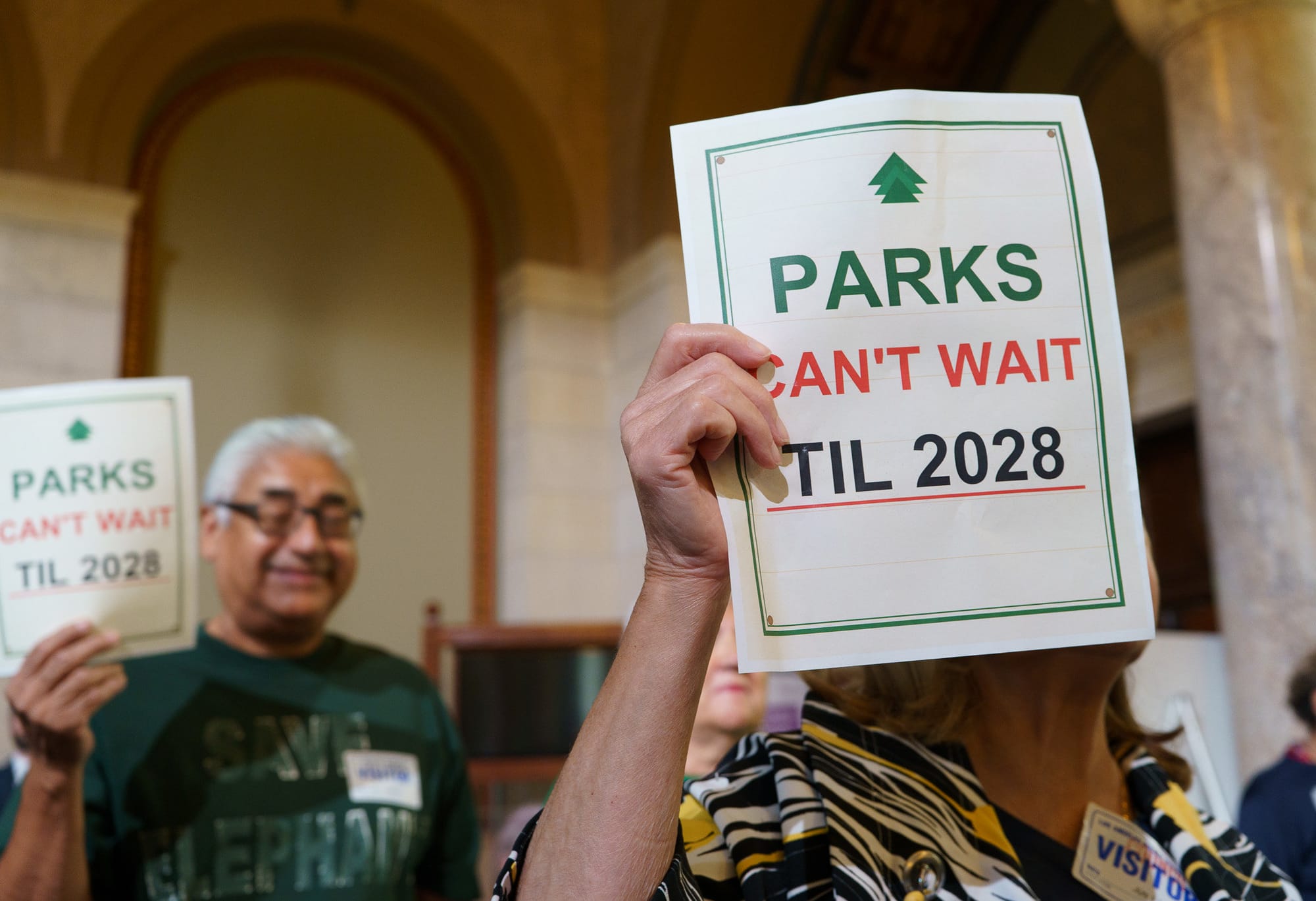
During last week's hearings, advocates held up signs that read "Parks can't wait until 2028," a reference to council delaying adequate funding for two additional years. But that particular date felt ominous for another reason. What happens when you foist yet another stressor on a park system that's ready to break? We ask so much of our parks in an era of climate change, homelessness, pandemics, the invasion of the federal government — just one year ago, agents marched across the same MacArthur Park soccer field currently hosting watch parties — and now we're subjecting them to two years of megaevents? LA's park staff is, once again, holding the city together, said Adan Pulido, a Recreation and Parks employee who testified during public comment last week. "Let's do right by Angelenos and make this investment back into the same communities that elected you into your current positions," he said, to applause. "RAP is more than the backbone of community-building through people and programs. We always rise to the task when asked." 🔥
Update: I can't believe I'm writing this, but somehow 14 councilmembers did the right thing and voted to double the parks department charter allocation, as recommended by the charter commission. There's still so much work to be done. (PLEASE, ALL COUNCILMEMBERS, READ THE PARK NEEDS ASSESSMENT COVER TO COVER, AS I DID.) And this will need to be approved by voters, of course. But what a win for advocates. See the whole conversation, which is very worth watching.

And 38 more reflections on LA's summer of soccer


This isn't like rebranding a soccer field for the weekend. When it gets hot, Angelenos rely on pools to survive
