
"The surf took the beach we planned this on"
A hurricane canceling a 30,000-person megaevent demonstrates the future that's coming for us
A hurricane canceling a 30,000-person megaevent demonstrates the future that's coming for us

This mayoral endorsement is setting up an even bigger fight about who will stand with workers as they turn the heat up on LA28
The point of the hearing was clearly to elevate the lawmakers' pleas for $2 billion in federal transportation funding requests
The CIP is really about building a whole new city

There's a little song I like to sing to myself as I stroll around Los Angeles. Broken sidewalk? The CIP would fix that. Missing curb ramp? The CIP would fix that. Dead trees? The CIP would fix that. Dangerous street? Disheveled park? An entire block of darkened streetlights? The CIP would fix that. The CIP would fix that. The CIP would fix that.
My walk to the bus stop on Monday morning was no different. But this time I was headed to City Hall for the official launch of LA's CIP, or capital infrastructure program. Yes, as many people just learned Monday — welcome to our nightmare! — the second-largest city in the U.S. does not have a long-term strategy to plan, budget, and deliver infrastructural improvements. Let me explain that in a different way. Everything you see that needs to be fixed? There's no plan to fix everything you see that needs fixing. Let alone a plan to maintain — clean, paint, trim, sweep, power-wash — what we already have. Let alone a plan to build something better in its place. Yes, it's true that every other big city in America has a capital infrastructure program, said Councilmember Tim McOsker at the press conference. "But you know who else has one? Every small city in America."
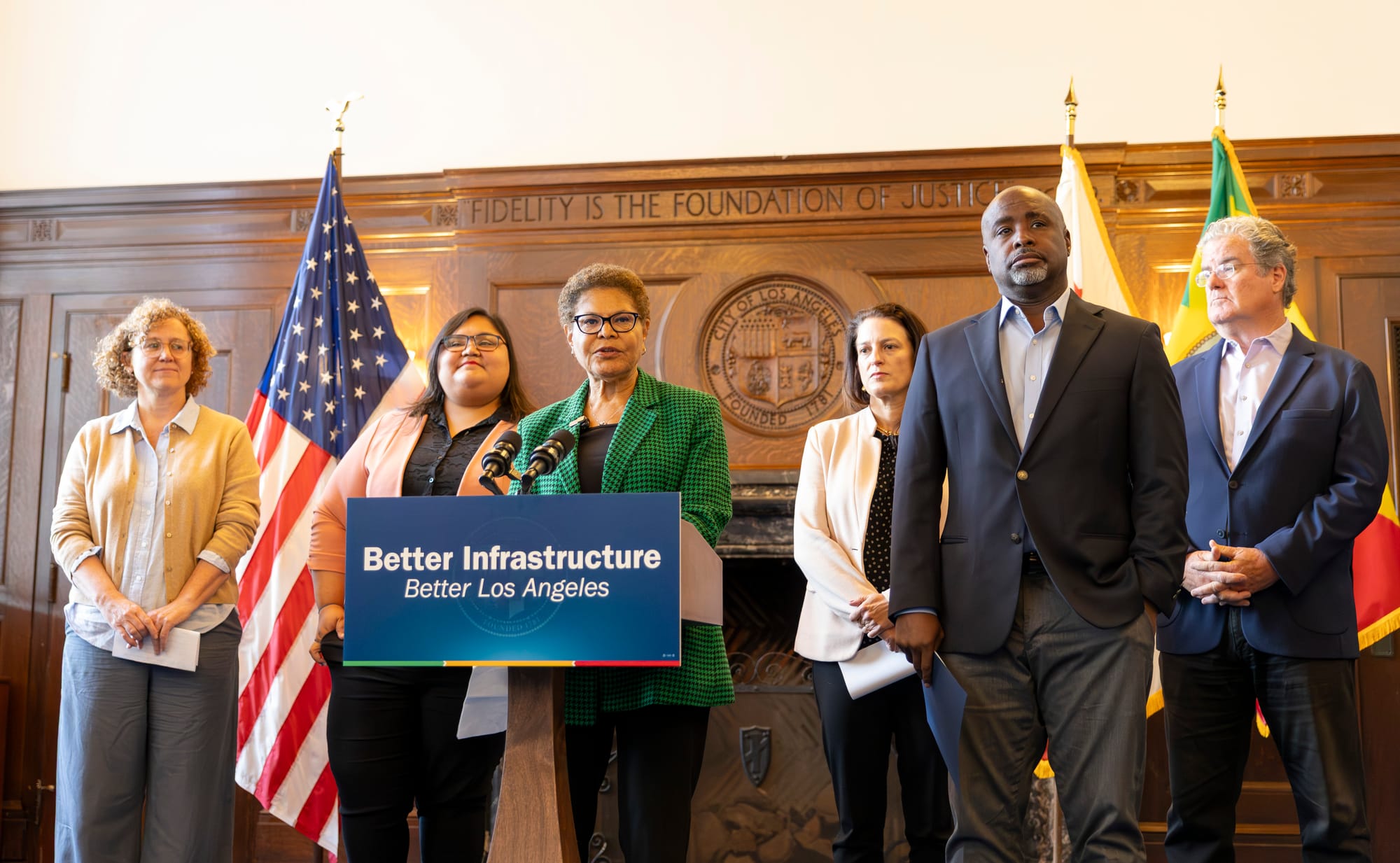
In many ways, the scene that unfolded Monday morning at City Hall was astonishingly cathartic. One by one, five CIP-pilled (CIP-illed?) councilmembers and Mayor Karen Bass agreed: LA's entire system was broken — and so was the trust in the city. "I've heard from Angelenos all across the city about how they essentially don't trust City Hall to fix our infrastructure," said Bass. "How can you trust someone when you don't even know what they are doing and what is being built?"
The timing for such an announcement seems critical. As ballots arrive in many LA city mailboxes proposing to charge property owners hundreds more dollars each year to repair broken streetlights — more on that soon, I promise — Nextdoor forums are filled with property owners saying they're not giving the city a single cent to turn them back on. The city is literally falling apart. There's no overriding vision for changing that. Of course infrastructural trust is at an all-time low. The CIP would fix that.
"A capital infrastructure program is not just a list of projects, it's a commitment to budget ahead; to care for LA. You can feel it when the sidewalk is even, the streetlights work, there's shade at the bus stop, when public space feels clean and cared for," said Investing in Place's Jessica Meaney, who has been working on this issue for two decades, as she stood with the mayor and five councilmembers Monday. "Today feels hopeful about how we all take care of Los Angeles."
Where to begin? I sat down with Geoff Thompson, the mayor's director of capital infrastructure, who oversaw the process kicked off by Bass's Executive Directive 9 in October 2024. The first step was getting all the departments on the same capital planning system — would you believe LA, with our circa 1994 websites, wasn't doing this? — and merging all the project lists into one central database. "Half of what we're doing is really just better communicating what we are doing today," he told me. "We can't make the argument that we need more funding unless we're much more collaborative."
To get the CIP started, the team started by populating the inventory with projects that are being prioritized and/or accelerated for 2028, which is why this first iteration is being called the Games CIP. Repeat: the first CIP is only the list of 29 Olympic and Paralympic legacy capital projects that departments have specifically prioritized, per another executive directive, Bass's "Games for All" ED 16. Even if something else not-games-related is on track to be completed before 2028, it won't show up here yet. (Whether or not these are the 29 projects that should have been prioritized is something we can and will have a conversation about later — but now at least we have them all in one place.) The idea was to work with a set, finite, and mostly funded list of projects — 16 of the 29 capital projects are in the 2026-2027 proposed budget— because establishing the real, citywide CIP will require creating a set of scoring criteria, a process that's still underway, that determines which projects get prioritized going forward.
But we do have one extremely key deliverable in place. I present to you something the city has never had before: a digital map of infrastructure projects across all departments.
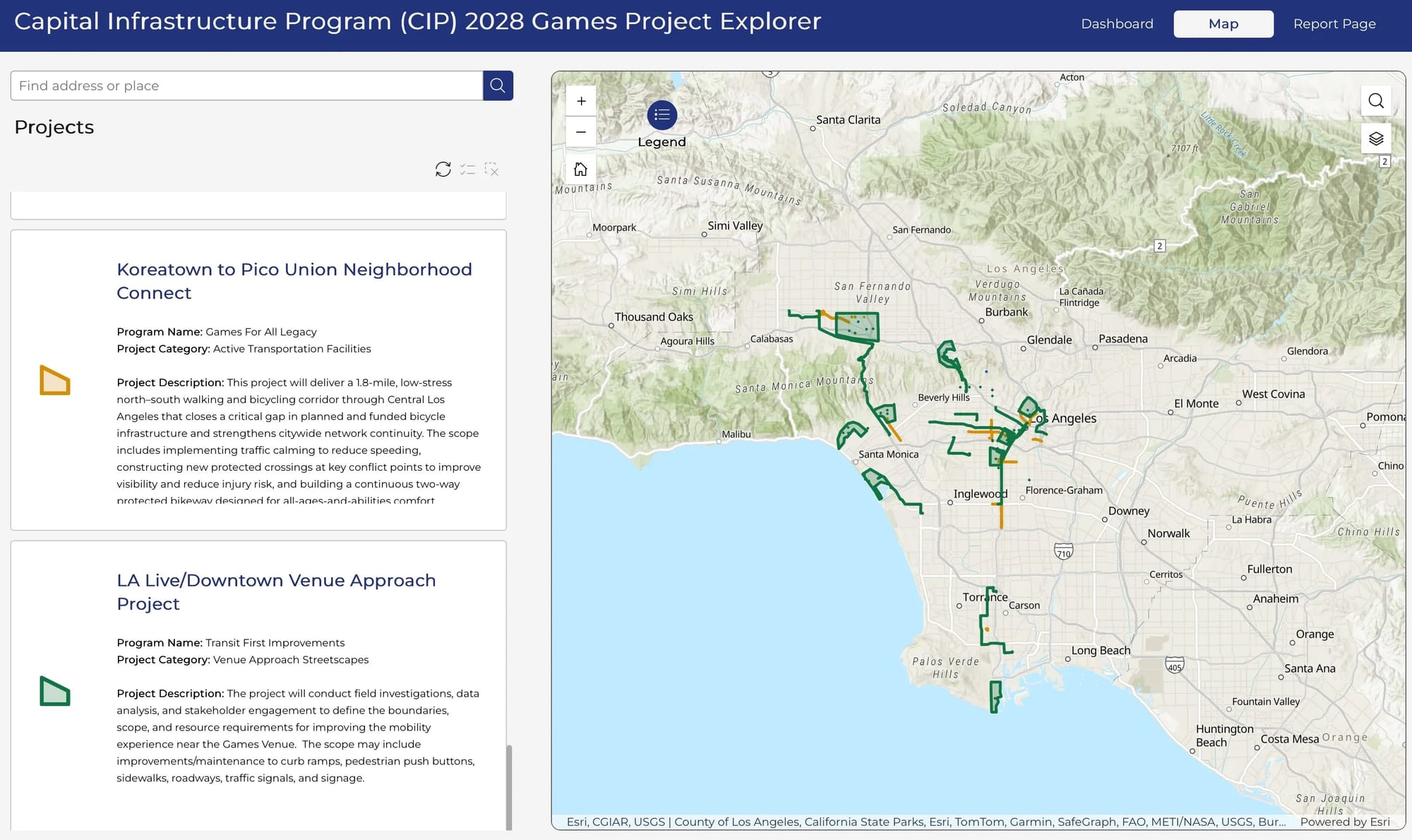
What's so exciting about having each city-managed project on a map like this is that you can finally find out what's happening near you, with the project's goals, how it's funded, and when to expect its completion — information that our own leaders do not currently seem to possess. At the press conference, the five councilmembers expressed dissatisfaction, frustration, and what I'd even describe as bewilderment about the way infrastructure is built, repaired, and maintained — in their own districts.
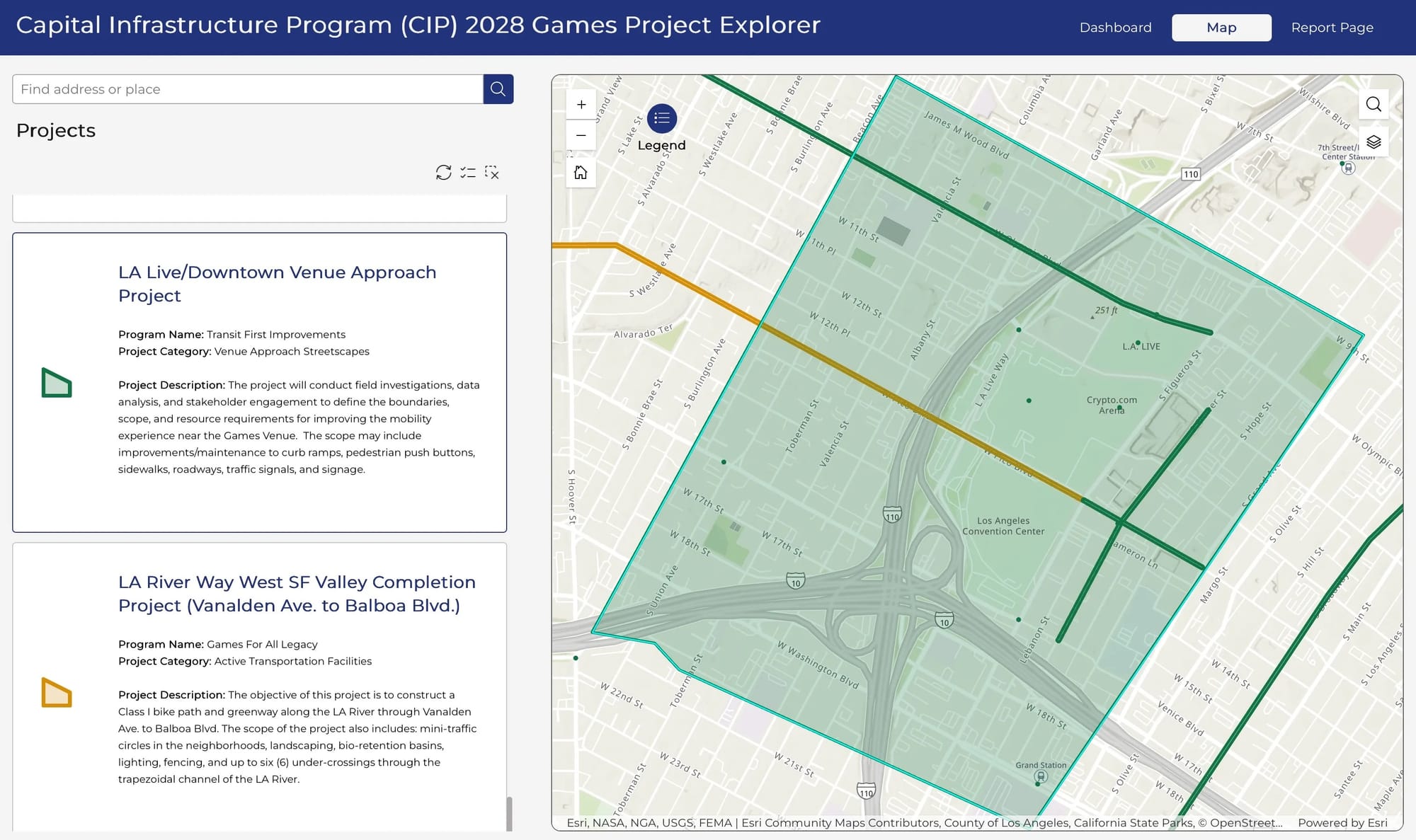
Now councilmembers can share insight with their constituents about why certain projects are moving forward — or years behind schedule — and, more importantly, constituents can have direct access to the same information to hold the city accountable. When this database is fully populated with all city projects, as well as the scoring criteria, it will be easy to see what's advancing — and why.
BUT THAT'S NOT ALL! Each project also has a report page. Earlier this year, Westwood residents started reaching out to me, asking why the city was prioritizing certain sidewalk repairs over others. And now everyone can easily find the answer — they're part of the improvements being made around the athletes' village at UCLA.
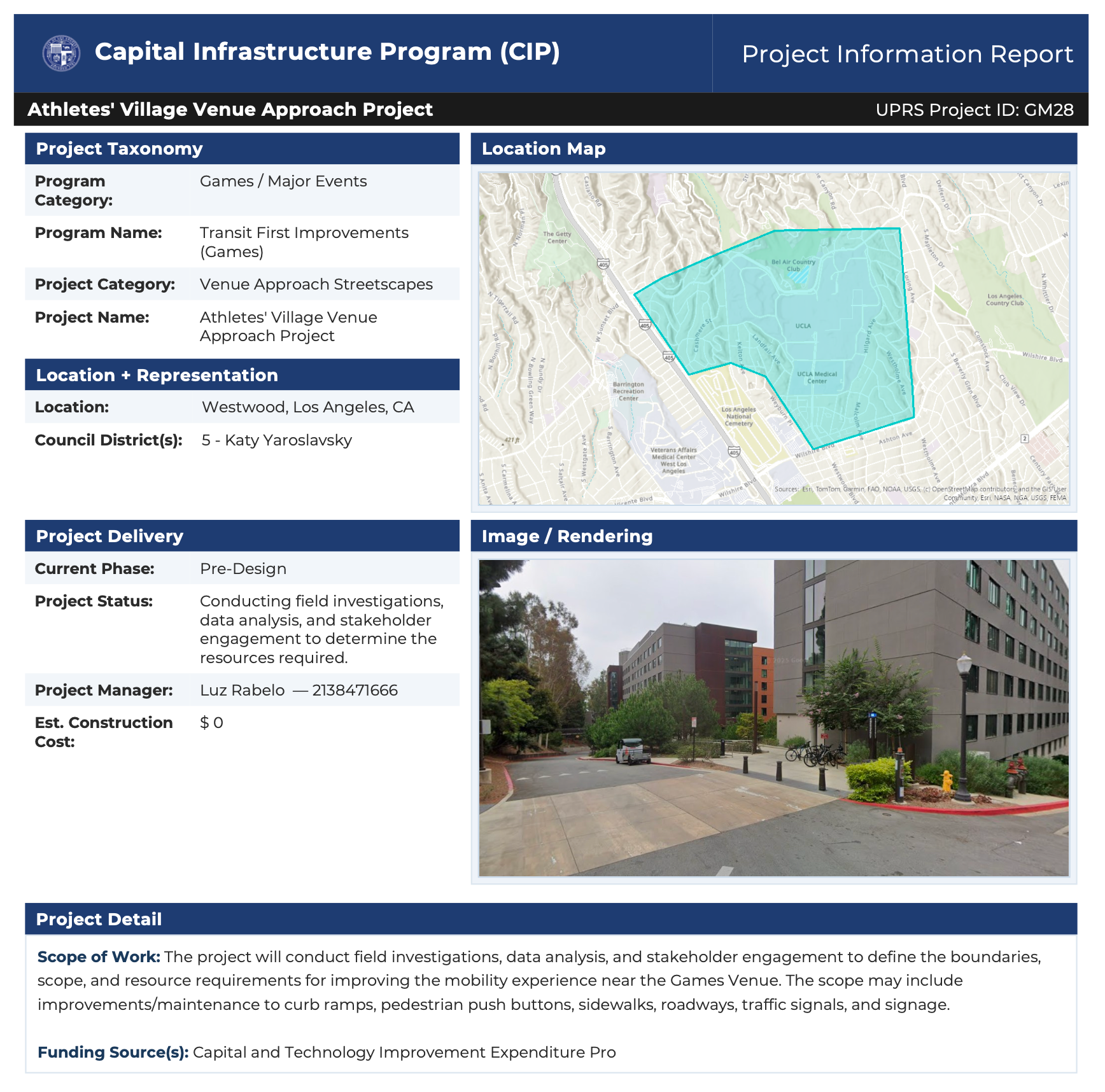
This, a modest PDF, might be the most crucial tool for LA to restore that infrastructural trust. But, please, don't let these only live on the internet. Print these babies up and post them publicly wherever the city is making infrastructure upgrades!
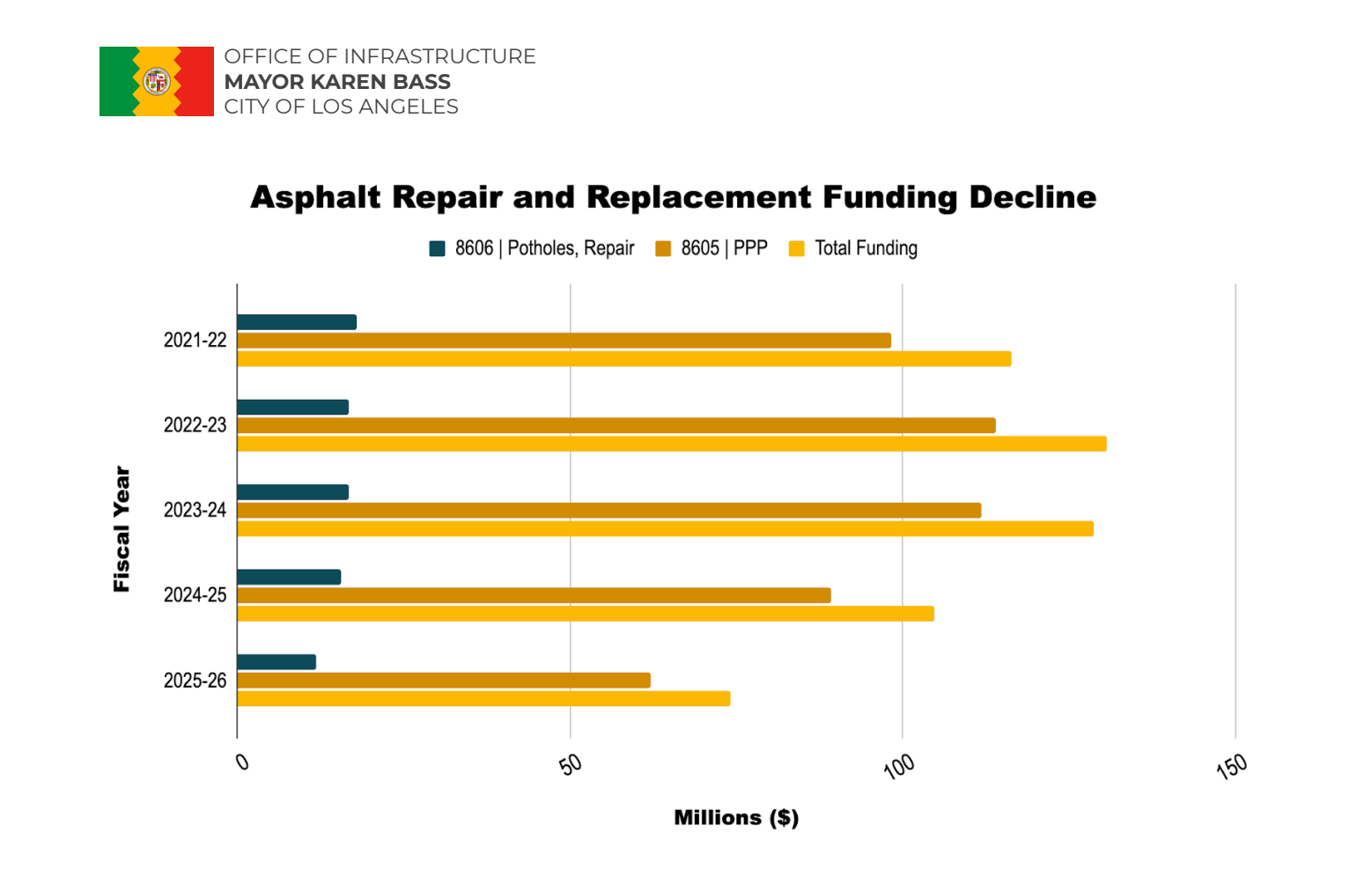
The other big milestone from Monday's launch is an asset inventory, and that's why I recommend reading (or bookmarking) the 565-page appendix, which includes a very helpful glossary of each and every "asset class," or type of infrastructure the city manages. The city did 73 asset class reports — fixed street bathrooms, my favorite category! — and the last time we did this was 30 years ago, which explains a lot. But this is another really important transparency tool. Basically if you've ever had a question about which department manages what part of the public right-of-way, or where the funding comes from to fix it, or who actually does the maintenance work, your question will be answered here. Plus you can read a lot of very depressing statistics about how much our service levels have declined in just the last five years.
And when it comes to reporting what needs fixing, that's a whole different issue that needs to be addressed. Many councilmembers tap into their own discretionary funding to prioritize certain fixes based simply on who yells at their staff the loudest — something a good CIP would, hypothetically, stop from happening. At the press conference, I asked about the problems with the city's 311 app discussed in council last week. (I believe I proudly called myself a 311 "superuser.") Councilmember Eunisses Hernandez, who chairs the public works committee, said that her committee is focusing on improving response times to certain priority areas like trash and graffiti. But ideally, these 311 requests would be public-facing and connected to the CIP feedback loop, creating this virtuous circle of infrastructural trust. When you report a streetlight out, you'd get an immediate response from the city about how long it will take to fix it, be able to clearly see on that map where it's prioritized in relationship to other fixes, and watch the fix happen — all in real time.
The next CIP steps are going to be a heavy lift. The full report proposes citywide guiding principles as well as 10 recommendations for changing city operations, many of which must be made through the current charter reform process. All of this is building towards a likely 2028 ballot measure where the city will present the plan to voters along with a strategy to keep the CIP adequately funded. And this is why project delivery for the Games CIP will be so critical, said Thompson. "It's really showing the voters where investments will be made for the games, but then building the momentum with council."
On Monday, Bass's CIP talking points were excellent — but where have they been the past four years of her term? Getting all LA's departments on the same page has got to be at least as difficult as, say, completing a transit connection to the airport on time, but these recommendations were supposed to drop six months ago, ahead of the budget process, per the CIP committee's schedule. Whether this particular announcement was expedited to occur just before the June primary, after more mayoral challengers entered the race, well, I guess we'll never know! But this step also means any CIP forward movement will outlast an executive directive of a single mayoral administration. And most importantly, we have now ventured beyond the abstract promises of a proclamation and into something more, well, concrete.
Because the CIP is really about building a whole new city. "Fixing what is broken cannot mean rebuilding the same system we inherited," said Councilmember Katy Yaroslavsky, also known as LA's badass budget chair. "Much of our infrastructure was designed decades ago for a different Los Angeles, one built around cars first. Los Angeles has changed. Our infrastructure has to change with it. That means repairing what has failed, while also building streets that are safer, cooler, more accessible, and better connected to the way people live now."
On my walk back from the bus stop I still saw everything that needed fixing. I still sang my little song. But something had changed. On my ride home I had read through the CIP executive summary. And it felt — for the very first time — like I was reading a blueprint for LA's future. 🔥
 Alissa Walker
 Alissa Walker

A notoriously anti-bike lane councilmember is using the "car-free" games to stop a fully approved 100 percent affordable housing development

Katy Yaroslavsky's words are about the city's convention center — but they are really about the city

LA's Park Needs Assessment provides a roadmap — or perhaps a well-shaded, native-planted pathmap? — for a department that's been asked to do more and more with less

What Angelenos need right now, more than ever, is a commitment to the spaces that we share with each other