
State of the art
In some ways, there are now three major cultural festivals planned for 2028 — and there will likely be even more
In some ways, there are now three major cultural festivals planned for 2028 — and there will likely be even more

You might not have noticed Burbank's new airport project flying under the radar because it went a lot faster than some other airport projects in the region
Hear from a Olympic and Paralympic expert on October 19 at noon on Zoom
Alan Rothenberg may have brought the World Cup to the U.S. in 1994, but he's also been outspoken about the risks that cities are taking on in 2026

When the World Cup came to the U.S. for the first time in 1994, it was thanks to Los Angeles lawyer Alan Rothenberg. As president of U.S. Soccer and chair of the organizing committee, Rothenberg produced a financially profitable tournament, surpassed previous FIFA attendance records by 1 million, and ushered in a new era for the sport with the establishment of Major League Soccer. Rothenberg also introduced innovations like the fan festivals, which became a FIFA requirement to make the World Cup more accessible to host city residents. And his new book, The Big Bounce: The Surge That Shaped the Future of U.S. Soccer, is an incredibly timely read as LA is a week away from hosting the 39-day megaevent in a very, verrrrry different political environment.
Rothenberg may have brought the World Cup to the U.S. in 1994, but he's also been outspoken about the risks that cities are taking on in 2026. And he's one of the few 2026 LA host committee members who is openly acknowledging that we've made a problematic deal with FIFA. (Hmm, sounds familiar to Torched readers!) I talked to Rothenberg about why that affects ticket prices, geopolitical challenges then and now, and how staging the soccer finals at the Rose Bowl during the 1984 Summer Olympics showed we could handle the 1994 World Cup crowds.
Torched: You've said this deal is not the same as the deal you made with FIFA in 1994. Can you talk a little bit about the differences between then and now?
Alan Rothenberg: It's a world of difference. In 1994, FIFA basically kept the major international rights — marketing and TV and sponsorships — and then turned everything else over to us. We created a company as a nonprofit, and ran everything. We had nine cities, but the people running those nine cities were our employees. There were host committees in those cities, but they were volunteers, and they gave us the rights to negotiate domestic television rights, certain domestic sponsorship with very lucrative and attractive categories, and sell tickets, but we were at risk on everything. This time around, FIFA is doing it themselves. There are 11 American cities, but each one is different, and FIFA is in control of each one.
Do you know that the public cannot see LA's agreement this time? When asked through records requests, they say it's not subject to records requests.
No, I was not aware of that.
Would that have been something that would have been done in '94? Would you have given it out?
[Laughs] As far as I know, no one asked.
I also don't think people really fully understand the way that the host committee works. We don't even know who's on the host committee. We only know the officers because of the way it's registered as a 501(c)6. You must know who's on it, but the public doesn't know.
And every city has a different committee, too, and they are not all made up the same way. LA is unique in this sense — well, we're unique in a lot of ways — but in this context, the FIFA requirement initially was a city had to enter into a contract with FIFA. Ten of the 11 American cities have done that. But in the case of Los Angeles, when the bid was being put together, Pasadena was requesting games at the Rose Bowl, and Inglewood was requesting games at SoFi. LA actually did not propose any games at the Coliseum, but trying to get a single city to sign on was impossible. The people preparing the bid for the U.S. knew FIFA absolutely wanted LA in there, so they made an exception for us, and we created a limited partnership, and that's the entity that actually entered into the contract. So, again, in terms of requests, I guess there's one set of rules if it's a city document, but this is a private entity document, and so the host committee basically has turned over the daily operations to LA's Sports and Entertainment Commission headed by Kathryn Schloessman, who's the CEO of it and doing a great job under difficult circumstances.
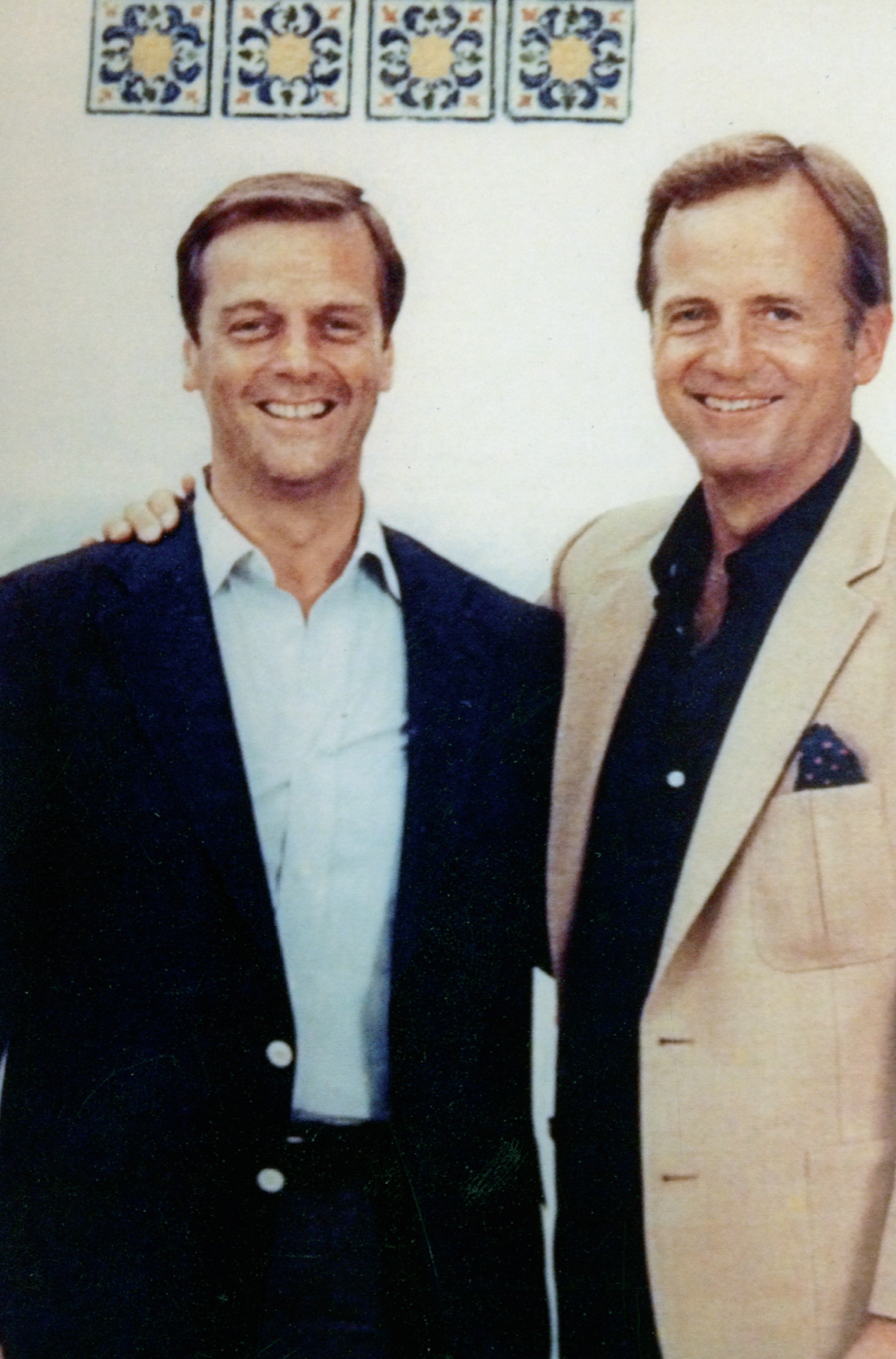
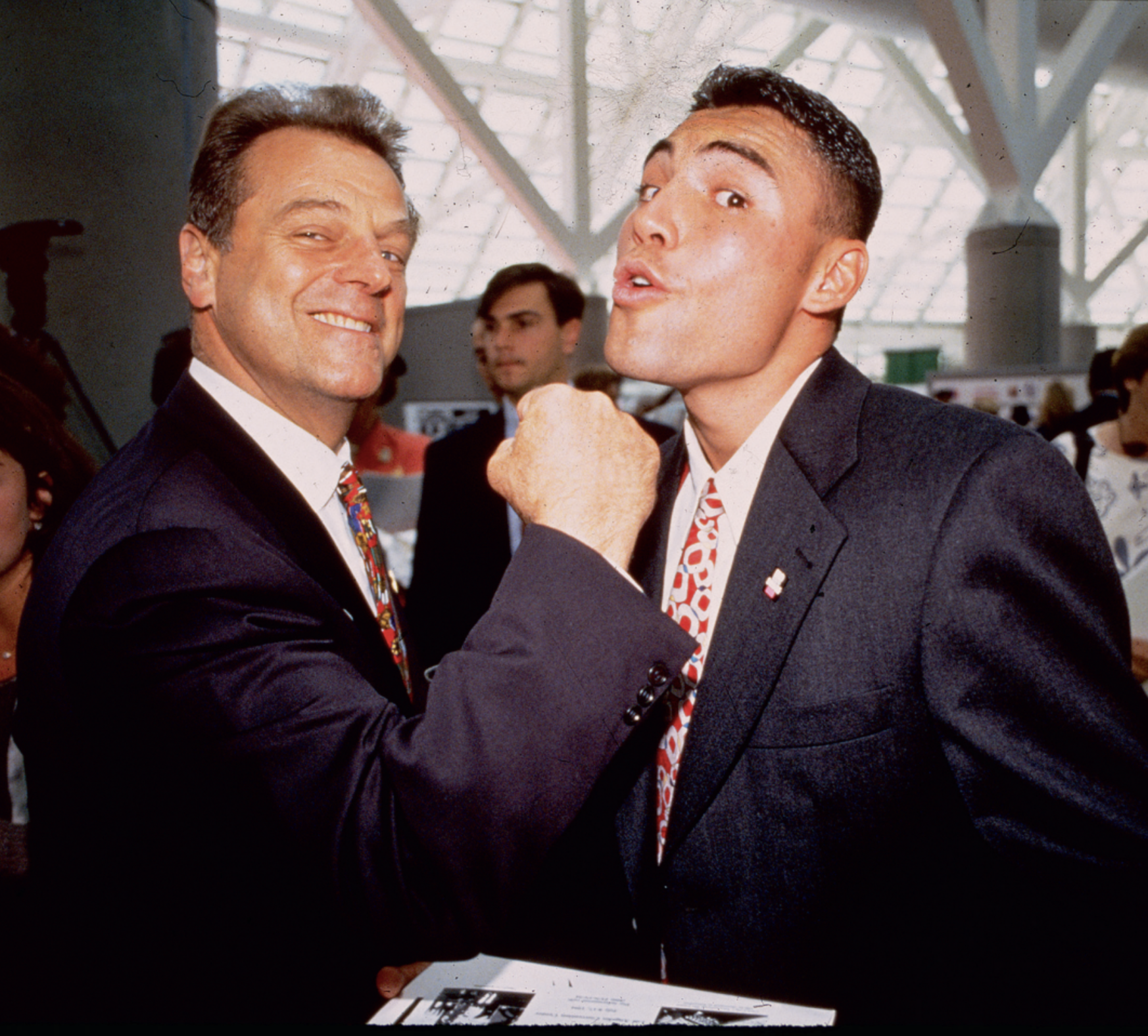
Rothenberg with Peter Ueberroth, who named him soccer commissioner for the 1984 Summer Olympics; Rothenberg with Oscar De La Hoya at the 1994 SoccerFest at the convention center. From Alan Rothenberg’s collection
So it's almost like LA got an exception because of who we are. Is that how you perceive it?
Yes, it did not hurt also that the person putting the bid together for the U.S. Soccer federation was John Kristick, who, before he took leave to do that, had been part of Premier Partnerships, which is a company that my partner, Randy Bernstein, and I own.
But the reality is that LA was felt to be crucial to the bid. Especially given our history with the '84 Olympics, when the soccer finals were here, the feeling was it wouldn't be as good of a bid for the United States if LA was excluded. Particularly since Chicago decided not to bid, so you would have had two of the three largest cities in the country not participating, which would not have been desirable.
Chicago's leaders did say that they took a look the agreement, and they said this isn't for us.
It's a very tough, one-sided agreement.
Can you talk more about '84? It was this moment where LA was coming out to the world in many ways, but now I see how '94 was also part of that window, and how your work played into that.
Well, '84 obviously was magical. Those of us who were here, I think that it's still the most glorious moment in modern LA history, and the games themselves obviously were a spectacular success. As it relates to soccer, it was because of the success of the soccer competition in '84 that FIFA felt that they could take the risk to bring their crown jewel to the United States in '94. And, by the way, another thing that helped: a lot of the key personnel that came to work for us in our organizing committee in '94 were people that had done similar jobs in the Olympics at '84 and so we benefited, obviously, from that experience.
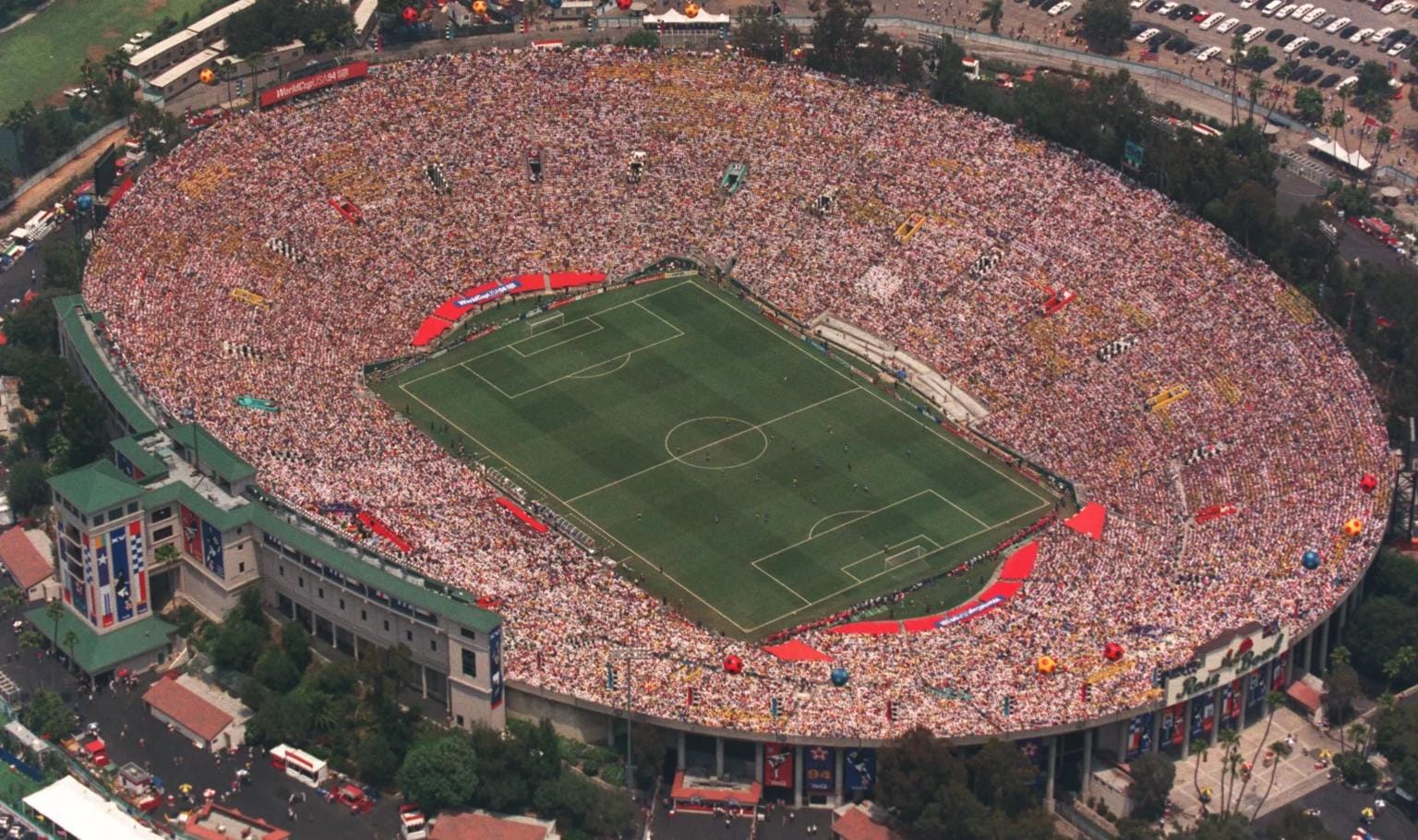
And then there was role that the Rose Bowl played at the '84 Olympics, which was a great test for what you did.
It was terrific. Again, the final with 100,000 people at the Rose Bowl just opened the eyes of FIFA to the potential. I had a great final fireworks show, with the then-president of FIFA, João Havelange, and general secretary Sepp Blatter, and I could just see their mouths were agape. We had spent $100,000 and had an interlocking FIFA logo with the Olympic five rings, and it was just spectacular. That's when I think they decided they could take the big risk and bring the World Cup here.
Going back to 1994, talk about the conversation about ticket prices. There's so much now about how expensive it has gotten to go see games here.
Well, we actually tried to convince FIFA to price every ticket in the Rose Bowl for the final at $1,000 — which was a lot for that period of time. Our pitch to them was what a statement to have $100 million gross, which had never been touched before for any event. If you ever want to stamp your message that you are the biggest event in the world, what better way to do it? I made the argument that this didn't even reflect the true market value — actual ticket prices were way less than that — but if a bunch of brokers and scalpers were going make the money, why shouldn't you? They were very protective of their fans, unlike some of the criticism that's going on now, and they said they couldn't do that.
But we did persuade them that we could take thousands of seats off the manifest, and not make them available as tickets to be sold to the public — we couldn't advertise them, we couldn't call them tickets — and we put together packages with the greatest seats, a parking pass, a program, and some light hors d'oeuvres, and we created the first hospitality package. It's a far cry from what you get now, and far cry from what the people pay for those now, but that was, in effect, the first hospitality package.
[Gasps] You invented luxury suites!
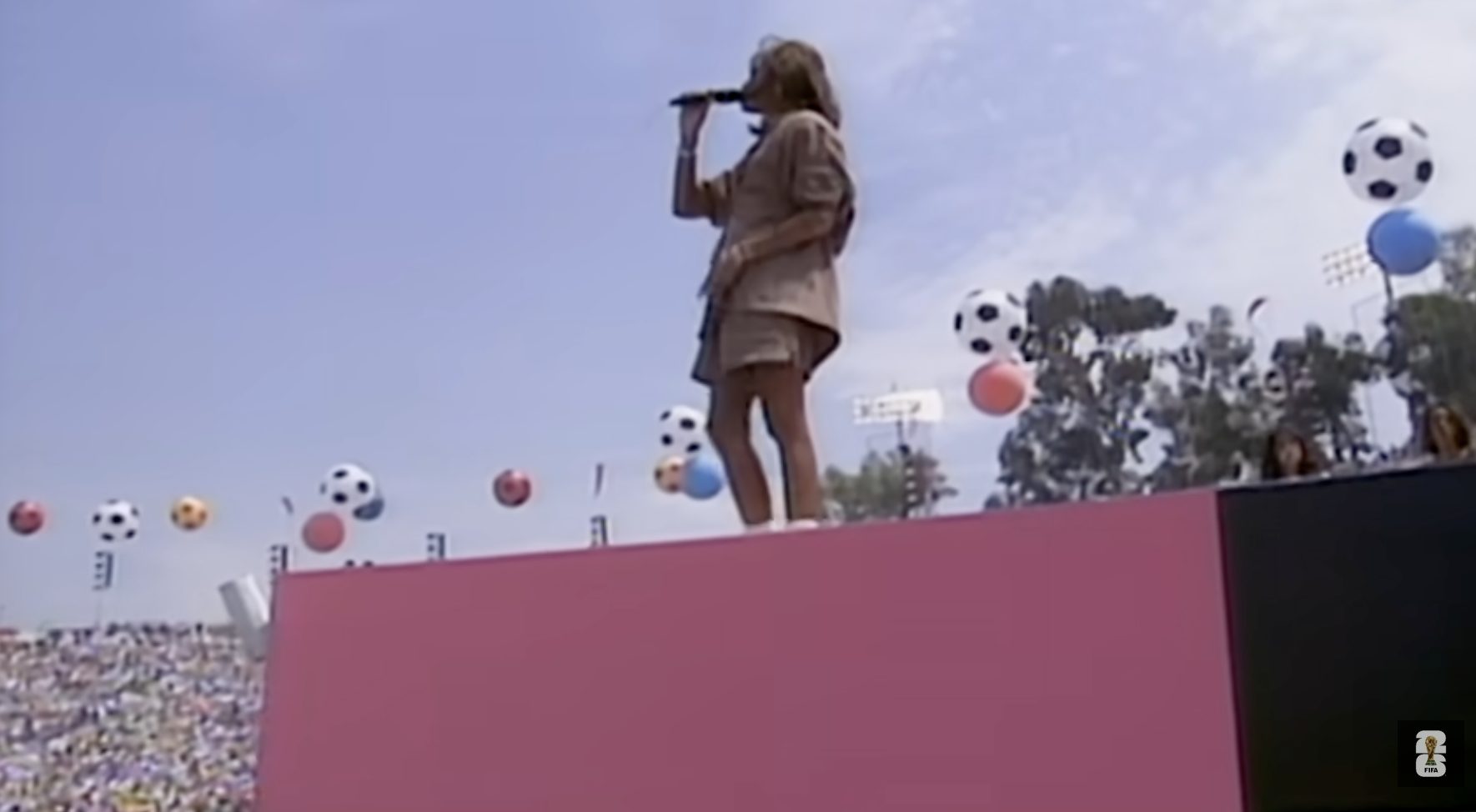
We did a lot of firsts. FIFA just announced that they're going to have the first-ever halftime show. It wasn't the first. We had contracted with Whitney Houston, who at that time was the biggest star, to do a halftime show, and first FIFA objected. President Havelange said we can't have the field messed up. What if there's moisture? What if there's rain? We showed them statistics that in the history of keeping records in Los Angeles, there had never been measurable moisture on July 17. It didn't matter.
But fortuitously, in January of that year, the Rose Bowl was hosting the Super Bowl, and it was when Michael Jackson appeared. So we had Guillermo Cañedo, who was head of the FIFA organizing committee, come out to be with us. We stood in the corner at the tunnel and watched the halftime show, and I said, when they take that stage away, we march in there, and you show me a blade of grass that's been bent or out of place. And you couldn't. I don't know how they did the displacement of the stage for the Super Bowl, but they did it. But nonetheless, they would not let us do it midfield. Whitney Houston was up in the stands performing. I take umbrage to the fact that they now say it's the first-ever halftime show. We had a halftime show, but they forbade us from having it at midfield.
Justice for Alan! I feel like you took a lot of notes from the NFL by inventing the fan festival, inspired by the Super Bowl experience, but then made a little bit more accessible.
We had SoccerFest at the convention center for the 10 days before the final. In that case we were taking the lead from the NFL Experience, which they have at Super Bowls. My son actually ran our SoccerFest, and he had worked for a couple years on the NFL Experience, so it was a perfect fit. We outdrew the NFL.
Of course you did. And now it's part of the World Cup and cities are required by FIFA to do these fan festivals. But there's been a big scaling back: some festivals were going to be open the entire 39 days, then ratcheted that back in, and now a lot of them are charging. What's your reaction when you see pushback that these aren't really for the people?
That's another area where things, unfortunately, have gone awry. You could have mitigated any criticism about ticket prices if you had fan festivals where you pay either nothing or a nominal fee. Again, the problem with the way they structured this is they were requiring cities to do these, and they're very expensive, mostly from the security standpoint, but also by giving them virtually no revenue opportunity. They wouldn't let them be sponsored. So they've been pulling back on the fan festivals, which is a shame.
Another challenge are the hotel numbers that just came out — the bookings do not look great.
There's obviously geopolitical issues overhanging that thankfully we didn't have to face in '94. Just the attitude that the world has toward the United States now versus then. Then we were still basking in this Ronald Reagan city-on-the-hill notion that we were this great place, and everybody wanted to come. Now people are angry at us, and so that's slowed things down here in Los Angeles. Our biggest group of tourists generally are from Canada — that's way down — and there's enough stories about hassles at immigration that people, especially people of color, are worried. Now, I'm the cockeyed optimist. I think as we get closer and closer, the soccer fans of the world are so passionate and irrepressible, that there'll be a last-minute surge that will pick up the slack. But as of right now, it's troubling.
Organizers say that the games will sell out, but what happens is more local people, or more people from California, will come and fill in the gaps. But then we do miss the the add-on spending that an international tourist brings.
It's ironic, obviously. One of the big questions is Iran. There's two matches scheduled for SoFi. They're going to be sold out because we have this huge Persian population in Southern California, but as you say, they're going to go to the matches, and they go home. They're not going to the bars or to stay in hotels.
But obviously, what's going on with Iran creates issues that spills over to people from elsewhere in the Middle East, and as I said before, some of the fears, justified or not, about immigration have slowed people down in terms of making the commitment to come. Now, of course, it's also more costly. This is also directly because of the situation in Iran. If you'd already budgeted out this very expensive trip, now your airline tickets doubled.
We had some close calls in '94. Hooliganism was so rampant in England, and so we had already been working with MI5 and Interpol. To our good fortune, England didn't qualify, so they didn't make it over. Now, it would have been nice to have the team in the tournament, but at least we didn't get the hooligans. On the last weekend of qualifying in Asia, it was conceivable that North Korea, Iran, and Iraq could qualify. That security headache would have been enormous, and the good news is none of them qualified. That was really the extent of our potential international issues.
Rothenberg also invented the World Cup trophy tour in 1994, which he modeled after the Olympic and Paralympic torch relay, and this year went to 21 cities
And now we have some local ones, too. The talk at the stadium was about the workers: their contract is up at SoFi, and they're renegotiating now, and if they can't keep ICE out, they're going to strike.
I'm a great supporter of labor, at the same time a great supporter of the city, and I have great empathy for how you live in the city of Los Angeles, or close by, making $30 an hour. On the other hand, I do understand why enterprises can't run a profitable business if they have to pay those kind of wages, so that's an overhang. I understand the aggressiveness of the union, but I wish it wasn't at this particular moment and on this particular issue. We had a Super Bowl last year, and there was an understanding between the government and the NFL that ICE would stay away. I am hopeful — obviously, and that was just one game, one day, one city, but I'm hopeful — that some kind of comparable détente will be reached for the 11 cities. Doesn't mean people won't be scared regardless, because obviously some will be, but I really, I can't imagine that they're going to go headlong into that kind of situation. But you know, I'm a cockeyed optimist.
What were some of the bigger challenges that you faced when it came to LA's politics back then?
In '94, things were, in that sense, quiet. Richard Riordan was the mayor so there was a pro-business viewpoint. The council was not as divided. We had support all along the way. I do understand the contentiousness in this City Hall, and I do understand the desire for labor to get the best possible benefits. But at the same time, I would hope that there would be good civic citizenship, and not put a huge blemish on what otherwise would be just a great event.
Any parting words of wisdom, or other pieces of advice, or things that you wish people had listened to you about this time around?
You don't have enough time to hear that. [Laughs] I probably would get into trouble if I answered that question for you. 🔥
 Alissa Walker
 Alissa Walker
 Alissa Walker

And 38 more reflections on LA's summer of soccer


This isn't like rebranding a soccer field for the weekend. When it gets hot, Angelenos rely on pools to survive

As we reach the midpoint of our World Cup journey, here's my survey of the best of LA's celebratory urbanism