
Bike share
Paris has made space for cyclists in a way that I simply have not seen in any other city

Nothing could have prepared me for the revelation that awaited me on a quiet Sunday morning in Paris. After a seamless one-seat train ride from the airport (AHEM), I stepped out of my hotel with a plan to meet friends a few miles away for Sancerre and oysters freshly shucked on a sunny sidewalk. Without even glancing at my phone, the choice for how to get there seemed obvious. Across the street I saw a cluster of bikes and a bike lane; around the corner: more bikes, more bike lanes; down the street: bikes, lanes. Soon, I was pedaling through a city that unfolded like a treasure map before me, an American tourist full-on yelping in astonishment.
I had read all the stories. I had even written a few myself. In just five years, Paris's cycling modal share has doubled, from 5 percent of all trips in 2020 to 11 percent in 2025. That's mostly thanks to a total of 870 miles of bike lanes, about half of them installed over the past decade. But now that I'm here, I feel like it's my duty to tell you the transformation that's occurred is even more dramatic than described. Since I've biked all around Paris for a total of three full days — which clearly makes me an expert — I can say this with confidence: Paris has made space for cyclists in a way that I simply have not seen in any other city.
And here's my extremely hot take: biking in Paris might be even more convenient than walking.
That's saying a lot coming from me, a professional Walker™.
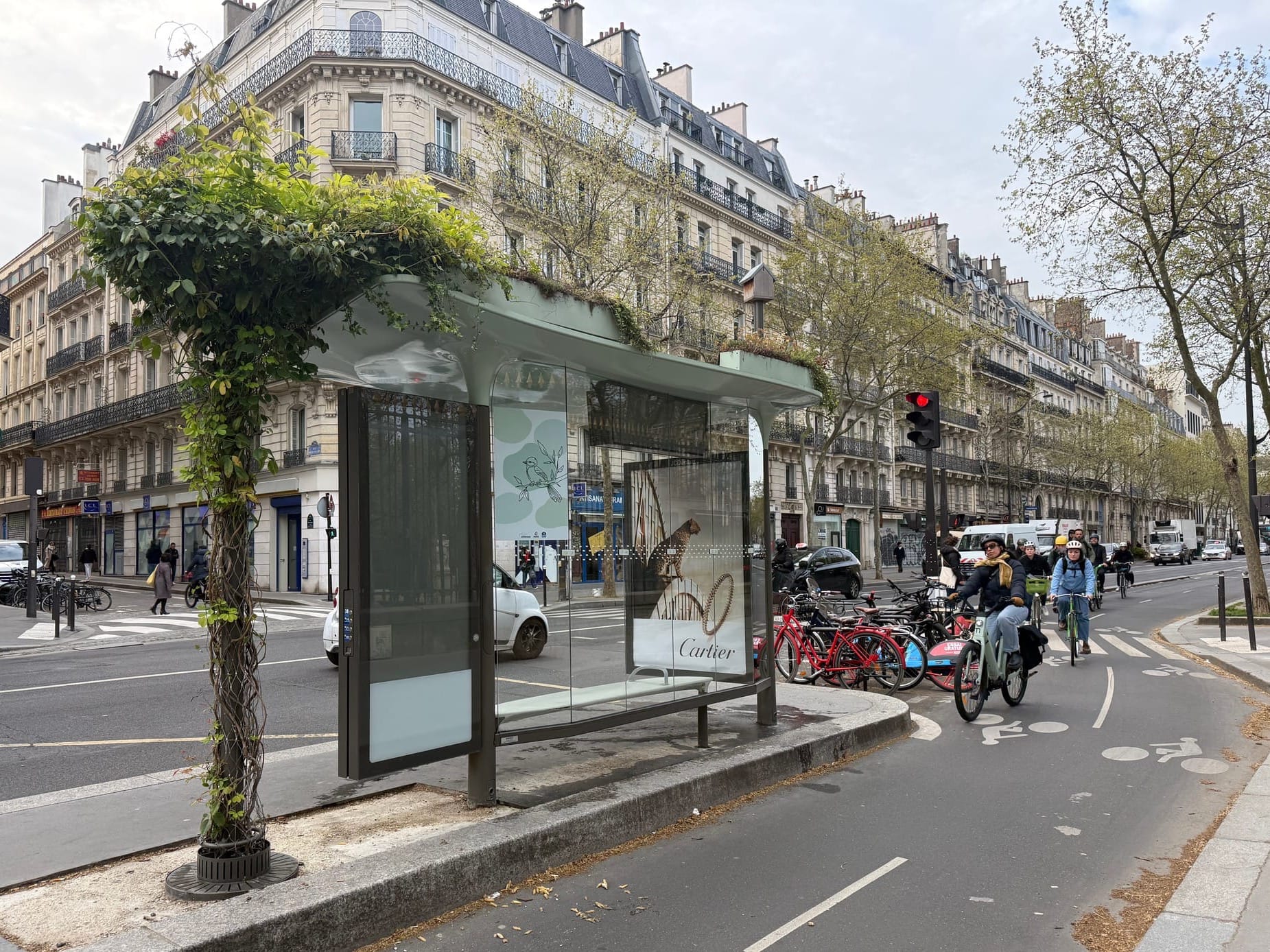
The first pivot Paris made is the most physically obvious: the travel lanes. Most major streets now devote an entire vehicular lane to bikes, usually two-way, side-by-side cycletracks which creates a power-in-numbers feeling of security. To my disingenuous bike-lane critics: the barriers are mostly low curbs permeable enough that an emergency vehicle could probably surmount them, if needed. It doesn't matter though, really, because this arrangement means the lanes are already wide enough to accommodate a vehicle. (European countries are already good at right-sizing their municipal fleets for small streets, a story for another time.)
Most bike-friendly cities I've visited in the last ten years fall into two categories: 1) a comprehensive network that's been intentionally incorporated into the infrastructure across decades, or 2) quick-and-dirty changes that work really well on some streets with a comprehensive network to be desired. Paris has built a comprehensive network with mostly quick-and-dirty changes in less than ten years. And it's obvious just riding around that these changes continue to iterate. I was most delighted to track how the striping below my feet had been scraped and relocated as evidence that the bike lanes had been expanded. It's a work in progress, and that progress is working.
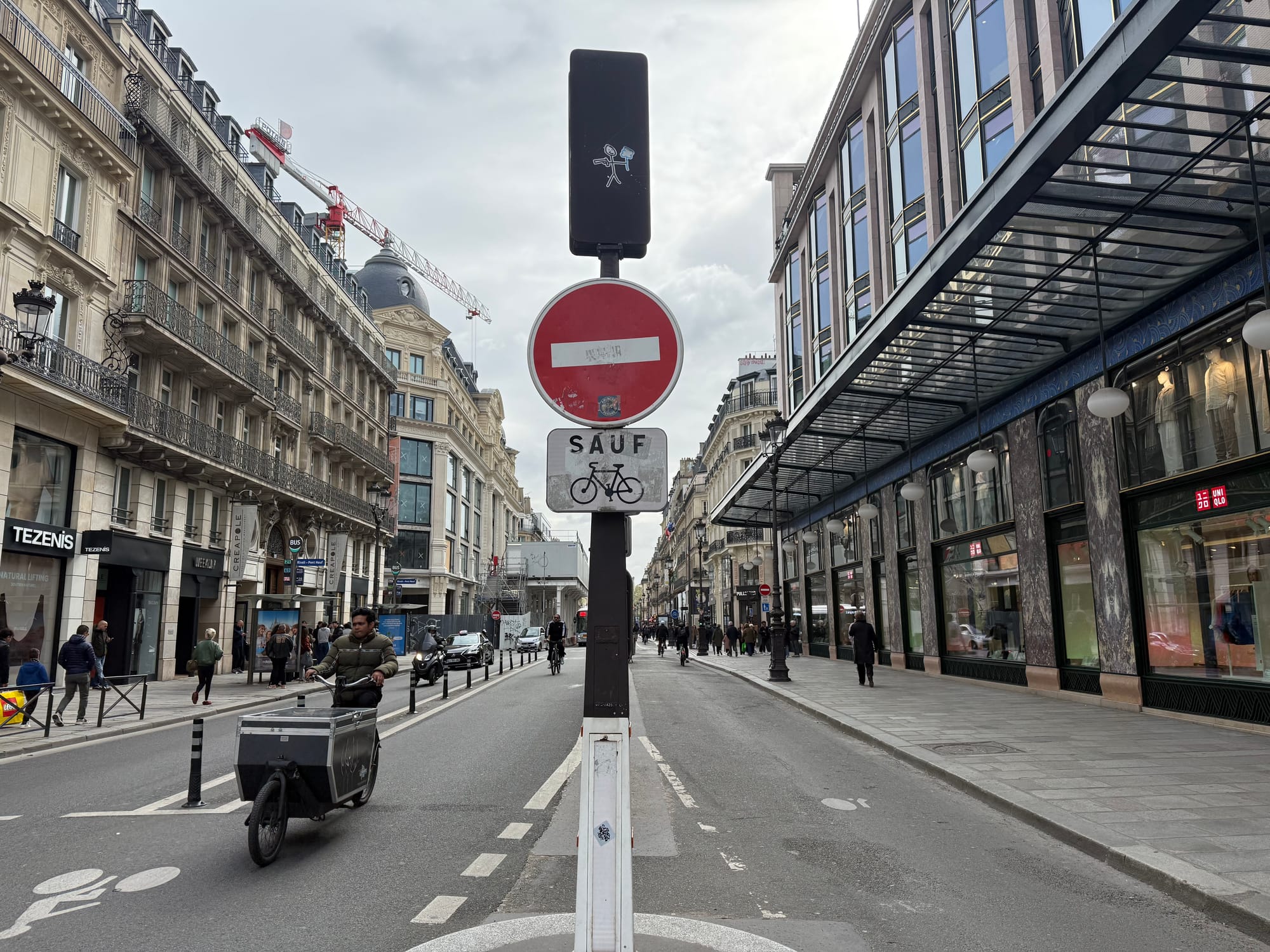
What makes the Paris improvements so astonishing is that they never seem dump you on a street where it feels dangerous. This is compared to biking in LA, where every major turn prompts me to ask myself: am I going to die here? In Paris, you never, ever need to think about routing. You don't have to make snap safety decisions. The bike lanes will guide you. And in my three days of riding around, I've only encountered one blocked lane. (It was a cop. C'est la vie.)
Sure, Paris is a city with many small streets that naturally feel safe for biking. But that's actually what I think is so significant about the changes that have been made. Take a street like this:
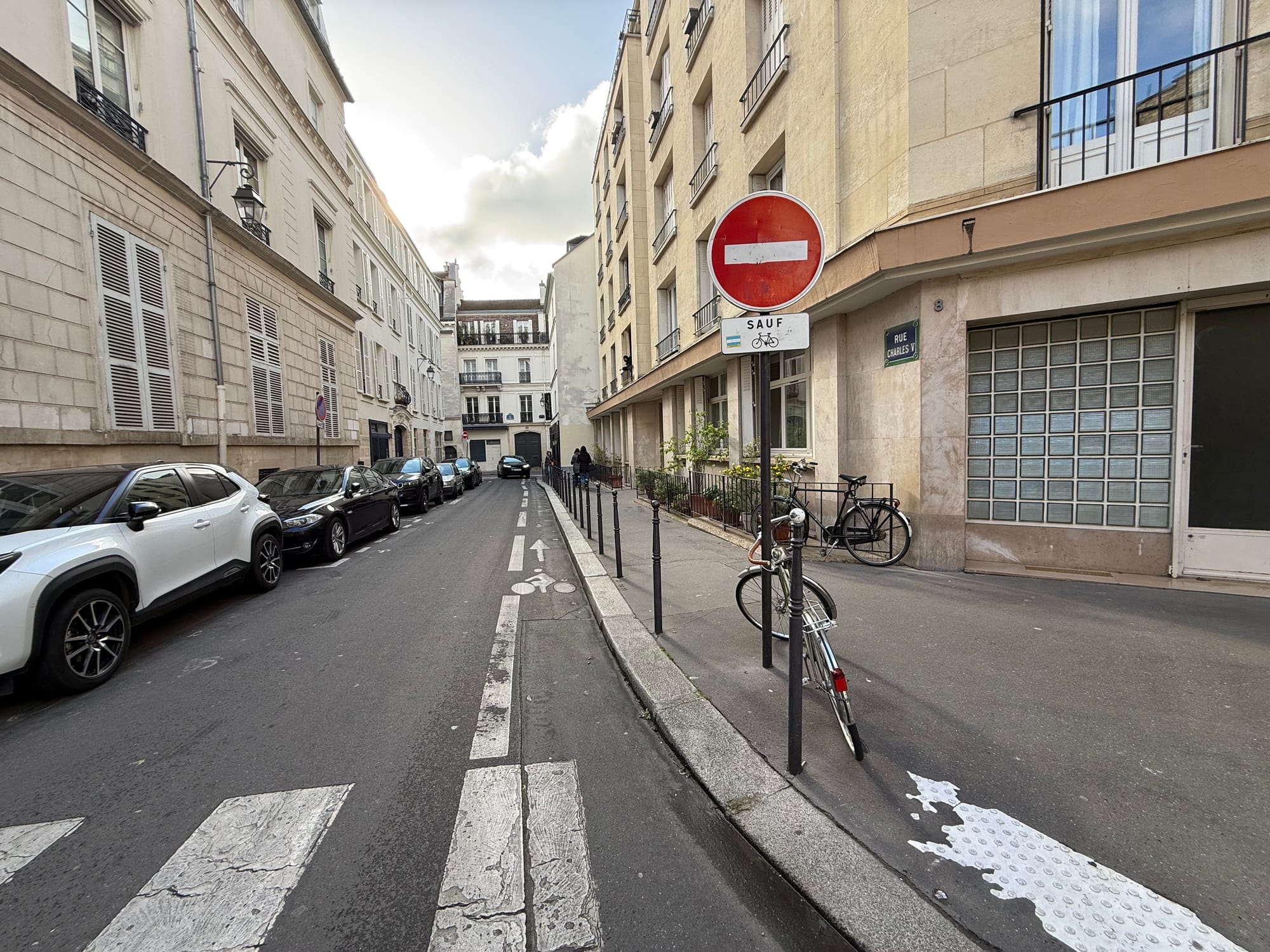
Cars can still drive here, of course. But in the same way pedestrians have their own dedicated space, the city was sure to carve out a tiny space for bikes. This gives cyclists a little confidence-booster, but it also ensures that the network remains intact. It's the same way that lanes for cars would never, ever disappear. They didn't have to put a bike lane here. But! They! Did!
Everywhere you go, cyclists are made visible: in striping, in signage, and, perhaps most importantly, in storage. I've long said installing bike parking the best way to signal that a city is serious about cycling — and these bike-rack corrals feel like they're on very corner. People do use them to lock up their personal bikes. But these little islands are also where you'll find the other key to Paris's astonishing cycling success: bike share.
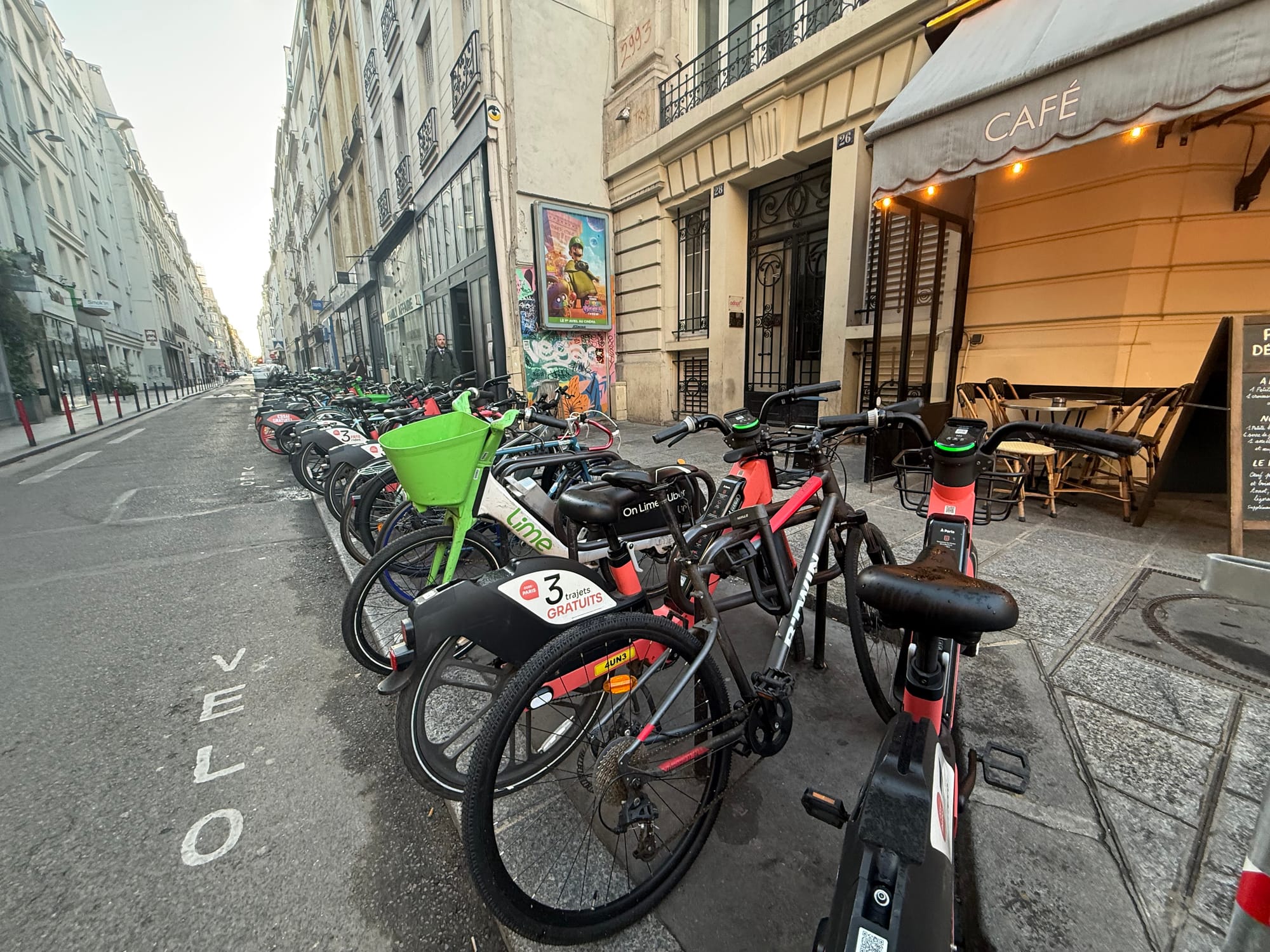
And more bike share.
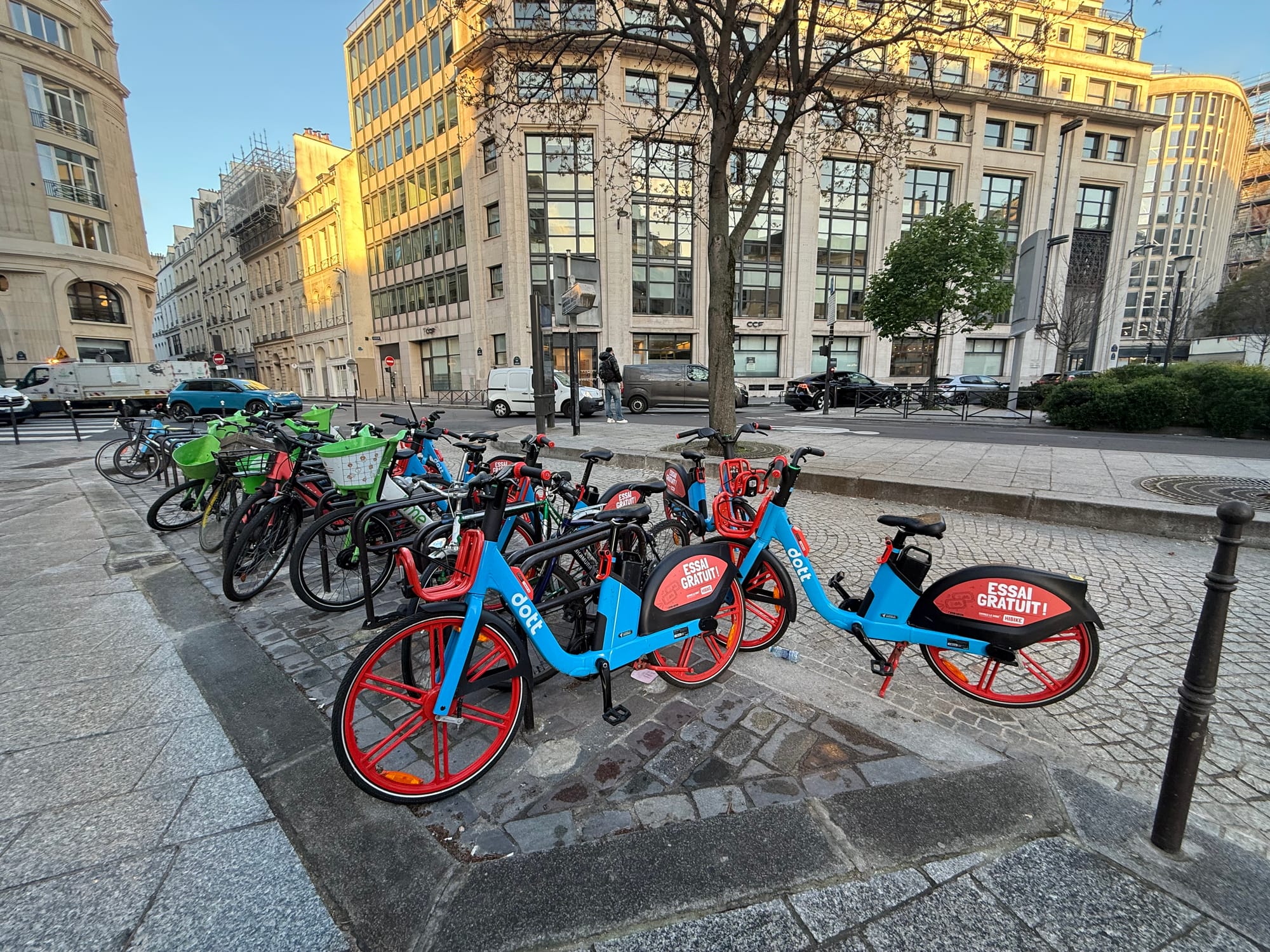
And we haven't even gotten to the "official" bike share.
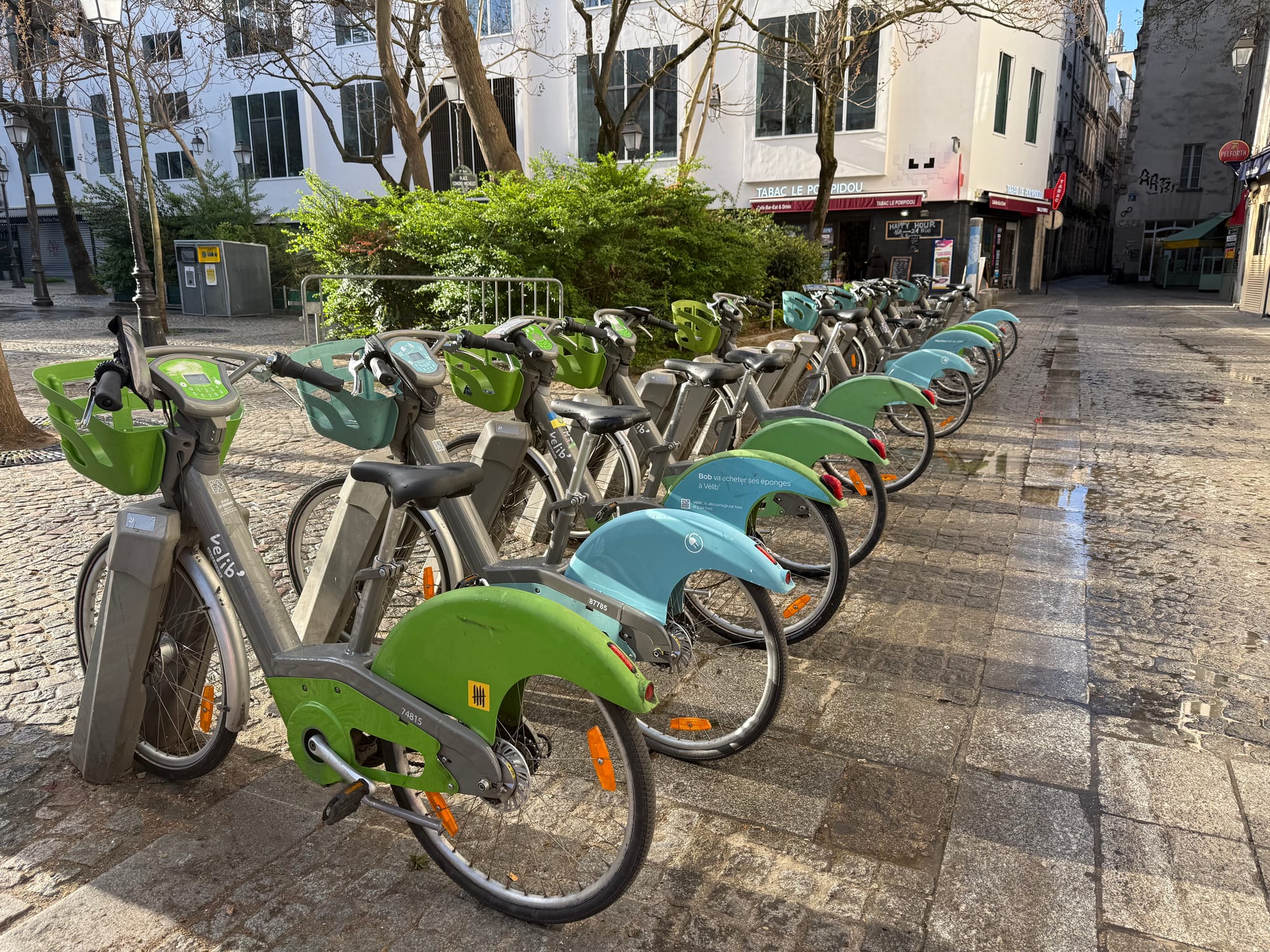
Not only do you not need to own a car to get around.
You don't need to own a bike to get around.
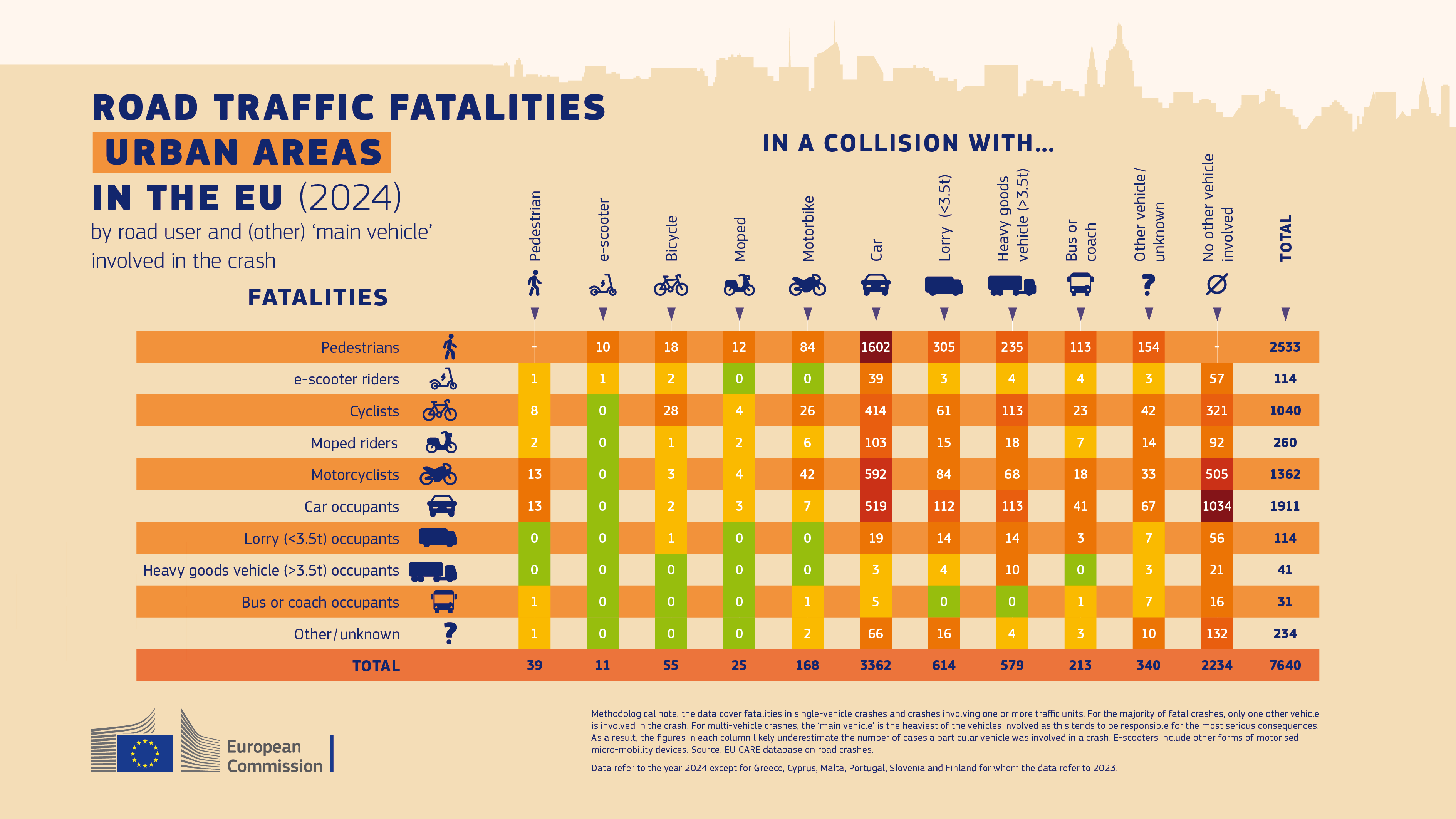
While most of the Parisians I know have embraced the changes, some will tell you the explosion of bikes makes streets feel dangerous in a different way. In response, I love to share this matrix, part of the European Commission's annual road deaths report, as it helps to viscerally envision what causes a fatal collision on an urban street. The only takeaway you can possibly construe from this data is that the key to making cities safer is by getting people out of cars and onto literally any other mode — including the extremely underrated aspect of saving drivers from... themselves?
But wait, you say, bikes don't work for every trip. What happens when it's raining? And if I have to leave the city center? We'll get into all of these case studies and more as I traverse my way across the greater Paris region. I suspect I'll discover that the key isn't just having bikes and lanes and racks, it's about having options, with public transit redundancy, sidewalks with shade awnings, and lots (and lots) of trees.
And before you dismiss anything I write about transportation in Paris — LA is so big! LA is so spread out! LA is so car-dependent! — keep in mind that we're framing everything around the motivation of a megaevent deadline. What biking Paris demonstrates more than anything is that culture shift can happen fast with dedicated leadership. LA's got the room — now we just have to make the space. 🔥
🎟️ Did you get selected for the LA28 LA locals presale? I got an email notifying me that I'll be able to get tickets starting April 2. Don't worry if you didn't qualify this time — there will be more drops
♨️ Missing this week's headlines? Hot Links is on hiatus while I'm in Paris, but please enjoy this story about making more space for people, not cars, in MacArthur Park
Did you miss me?
 Alissa Walker
 Alissa Walker

Read next


The upside down
The spectacle that unfolded along four miles of Melrose on the Sunday before Thanksgiving was a portal into LA's age of activations

"If it hasn't broken ground by now, it's not happening"
It's time for paint, posts, and political will

Making concrete plans
Talking to UCLA's Juan Matute about this year's Lake Arrowhead Symposium and how LA can leverage megaevents to create lasting public benefits