
How to get people excited about transit
"It will literally be your best selling t-shirt, it will get you so much PR, and if anyone interprets this inappropriately that's a them problem"
"It will literally be your best selling t-shirt, it will get you so much PR, and if anyone interprets this inappropriately that's a them problem"

Join a self-described "sports crank" on March 16 at 3 p.m. on Zoom
The spectacle that unfolded along four miles of Melrose on the Sunday before Thanksgiving was a portal into LA's age of activations

I pedaled as hard as I could, my heart thumping against my chest. My bike was fast, but somehow not fast enough. On the empty stretch of street ahead, a man spotted what was behind me, clutched his clearly terrified small child, and turned to a group of people trapped beneath a heap of twisted vines on the sidewalk.
Hey, anyone want to do this demogorgon pedicab with me?
In many ways, it was just another CicLAvia, the largest open streets event in the U.S., which turns roads designed for cars into routes for walking and biking just about every other month somewhere in the Los Angeles region. But this CicLAvia was slightly different in that every single aspect of the day — demogorgon pedicabs, Starcourt Mall merch booths, strolling actors wearing Hawkins National Laboratory coats — were branded to promote the Netflix show Stranger Things, which premiered its fifth and final season last week.
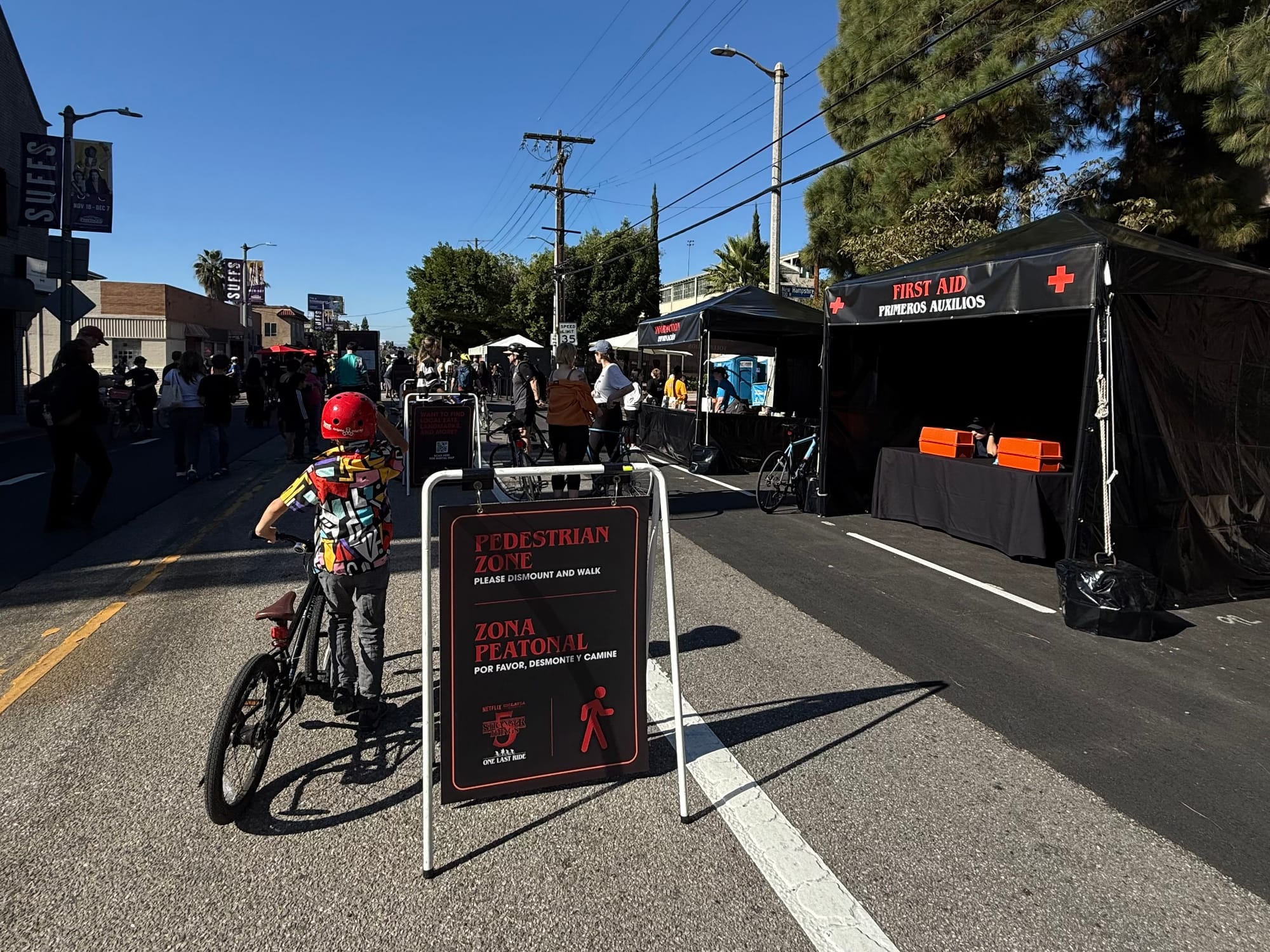
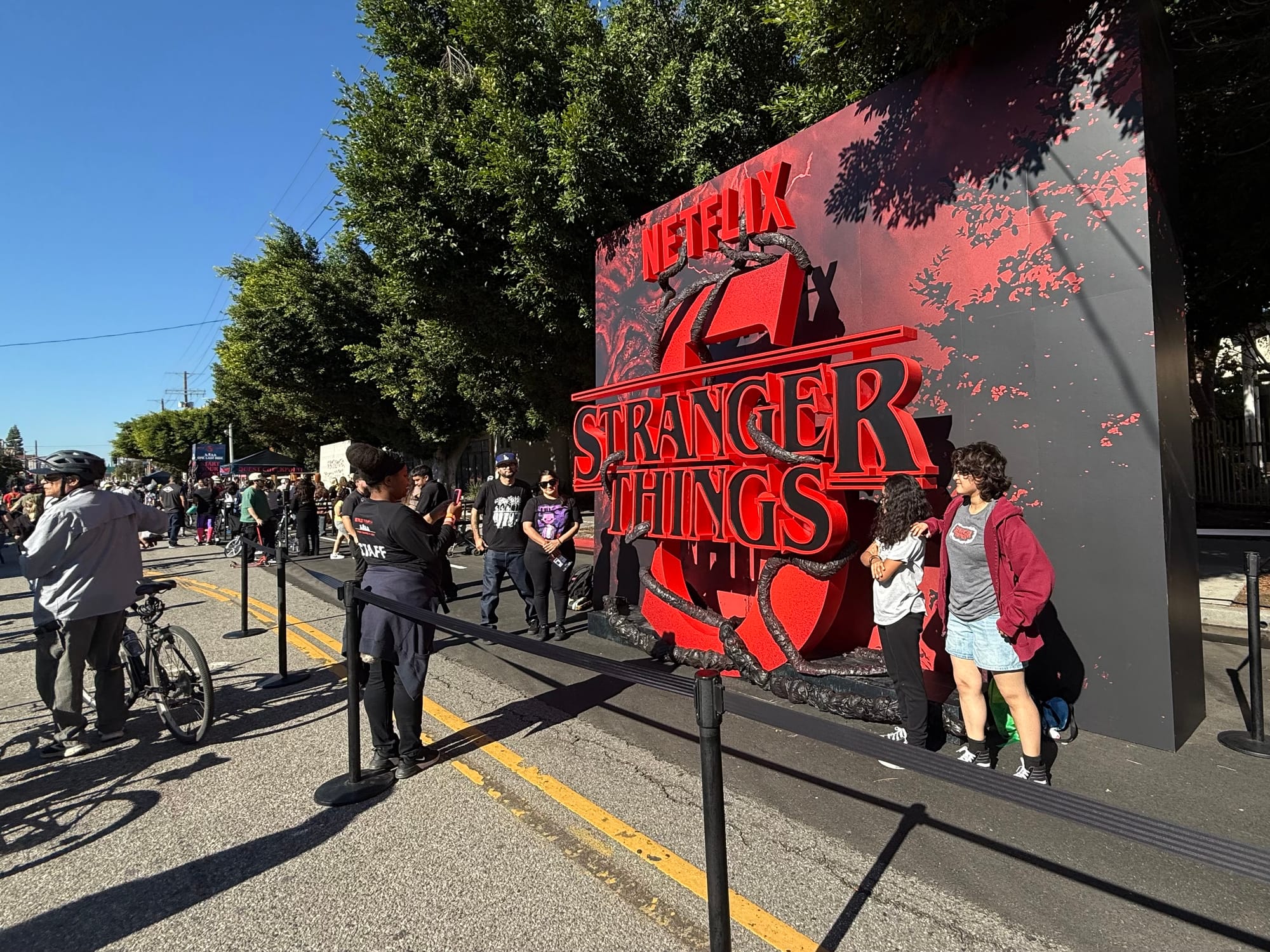

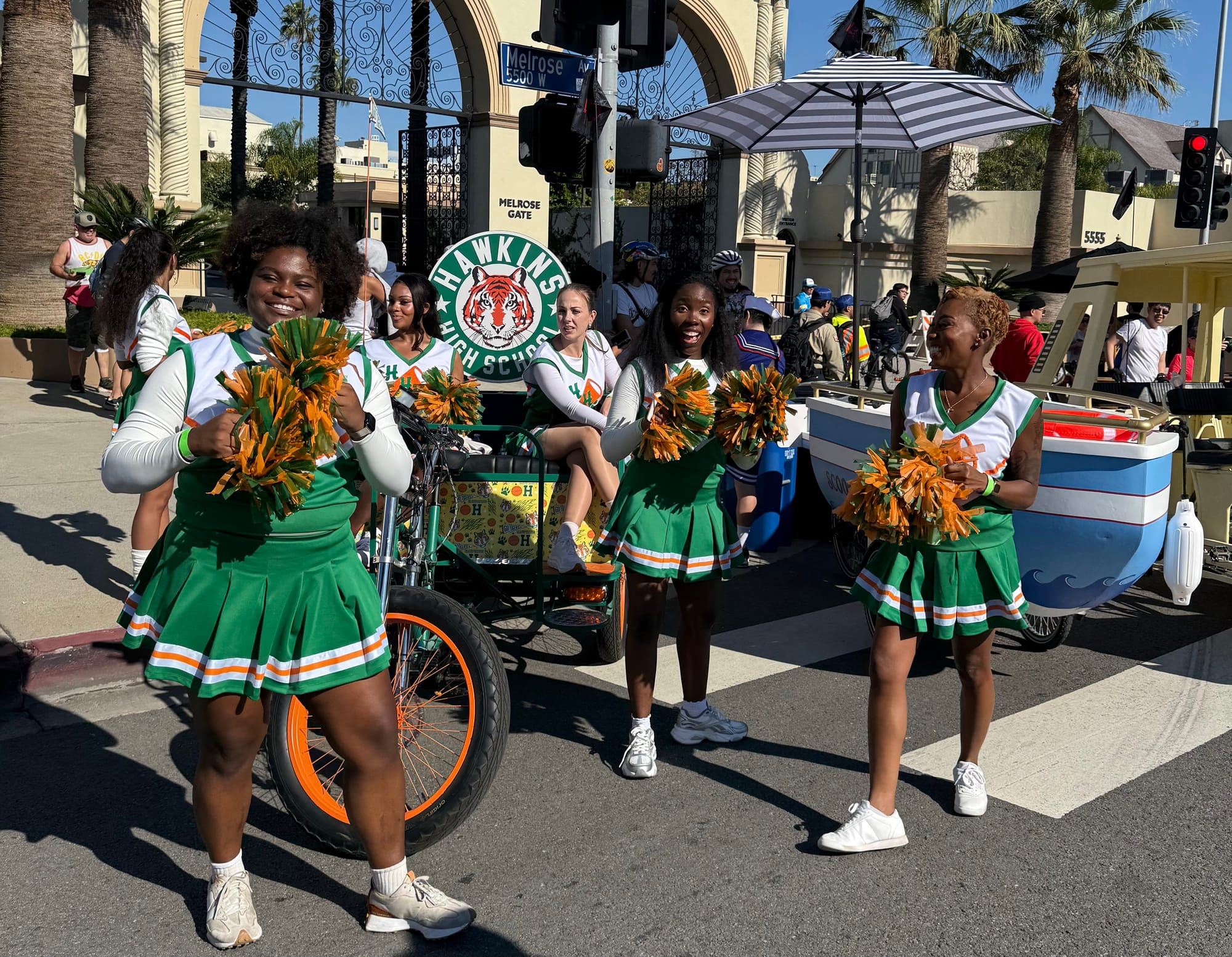
"For one day only, the street will be reimagined as Hawkins itself, where the familiar collides with the mysteries of the Upside Down and fans come together for one last adventure," CicLAvia promised
I've written about the power of open streets as megaevent practice before. But from a sponsorship perspective, the spectacle that unfolded along four miles of Melrose on the Sunday before Thanksgiving was a portal into LA's age of activations. And as I started looking into how this all came together, my inquiry became less about the somewhat unavoidable commercialism that's already seeped into our major events, and more about who is setting standards that align with our values — and if those values will be upheld when the money's changing hands. Naming rights are just the beginning; get ready for the Branding of Everything™ from temporary venues to viewing parties to hospitality houses to fan festivals to, yes, open streets events.
Before you think CicLAvia has crossed into some kind of alternate dimension, know this: sponsorships have always funded LA's open streets. The top-tier partner is almost always Metro, which you might not have noticed at all because it seems natural to have our public transit agency headlining a car-free event. As I looked through 15 years of sponsors, I saw mostly foundations, bike-adjacent companies, healthcare groups, and cultural institutions — remember the LA Phil 100th-anniversary event? — but I did find a few that attendees might find objectionable, like SoCalGas and Amazon. This is the reality for a nonprofit cobbling together funding from public and private sources that are more uncertain than ever. "We have to raise about 40 to 45 percent outside of the public funding we receive annually for CicLAvia to operate," Romel Pascual, CicLAvia's executive director, told me. "We're leaning more than ever into partners who naturally align with what we do: transforming streets, shifting behavior, activating neighborhoods, showcasing infrastructure, and supporting small businesses." These days, the sponsors might not be the typical "open streets" sponsors, he says, but partners who clearly benefit from the environment CicLAvia creates.
With routes that have traveled near most major studios, CicLAvia's leaders had internally contemplated what an entertainment industry tie-in would look like. So when Netflix approached CicLAvia earlier this year with the idea, having them buy out the Melrose route, already planned for November, seemed like a good fit. The route, which first debuted in February 2024, is one of the best-attended using CicLAvia's participants-per-mile-per-hour metric — final crowd counts aren't out yet, but anecdotally it felt even more busy than the 2024 event — and also has the highest percentage of pedestrians with 2:1 people biking/rolling to walking. (Typically, the ratio is more like 3:1 people biking/rolling to walking.) In fact, when I first posted the news of the Netflix deal, transportation safety expert Tara Goddard marveled: "Can we just stop for a sec and tell 2004 us that Netflix would be sponsoring an open streets event in 2025?" I mean, she's right. According to a Los Angeles Times feature, Netflix staged fan events in 28 cities worldwide for the premiere of the final season; isn't it actually awesome that Netflix sees a local biking and walking event as the best way to spend their promotional dollars? In LA?
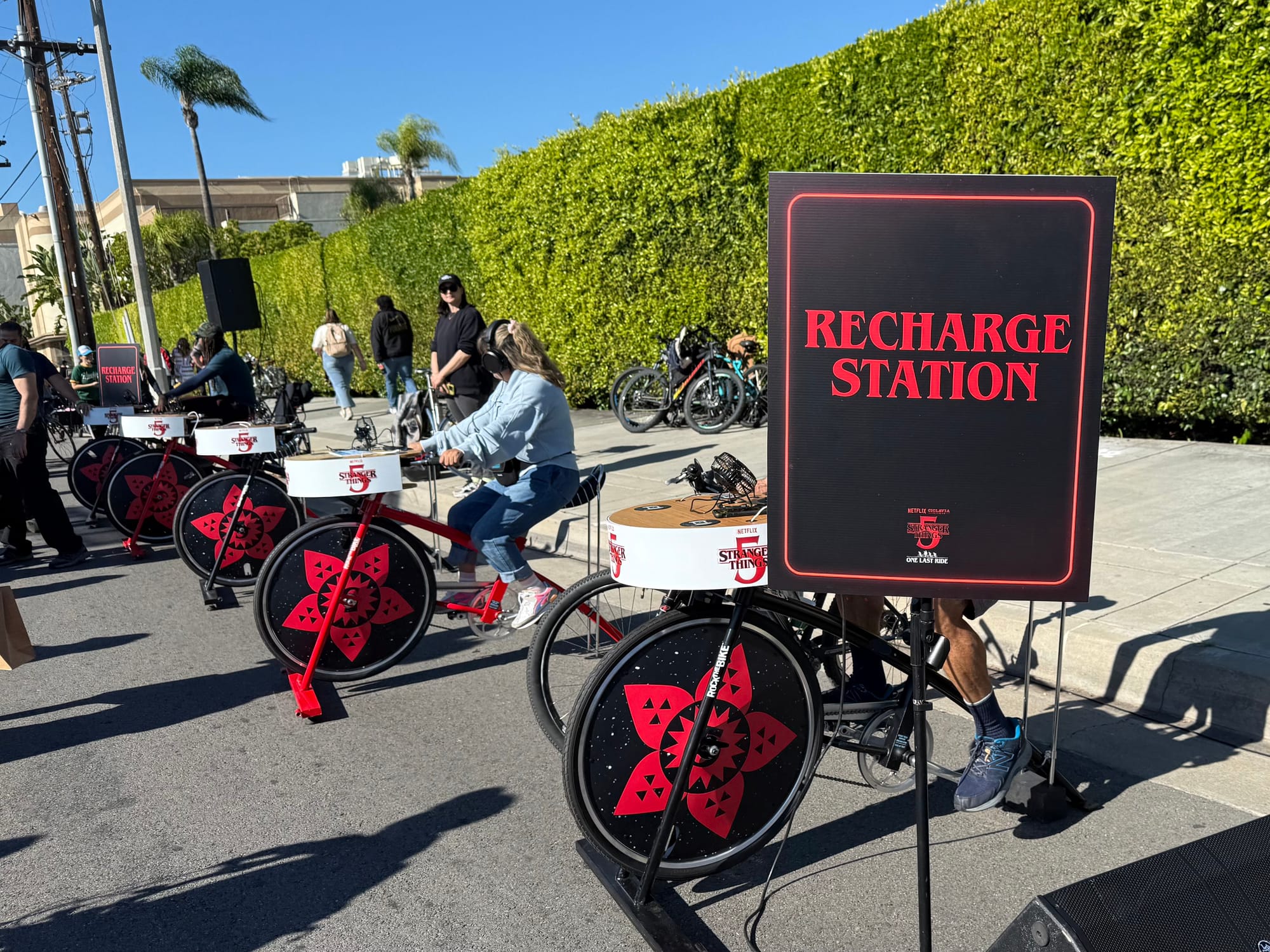
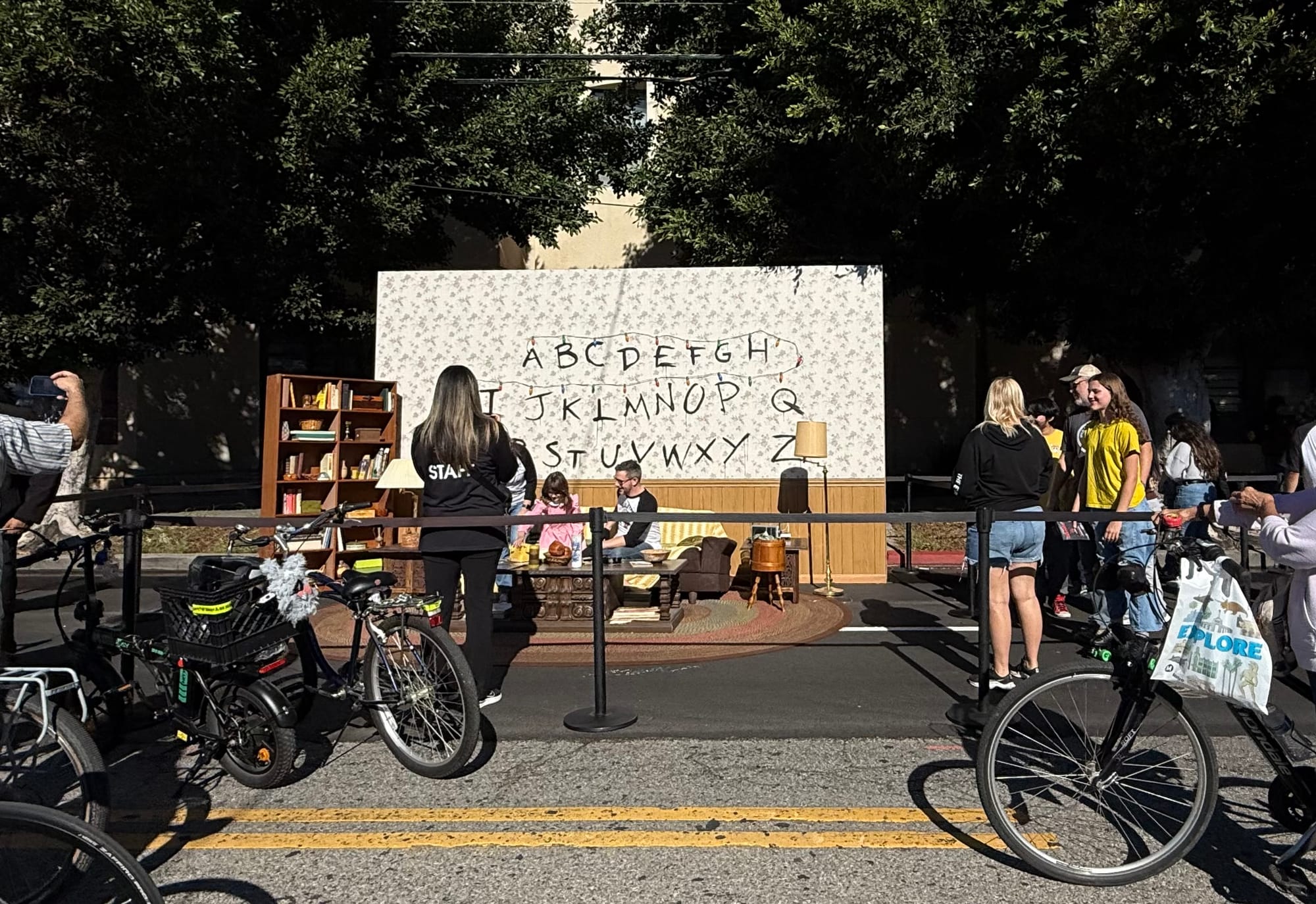
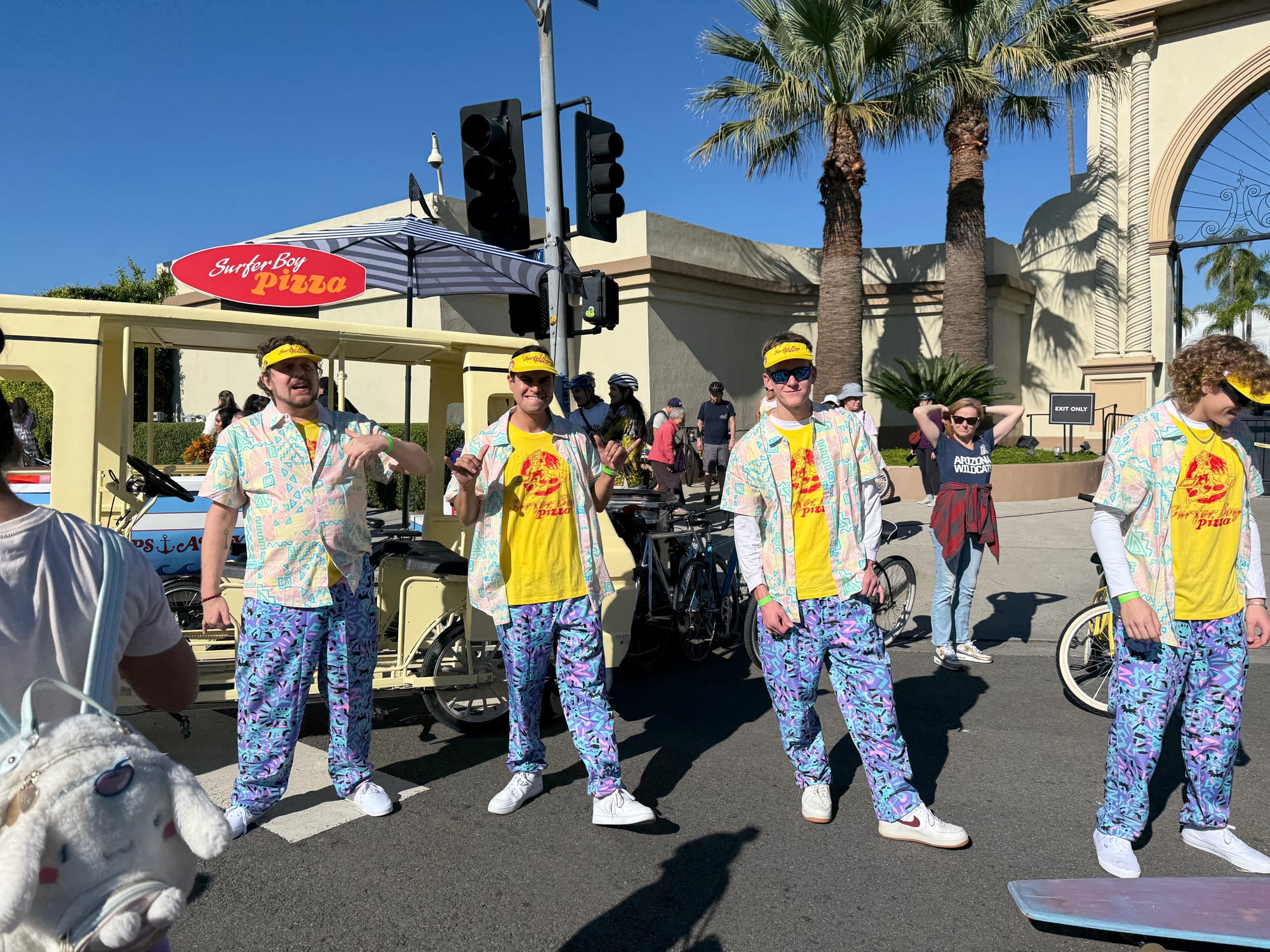

How much did Netflix pay for this? Here's CicLAvia's sponsorship rate sheet and all the exhibits they sponsored along the route
Personally, I was all too happy to pull out my neon pink bike shorts, blue eyeliner, and a side ponytail complete with Lisa Frank-inspired scrunchie. I was accompanied by my very enthusiastic 8-year-old who dressed up as Dustin, was enchanted by the demogorgon-branded ice cream, and had a magical moment when he encountered a "Sheriff Hopper" in a coffee shop. When I asked for feedback on social media, the reactions were mostly positive and the general consensus seemed to be: it's fine, I guess, but maybe not alllll the time. However, some people really hated the idea and refused to attend the event. Two things seemed to trouble critics the most: the immersive experiences at the hubs and the other brands that came along for the ride.
Stranger Things itself is a brandstravaganza — extrava-brands-a?— that has gotten countless corporations to embed winky '80s references in its episodes. The CicLAvia buyout was no different, and I counted at least a dozen other brand giveaways: Chips Ahoy, Dr. Squatch, Doritos, Funko, Lego, Eggo, although I did think the vintage Gatorade stations were well-executed. Again, brands give out products at every CicLAvia. But it felt like Netflix ushered in a new type of event. My friend Christine Taylor, an entertainment brand licensing expert who has worked on many pop culture consumer products and experiences over the years, including Stranger Things, noticed this when she posted a tagged photo reel (of herself wearing Hawkins High apparel) on Instagram. "I was retargeted with ads of products I’d never even seen before from brands that weren’t even at the event," she says. But while big brands obviously capitalized, what impressed Taylor more, from an engagement perspective, was the way small businesses on the route played along. "Friends riding with me kept saying they’d never even noticed half the shops before, and I discovered a couple of spots by stopping to enjoy their Stranger Things-themed treats," she says. Taylor understands how this might have been perceived differently for CicLAvia purists who aren't necessarily into the show, but "overall, it appeared to be a perfect trifecta of synergy between Netflix, CicLAvia, and the community."
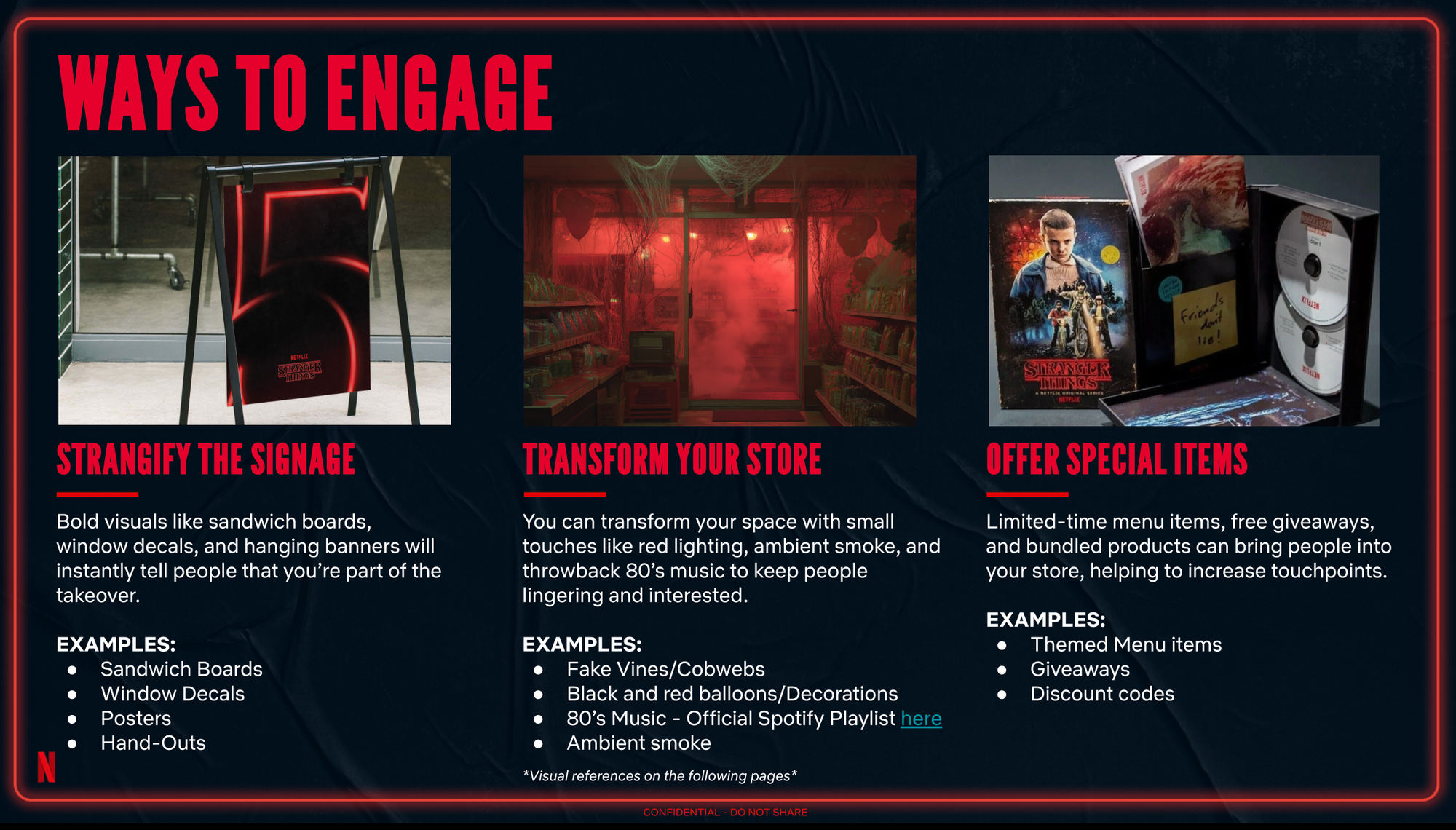
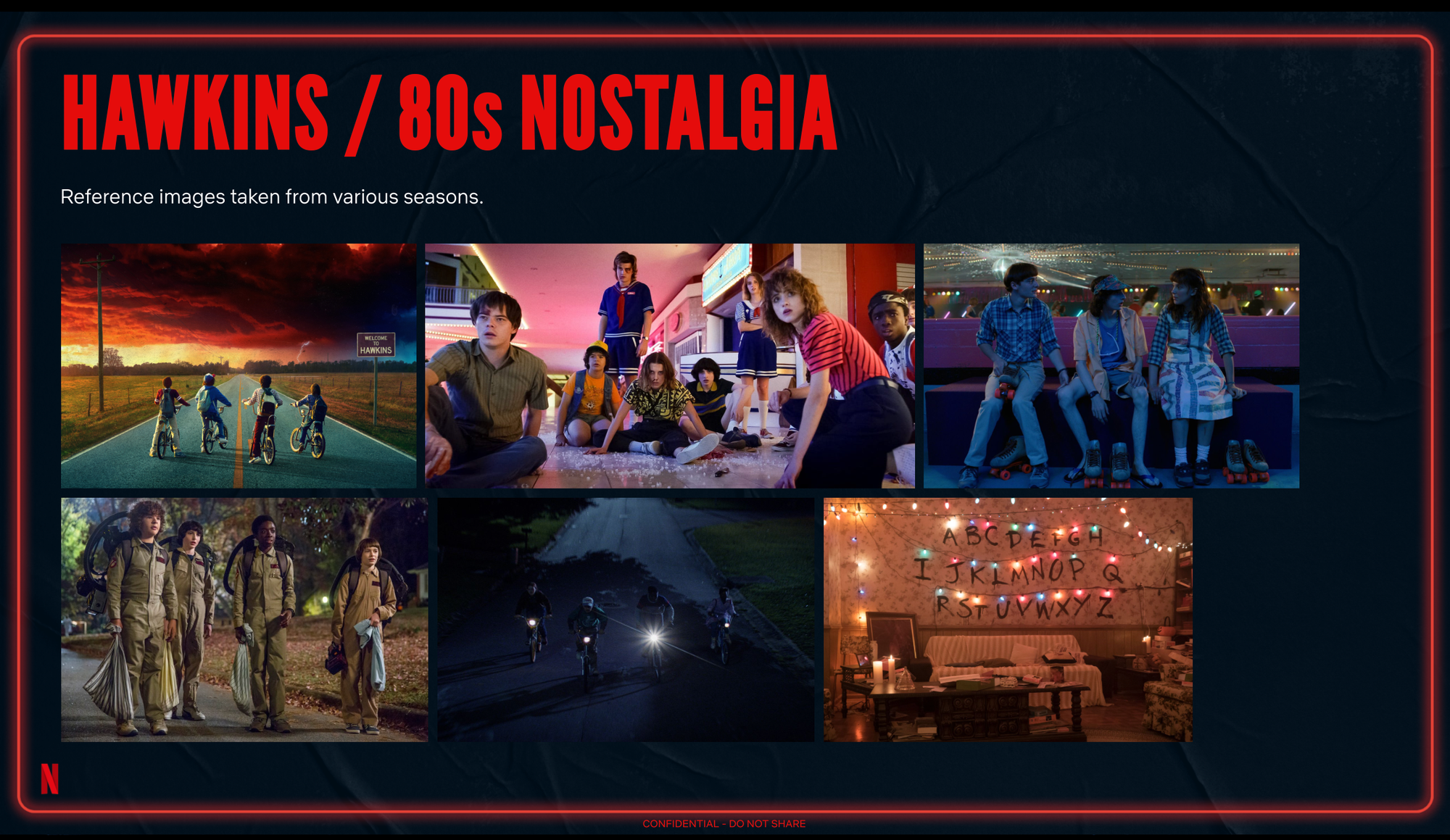
CicLAvia and Netflix created an entire branding guide to help small businesses along the route maximize their tie-in potential. What's this going to look like for other megaevents?
And honestly, there's something very intriguing about this one weird trick to reduce car dependency, promote our homegrown entertainment industry, and invigorate small businesses, specifically restaurants. Last month, LA Mayor Karen Bass and the Los Angeles County Economic Development Corporation announced a new campaign called LA Is Open — with a verrrry regrettable logo — promising to engage tourists and locals through "pop-up events" that focus on small businesses. How about some synergy here? Shutting down streets for filming can be annoying for local businesses and CicLAvia's outreach teams are really good at making sure local businesses benefit during open streets events; could CicLAvia work with Film LA to leverage those closures? The Oscars block Hollywood Boulevard for weeks every year, why not make the whole Walk of Fame a month-long open streets festival? Another thing that bothered me: instead of celebrating a show that's shot in Atlanta, let's pick something filmed locally next time? Officials made a big deal last month about Baywatch returning LA County — how about a "back to the beach" Venice route?
We're going to need to get more creative. Earlier this year, Metro created new requirements that would only fund open streets events occurring during the World Cup in 2026 and the Olympics and Paralympics in 2028. Advocates argued that this move would be devastating, affecting CicLAvia and a half-dozen other organizations like Active SGV that organize open streets throughout LA County. (Which is why last Sunday's tagline, "One Last Ride," was a little too apt.) At a meeting days before the Stranger Things CicLAvia, advocates swarmed public comment, begging the agency to reconsider, and Supervisor Lindsey Horvath — who said board members received over 700 emails — introduced a new motion that could restore the funding to sponsor more events.
But even a Metro hail mary isn't enough, says Pascual. Since the pandemic, the cost to insure an open streets event has increased by fourfold. "Our annual insurance used to be around $100,000 a year and to as high as $500,000, depending on the number of events we have," he says. "We are not generally able to recoup these costs from any public contract we have." Pascual says what could really help is California legislative fixes: insurance for open streets is tied to liability, and liability rules are governed by the state. "There’s an opportunity for California to consider legislation, like what exists for other public-serving activities, that reduces exposure for open streets producers or creates alternative insurance mechanisms for civic events," he says. He'd also like to see city agencies playing a greater role, but even that's not a panacea. "Even if the City of Los Angeles were to serve as the primary insured on certain portions of the event, CicLAvia would still need to carry its own insurance," Pascual says. "So yes, it could reduce our costs, but it wouldn’t eliminate them."

But while those structural changes are needed, here's the reality: CicLAvia should not have to do this anymore. Cities should be stepping up to create their own dedicated cycling and pedestrian routes between venues as part of their megaevent plans to test in 2026, refine in 2027, and finalize in 2028. And then... keep those streets closed to cars forever! These city officials who come to the press conferences and tootle around on a bike for a few hours then climb into their SUVs to drive home need to be asked, repeatedly, what they're doing to make car-free streets an everyday amenity, not an anomaly. It's been 15 years since CicLAvia began!
In 2016, when Stranger Things debuted, I wrote this for Curbed: "The show has tapped into a very specific type of nostalgia — leaving viewers reminiscing about a time when kids roamed their neighborhoods on bikes, by themselves." Nine years later, LA's streets are statistically more dangerous. No one needs to dream up imaginary monsters trying to murder our children, they're parked right there in our driveways. We could let Netflix pay for a throwback fantasy of a walking and biking city one day out of the year. Or we could actually fund streets that give our kids a shot at a future. 🔥

This is the downtown that Frank Gehry wanted. When will LA's leaders give it to us?


Unfortunately, the mayor's vision — which feels about 1,000 days too late — is so light on substance that it's hard to see how LA's megaevent future materializes

The Palantir Deep Dive Center will really give the sport a whole new meaning