
LA is not a bloomin' desert
The official look and feel for the games shows, once again, that LA28 doesn't really understand our city
The official look and feel for the games shows, once again, that LA28 doesn't really understand our city

The goal is to improve the downtown experience by 2028 by "linking key locations with safer, cleaner, and greener streets, parks, public spaces, and transit hubs"
We've got to improve the way we deliver transit information before millions more people get here
The official look and feel for the games shows, once again, that LA28 doesn't really understand our city

Last month, after arguing that the LA28 logo is a lost cause, I looked anxiously to the next LA28 design announcement: the urban-scale branding known as the "look of the games." This was finally unveiled by LA28 yesterday — and as Angelenos, it's your civic duty to understand what you'll soon see slapped across every venue, wayfinding sign, and streetlight banner in the region.
The LA28 look sets the visual agenda for LA over the next two years: the color palette, graphic elements, and typographic treatments. (Yes, even more typefaces, somehow!) This is 2028's version of the celebrated design language Deborah Sussman brought to the 1984 games, the shimmering, kinetic aesthetic she saw in a dream, "the sky and the ground sprinkled like confetti."
Unfortunately, as I will explain, the official look and feel for the games shows, once again, that LA28 doesn't really understand our city.
The LA28 look is described as "a visual identity as alive and layered as Los Angeles itself with a palette drawn directly from the heart of the city: vivid, sunbaked, unapologetic." Sunbaked, you say? Well, yes, as Torched readers know, that's because LA planted 40,000 palm trees ahead of the 1932 games — arguably the most consequential visual identity of any LA Olympics.
What LA28 really owes us is a vision of a cooler city, with more shade, that hopefully isn't on fire.
Instead, we get "the Superbloom."
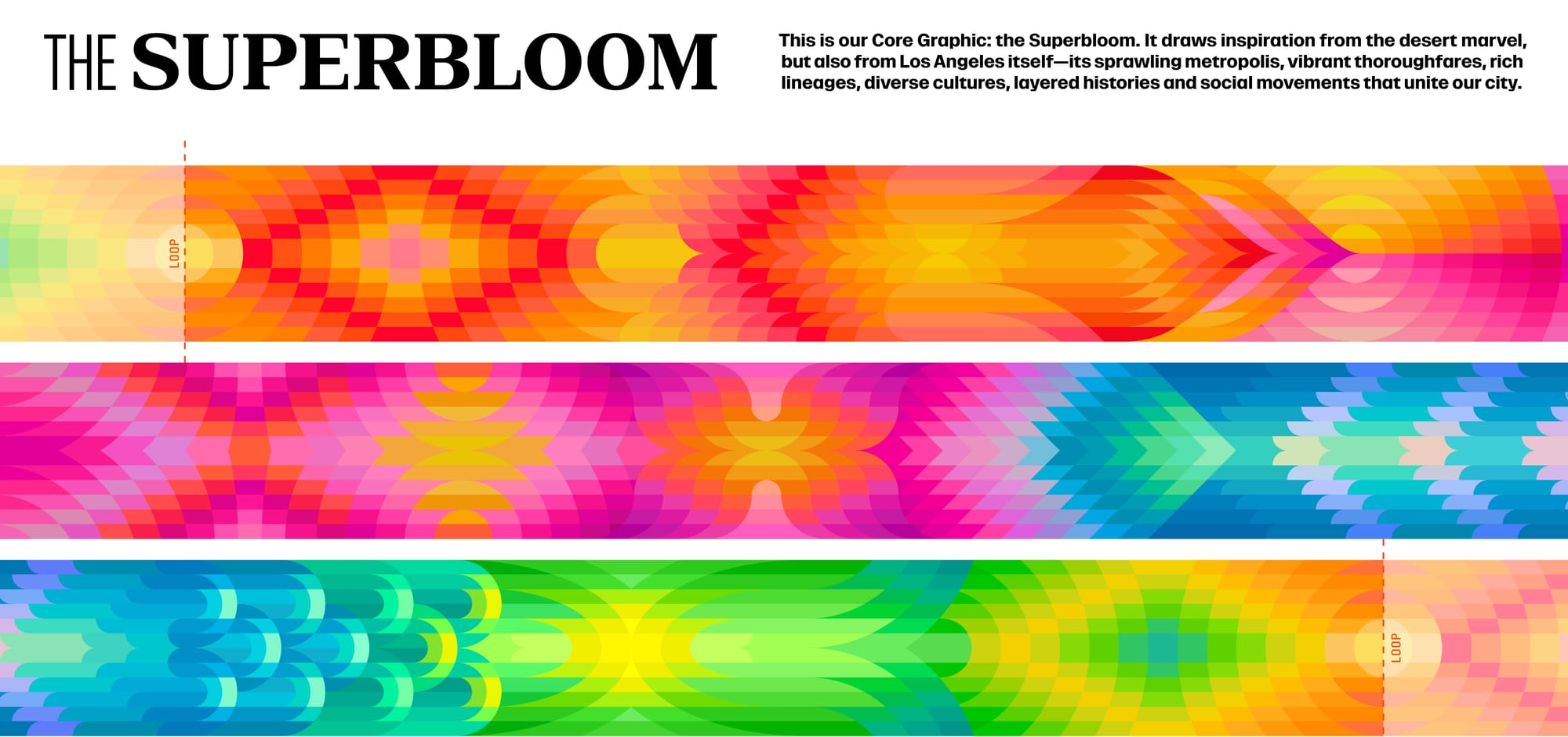
Yes, the visual identity of the 2028 Olympic and Paralympic Games, hosted by the city of Los Angeles, "draws inspiration from the desert."
Live shot of me: 💀
I hate to break it to the well-paid consultants who put together this creative brief, but LA is not a desert. Yes, the northernmost section of LA County is on the very western edge of the Mojave Desert, which you can also call the high desert. Yes, there is a superbloom currently occurring there (which we'll come back to in a minute). But even within LA28's actual quite-sprawling footprint, a grand total of zero venues are located in the desert. This is decidedly a not-in-a-desert event.
Then there is the far more problematic part of this identity — and the way LA28 is marketing it to the world.
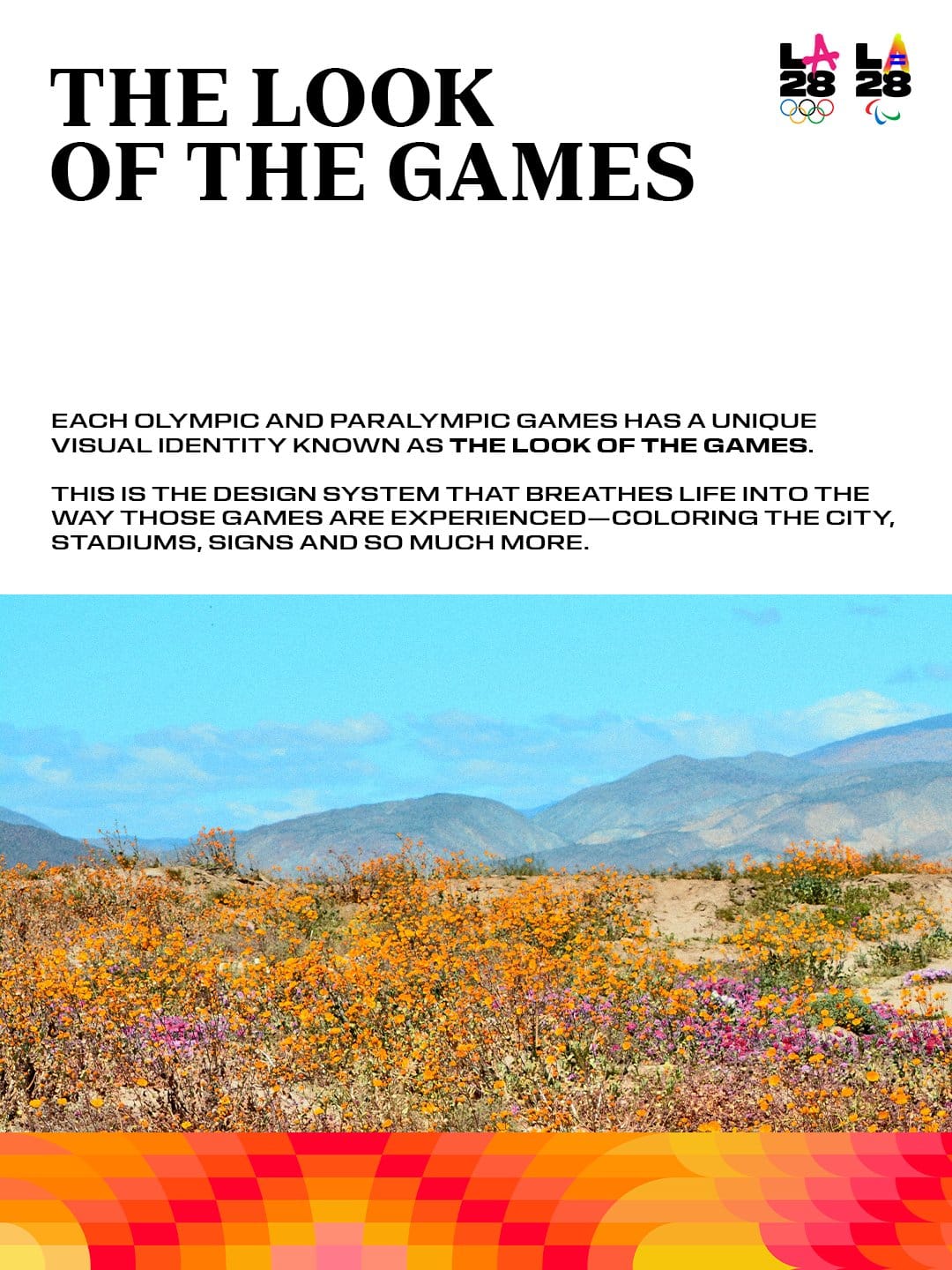
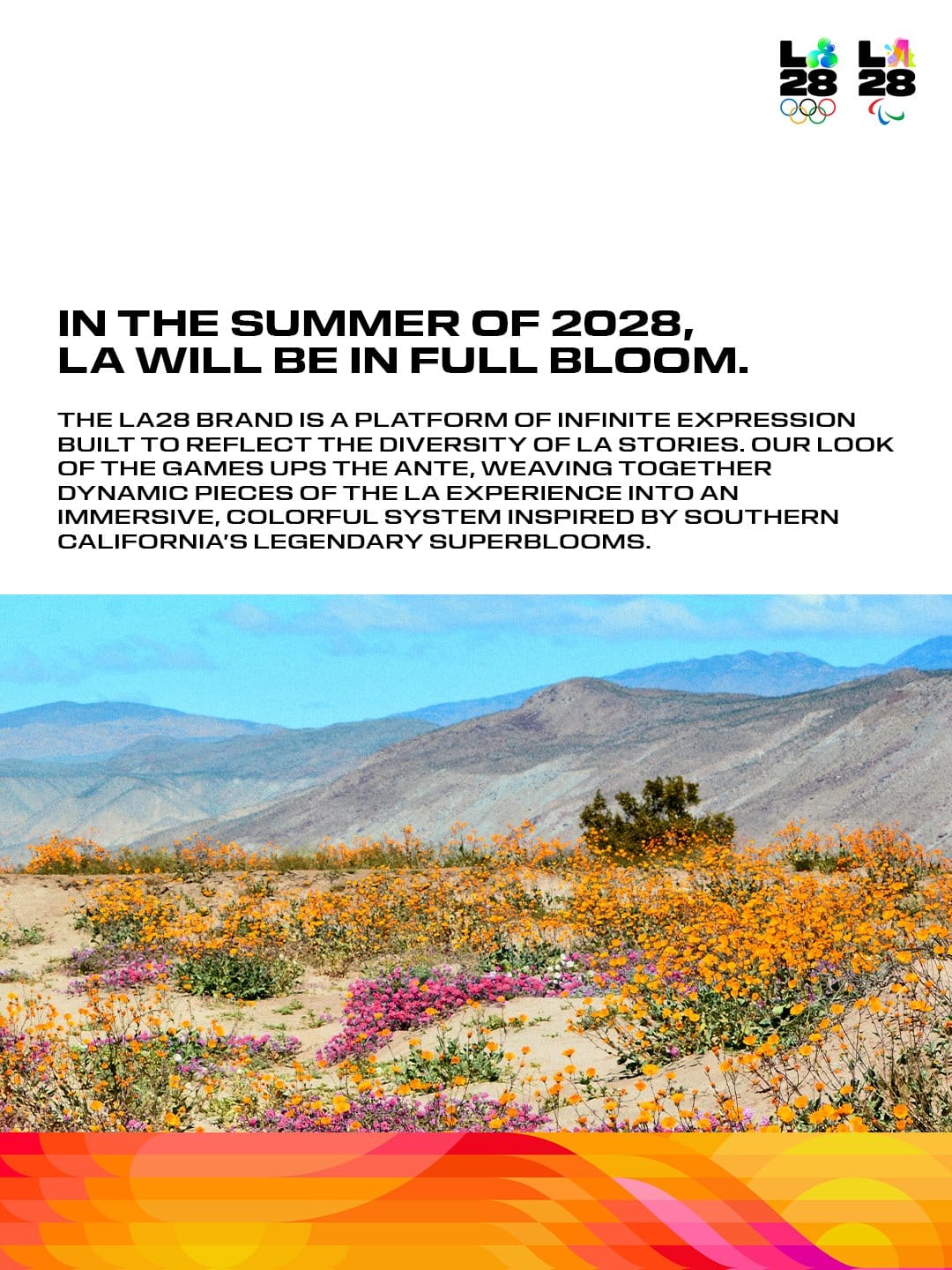
No, it will not! Please don't go looking for these when you come here in the summer of 2028!
The photo LA28 has chosen to illustrate "LA in full bloom" is indeed a well-known superbloom-viewing spot. It's so famous I knew exactly where it was: Henderson Canyon, located in Anza-Borrego Desert State Park, in San Diego County. It's about two hours from the nearest LA28 venue. BECAUSE LA IS NOT A DESERT.
Fortunately, superblooms happen all over Southern California, not just in the desert, says Katie Tilford, director of development and communications for the Theodore Payne Foundation, who starts to field questions about where superblooms are happening every January. In fact, "there’s no scientific definition of a superbloom," she says. "It's more of a cultural phenomenon. It's a spectacle."
But a superbloom is definitely a springtime spectacle, not a summertime one. These showy displays have a short window to attract pollinators before temperatures get too hot, says Tilford. "Desert wildflowers are bright for a reason." She can see why LA28 wants to reference their vibrant hues in its corresponding color palette: Poppy, Scarlet Flax, Bluebell, and Sagebrush. (Although the inclusion of scarlet flax was a puzzler as it's the only non-native in the lineup; Tilford would recommend the bright magentas of a desert penstemon or clarkia instead.) But it doesn't make a whole lot of sense to brand your July-through-August event as "LA in full bloom" during the time of the year that LA's hillsides are uniformly one shade: Highly Flammable Ochre.
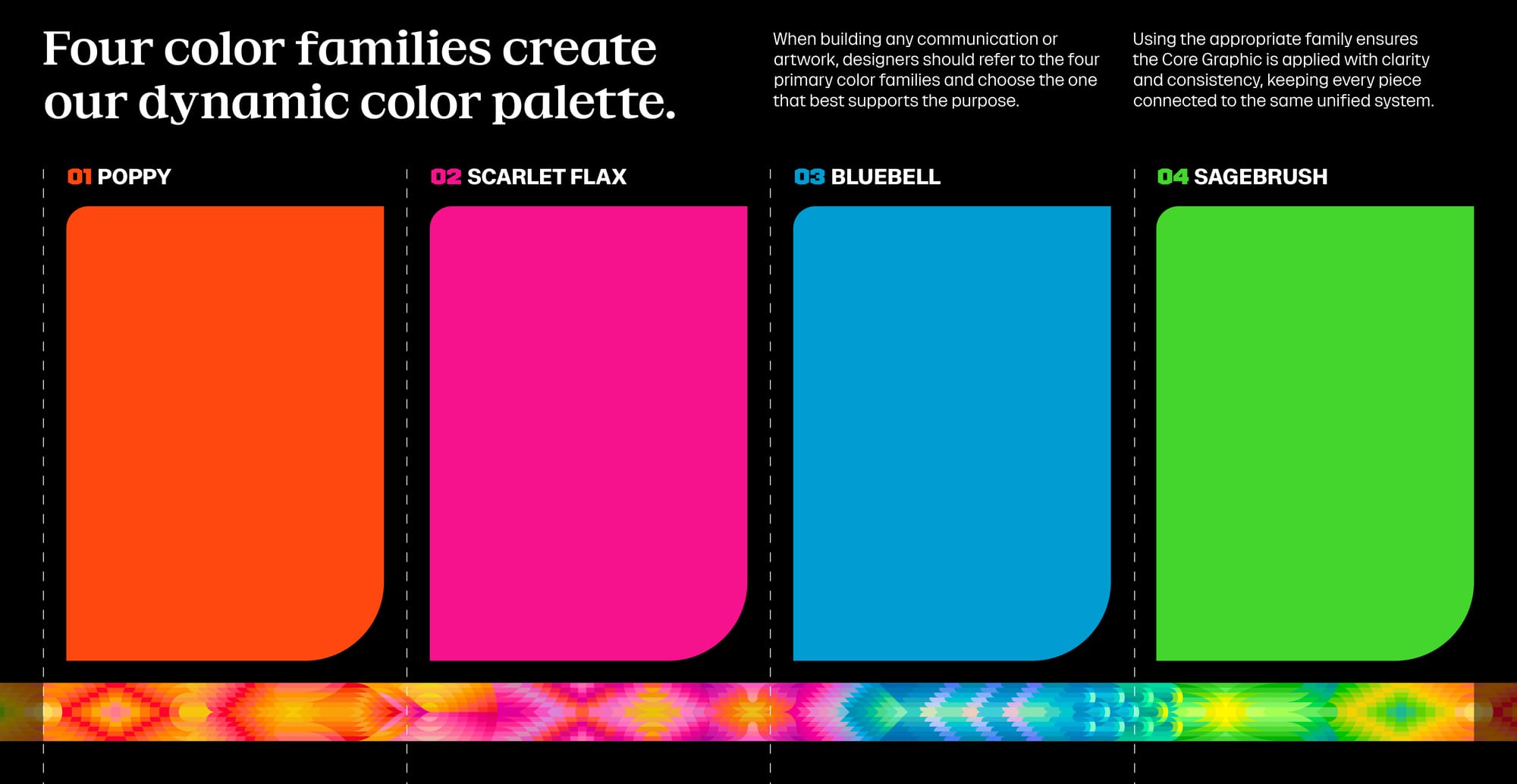
While LA28 sends European tourists out to San Diego County in 120-degree temperatures looking for desert sand verbena that went dormant months ago, these four colors will come together to make 13 patterns — confusingly named "blooms" — "inspired by the people, cultures, and landscapes of LA." From Poppy left to Sagebrush right these are: World Stage, Desert Vegetation (AGAIN?), The Flame, Hollywood, LA Light, Perpetual Innovation, City Meets Nature, Cultural Intersections, Architectural Moments, The Pacific, Gateways, Culinary Crossroads, First People.
Finally, you can start to see how it all comes together as a system.
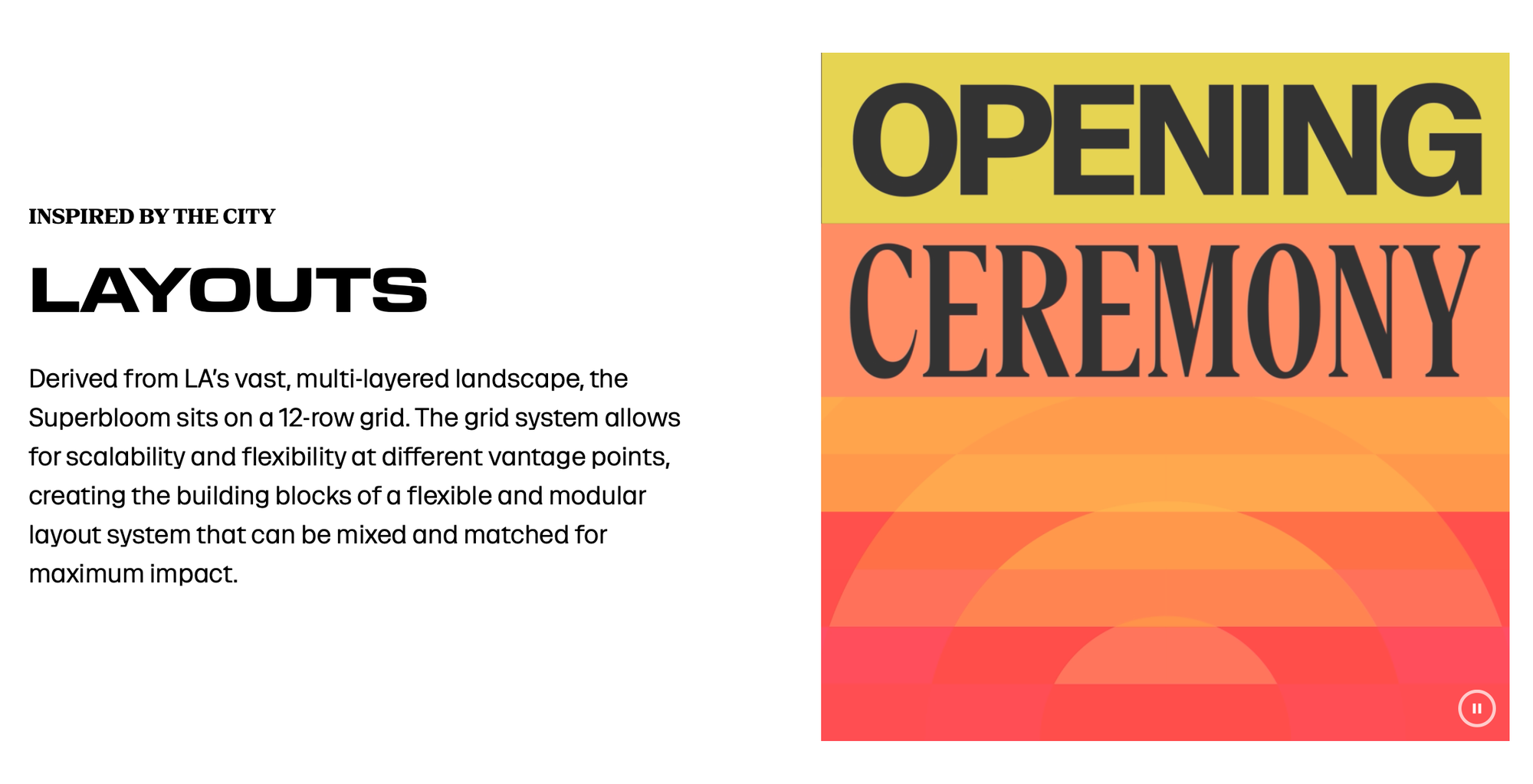
But then — plot twist — the brief takes a surprising turn.
Apparently, the color palette doesn't actually come from desert wildflowers? The colors are actually inspired by... bird of paradise?
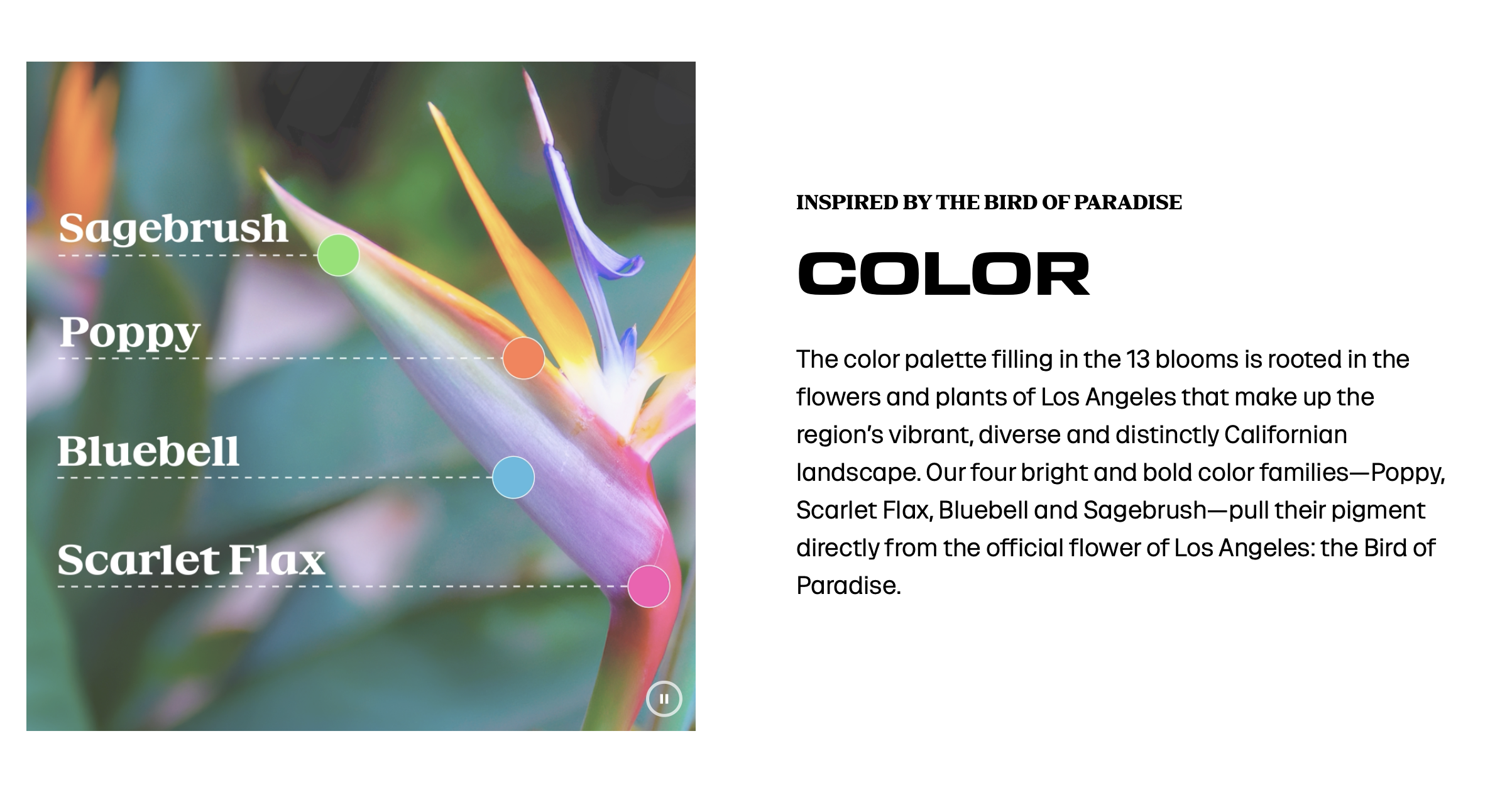
Bird of paradise might be the official flower of the city of LA, but like so many Angelenos, it, too, is a transplant. And like the palms that were planted a century ago, it's evidence of outdated thinking, says Charles Miller, chair of LA's Climate Reality Project. "I feel like we have constantly missed the opportunity with the Olympics to feature the wonderful native plants that are native specifically to LA County," he told me. Putting this focus on bird of paradise and scarlet flax, both African flowers, takes attention away from the richness of the region, he says. "They are not appreciating the plant heritage of the only Mediterranean climate in the U.S. that's also a biodiversity hotspot — and the one that's most imperiled."
Miller acknowledges the nod to tradition but picking bird of paradise to represent 2028 shows that LA28 isn't embracing sustainability at all. Our symbols need to evolve; this is one reason that Miller worked with a huge coalition to declare LA's native toyon — with its brilliant red berries — as the official city plant over a decade ago. Although he did have one nice thing to say about bird of paradise: "It is a pretty good rat habitat, so there's that."
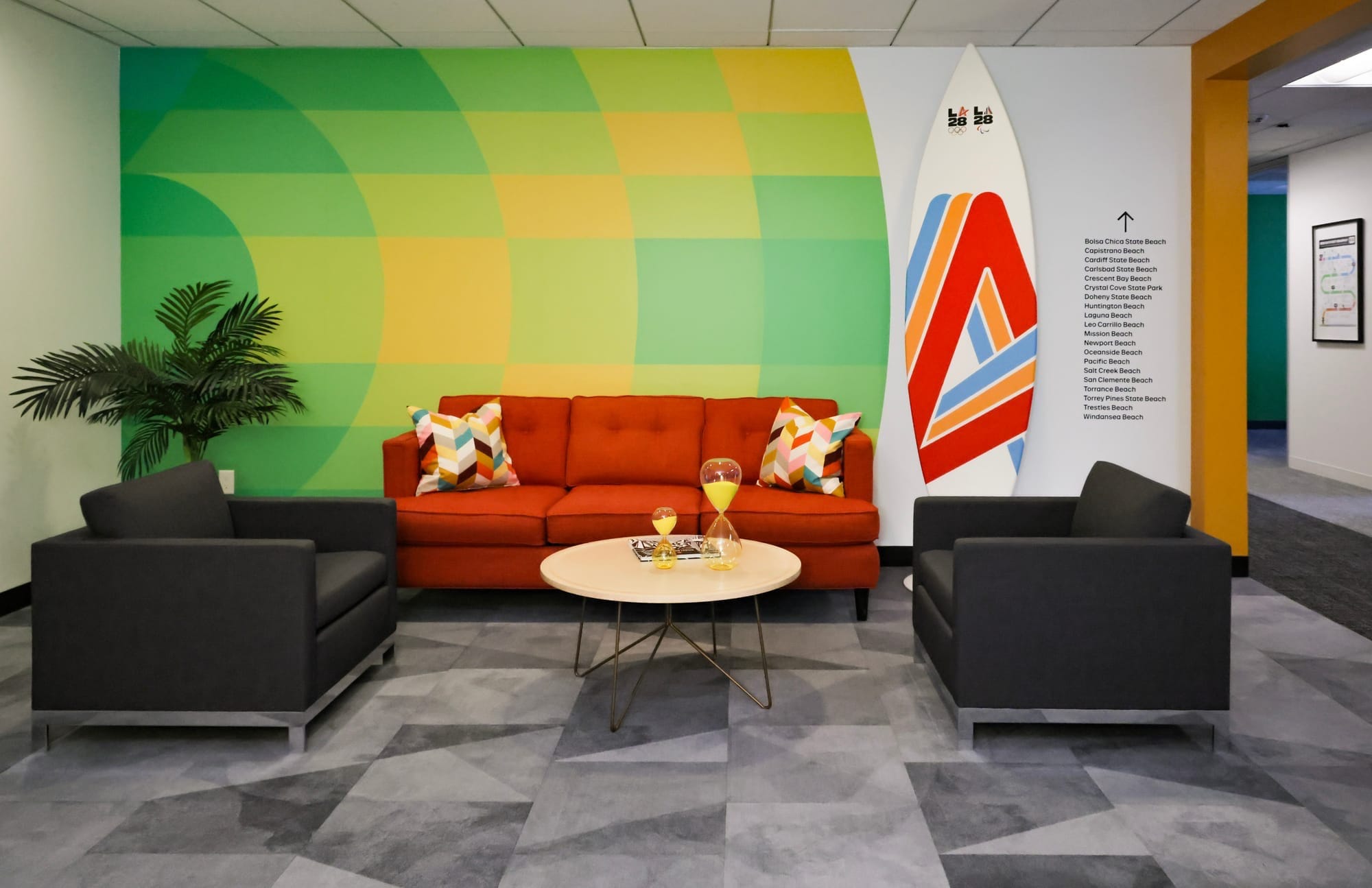
Will anyone be questioning if Scarlet Flax truly epitomizes Perpetual Innovation or wondering why Architectural Moments are rendered in Bluebell? No. But after talking with Tilford and Miller, I think there's a huge missed opportunity here to use the colors of various native plants to represent LA's microclimates based on where they actually grow. LA28 has divided the region into 17 zones of activity, and ideally the branding would also serve as a kind of macro-wayfinding system as you're transitioning from one part of the city/biome to another. So you'd know, just by looking at the graphics, where you were currently situated and where an event is being held. That doesn't sound like what the designers have planned.
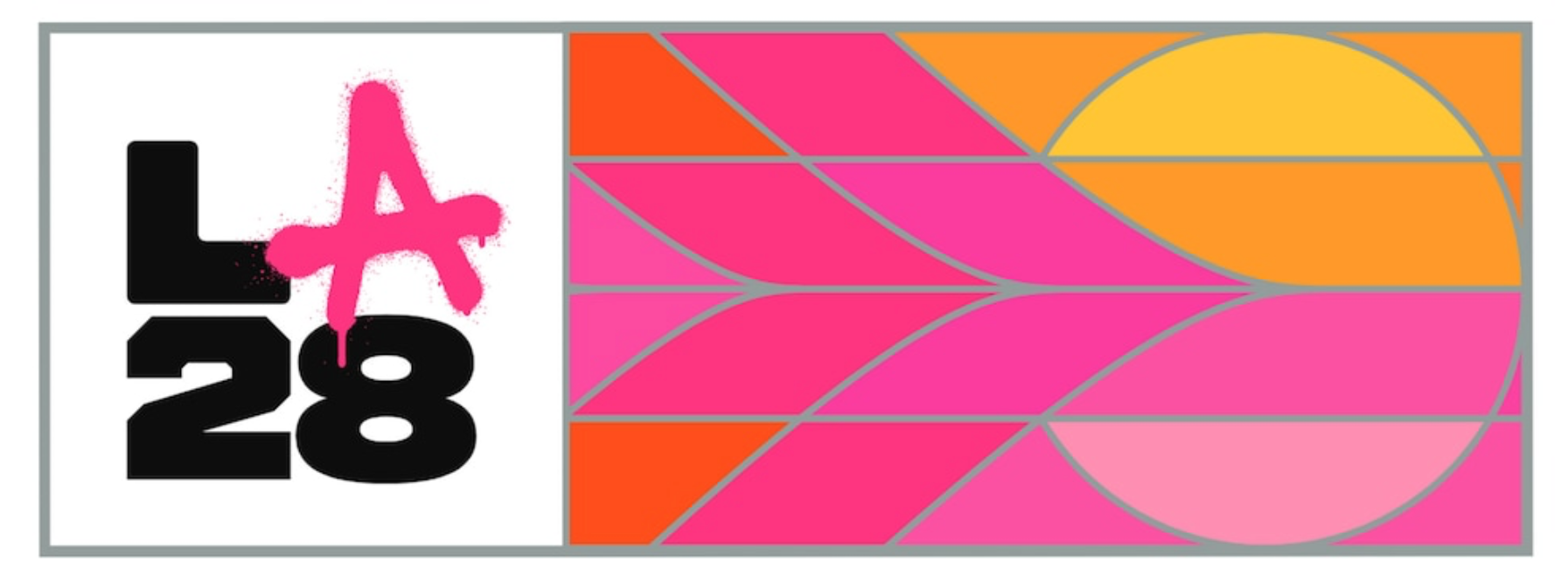
In truth, like the logo, LA28's visual language may be too abstract for interrogation, especially when animated and/or blown up to supergraphic size. The colors, wherever they actually came from, nicely echo 1984 without feeling too throwback. The pins are already for sale. However, I think it's going to be hard to remember what each graphic stands for, and 2028-me is not looking forward to constantly trying to figure out what each pattern is referencing.
I also will need at least two years to process LA28's befuddling typographic decisions, which keep getting more muddled.
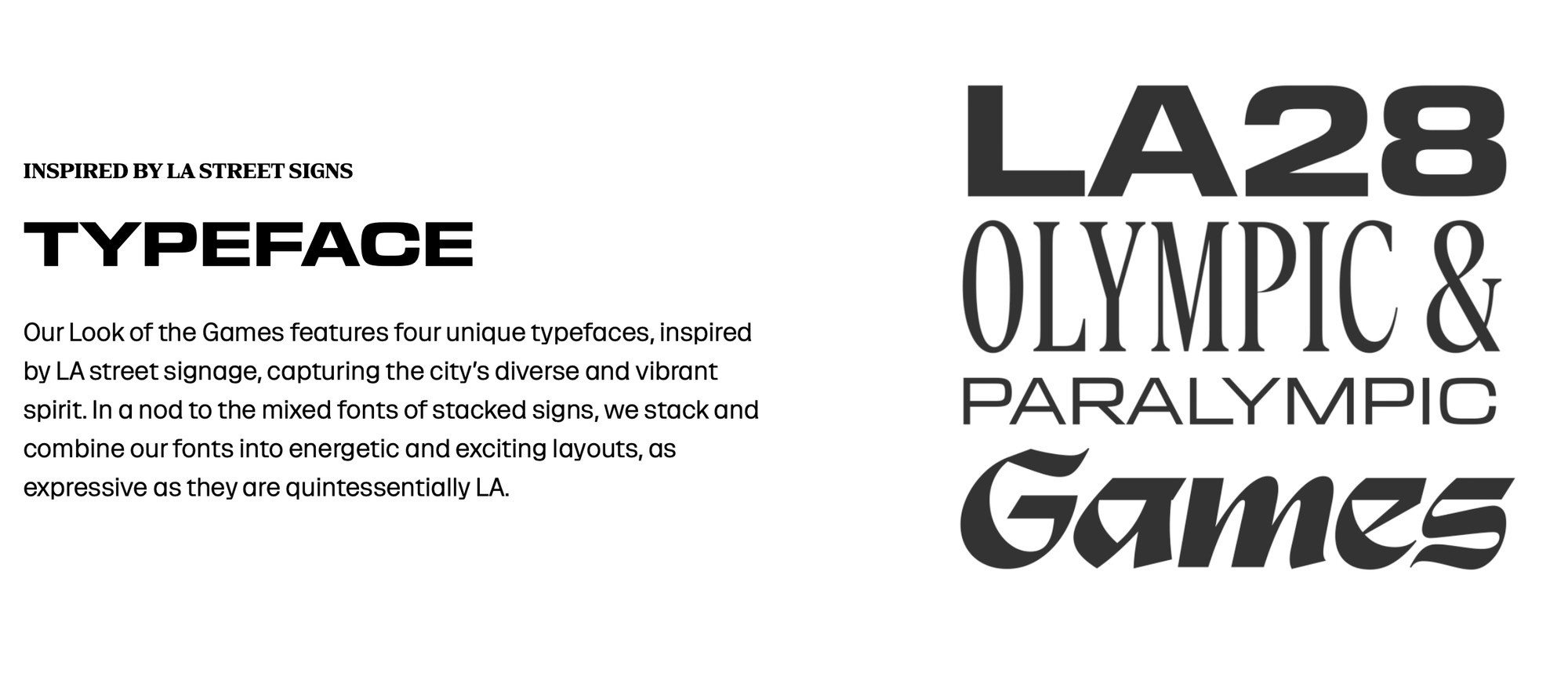
You really don't have to do this!
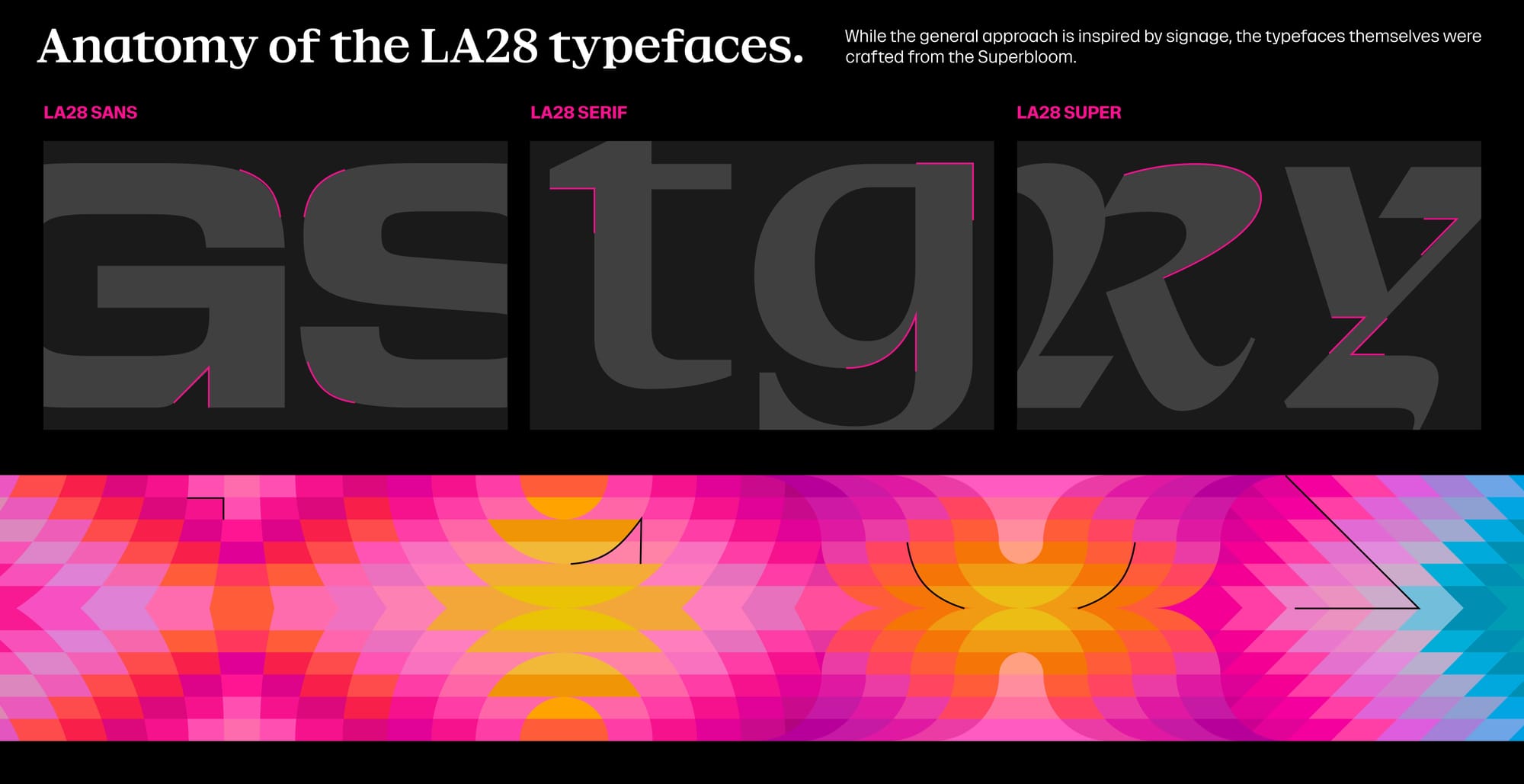
Just say you wanted to make four different typefaces and leave it at that!
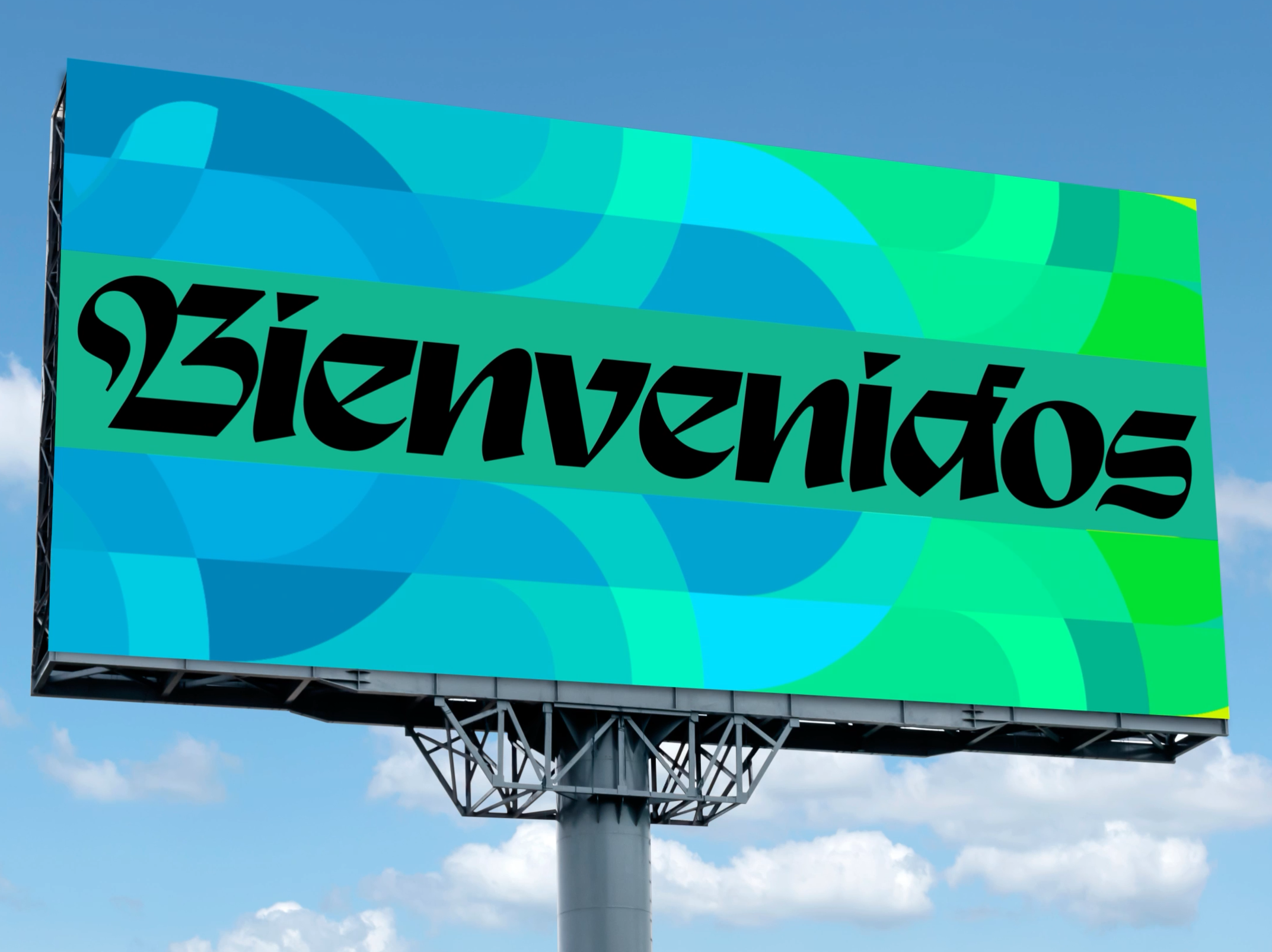
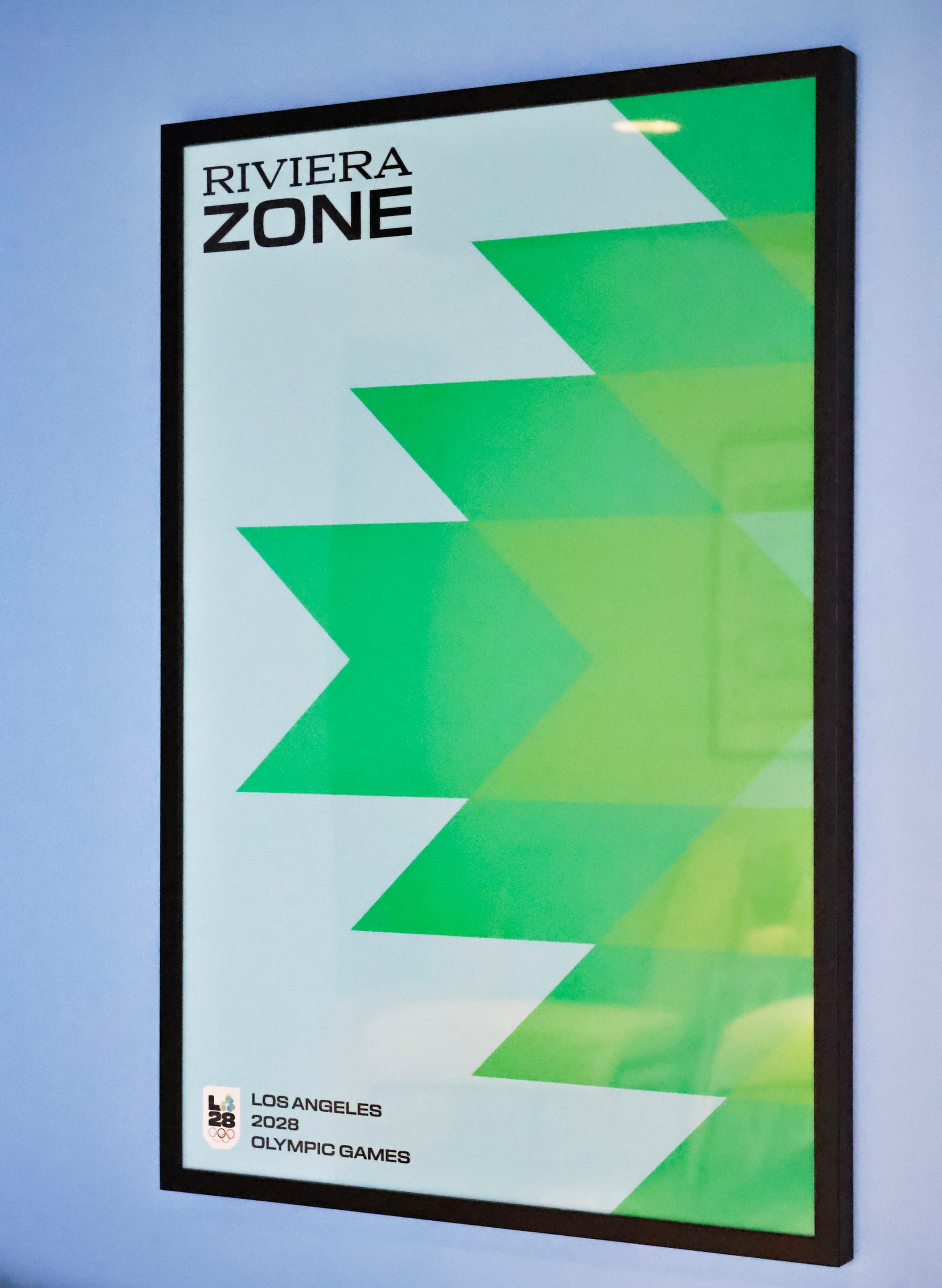
Still, I really do appreciate the effort to at least attempt to anchor the branding to LA's natural landscape. After the fires, LA28's new-to-LA CEO Reynold Hoover took an interest in native plants. Instead of trying to make LA a desert, a nice nod to LA's flame-adapted oak groves might have been more appropriate; I could see a palette made up of "fire followers" like the lavender-blue giant-flowered phacelia that the Theodore Payne Foundation sees popping up in Malibu. It's even more symbolic than a superbloom, as these blossoms can only achieve their full potential after a fire. Or maybe that was too intense of a metaphor for the design team.
While she'd also prefer to see LA28 champion the chaparral around the venues themselves, Tilford will take any attention paid to native plants. "Our goal is more native plants in the ground," she says. "If the lasting legacy of these games is that a bunch of people look up 'superbloom' and go buy wildflower seeds for their home, that's a win."
And I, too, continue to hold out hope for legacy. While the biodiversity corridors proposed by native plant advocates didn't make it directly into LA28's sustainability plan — there's still time; the deadline to apply for LA28's resilience grants is today! — maybe this opens the door for a mass poppy-planting campaign that results in an actual urban superbloom in years to come.
But, hey, at least it's not a palm tree? 🔥
 Alissa Walker
 Alissa Walker


When you've committed to holding a Summer Olympics, a marathon route becomes a guaranteed death march

There is growing concern around the absence of a cohesive human trafficking prevention strategy for LA's megaevent era
