
How to get people excited about transit
"It will literally be your best selling t-shirt, it will get you so much PR, and if anyone interprets this inappropriately that's a them problem"
"It will literally be your best selling t-shirt, it will get you so much PR, and if anyone interprets this inappropriately that's a them problem"

Join a self-described "sports crank" on March 16 at 3 p.m. on Zoom
LA always feels empty this time of year. But at the end of 2025, the city feels not just deserted, but deflated

Exactly one year ago, I remember hitting publish on my final story of last year. Our struggling metropolis had just barely made it, broken and bedraggled, to the end of 2024. Then, only one week later, 2025 began in earnest: a triple whammy walloping of fires, ICE, and a budget apocalypse that eradicated city services. Everyone was afraid to go outside for one reason in the first half of the year, then stayed indoors for a different reason in the second half of the year. Tourism plummeted. Restaurants closed. Leaders could barely craft a strategy to address one crisis before another came cascading down. LA always feels empty this time of year. But at the end of 2025, the city feels not just deserted, but deflated.
Yet, somehow, in just six months, more people will arrive in LA, filling our trains, our plazas, our bars, our parks, our crooked curb ramps — and they won't really ever stop coming. In two short summers, LA will be filled with more people than we've seen — ever, if LA28's crowd estimates are accurate. A city that's largely retreated from public life will find itself suddenly activated, vibrant, crowded. What will we do with ourselves? Everyone's getting ready in their own way; while leaders organize one set of volunteers to pick up trash because company's coming, another set of volunteers are trying to figure out how to patrol the federal security perimeters of venue sites to keep immigrant workers safe. After 2025, no one can predict how it will all go down. But I'll be there to cover it all. Here are the most-read Torched stories of this year — and a look ahead to 2026, ready or not. 🔥
With over 35,000 page views — and counting; an uptick registers whenever we see bad air days — my attempt to navigate puzzling public health messaging as the fires burned was also my most-read story of the year. In the weeks afterwards, I was contacted by over 300 people, mostly scared moms, asking for advice. I think I answered every single query. This was a lesson in how difficult it is to find accurate information post-disaster that our local leaders don't seem to care about fixing. Now imagine something similar happening when millions of tourists are here!
 Alissa Walker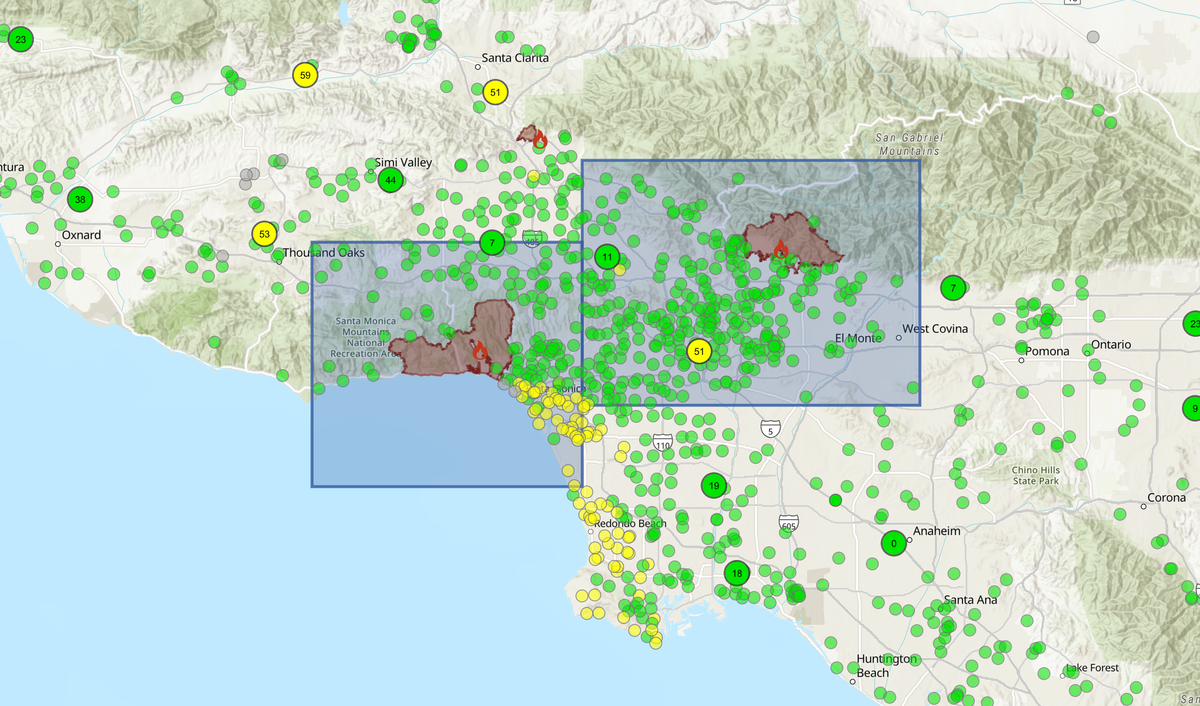
The fires, like planning for LA's megaevents, continue to highlight LA's leadership vacuum. Yet while houses were still burning, the international media remained preoccupied with LA's Olympics readiness, so I tried to connect these two concepts when I spoke to reporters at Bloomberg, Today Explained, the Washington Post, and the New York Times. I wrote about the same vacuum for the Los Angeles Review of Architecture, where LA's leaders had a moment to create a centralized authority that would have guaranteed a safer, more efficient, and more thoughtful rebuilding process — and simply didn't.
 Alissa Walker
The story of the legendary landlord-shaming spreadsheet was featured in pretty much every national publication, but in my piece I was also sure to include information about the questionable post-disaster practices of Airbnb — concerns which have only grown over the past year as both the IOC and FIFA have named Airbnb as global partners. As spreadsheet mastermind Chelsea Kirk wrote in N+1, my headline inspired the permanent name of the collective: The Rent Brigade.
 Alissa Walker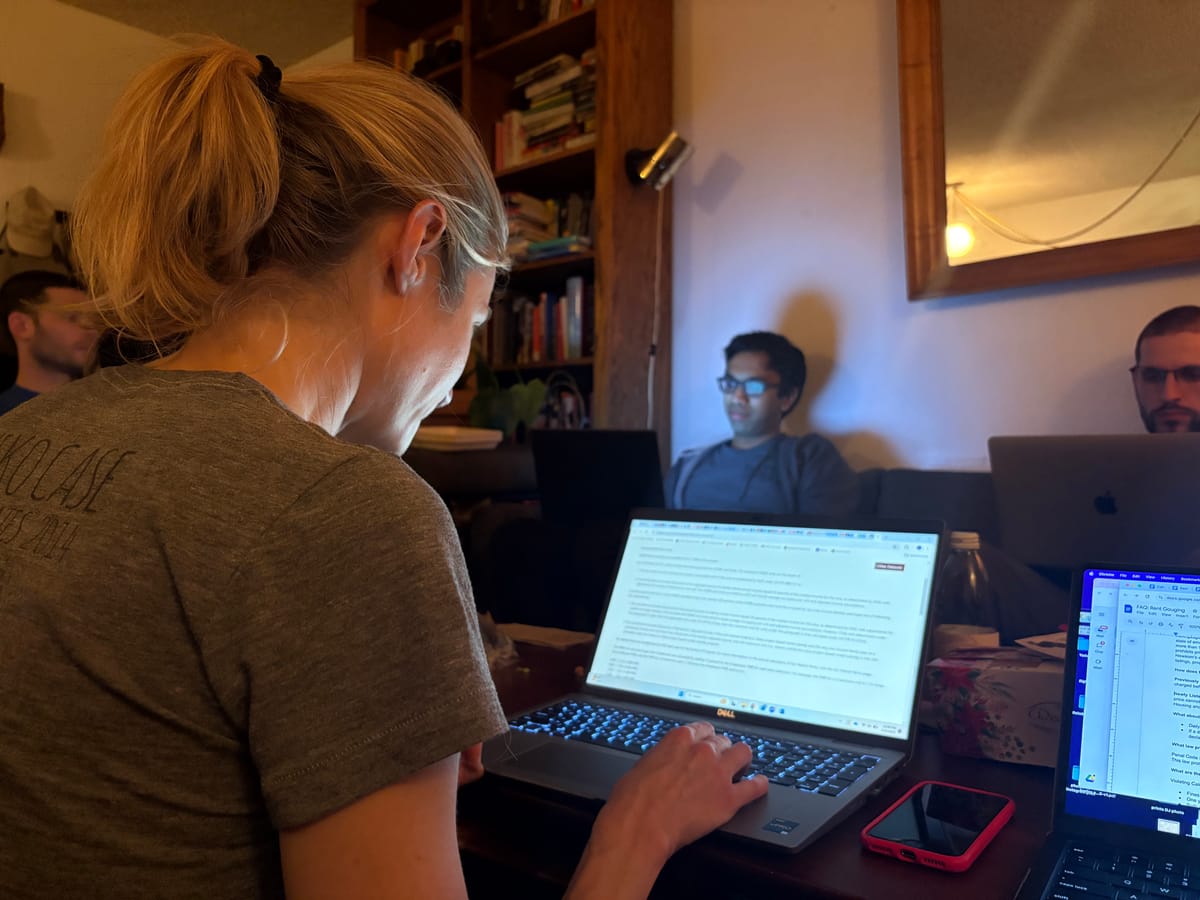
For the next few summers, if millions of international visitors do, in fact, come to LA, it will be at their own peril, risking travel bans, detainments at border crossings, and deportations. During other soccer matches this summer, as ICE ran rampant through the region, immigration lawyers and human rights groups issued warnings about attending games. Instead of saying "the world is welcome," over and over, the LA leaders hyping these events need to show the world that they actually mean what they're saying.
 Alissa Walker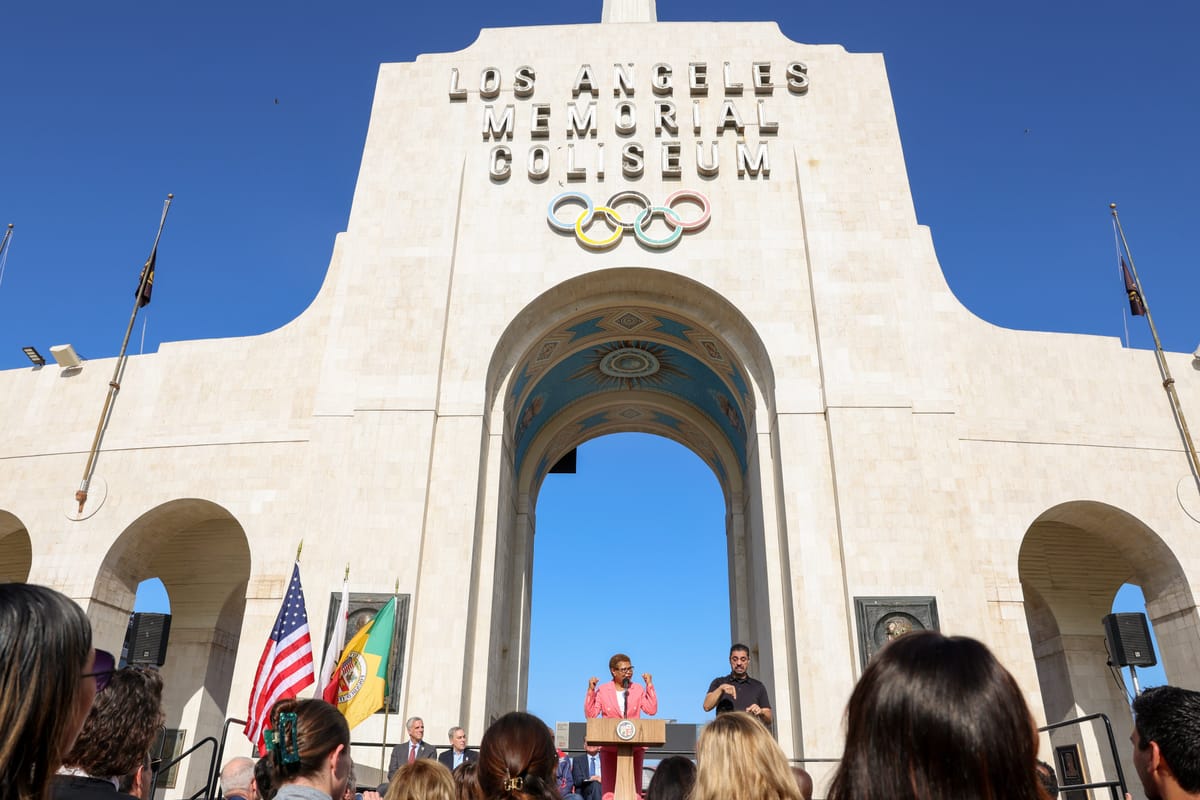
Of course we didn't need Trump to call in the Marines, as I wrote in June — an assessment so accurate I was quoted by John Oliver. But the truth was that federal troops were already here — per the LA28 national special security agreement we entered into in 2024 that put the Secret Service in charge. During the invasion of MacArthur Park — on the six-month anniversary of the fires, no less — Councilmember Eunisses Hernandez made what would be one of the most prescient statements of the year: "What you see happening in MacArthur Park is coming to you." It's an even more chilling warning now as other World Cup host cities are being targeted by ICE.
 Alissa Walker
After the fires, LA28 CEO Reynold Hoover told the IOC that the private nonprofit running the games wanted to become a civic organization. Yet as the region was terrorized by the federal government, LA28 has said nothing — even as the very workers who will execute the games are being targeted. I talked about this more on the State of Play podcast. And after the formation of the LA28 White House task force, when pundits Gustavo Arellano and Joe Mathews both came out swinging against hosting the games, we discussed this changing sentiment in Christopher Hawthorne's newsletter.
 Alissa Walker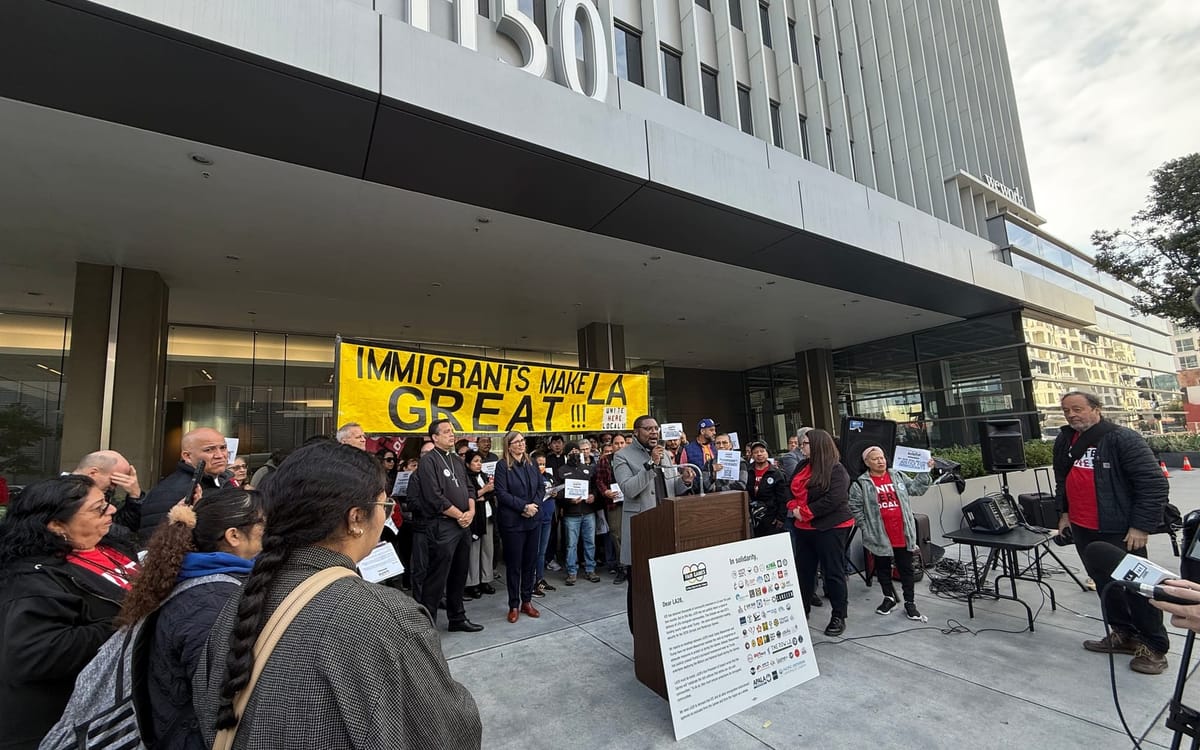
When city employees started raising alarms to civil rights attorney Connie Rice that the city was about to sign a bad deal with LA28, she wrote a letter to LA Mayor Karen Bass listing all the ways the city was in trouble. The Enhanced City Resources Master Agreement, which details who pays for what city services in 2028, was supposed to be settled by October — and there's still no agreement in sight. On the day I'm publishing this, LA28's human rights strategy is due to the city, a laughable proposition as kidnappings continue to occur on LA's streets. LA's World Cup host committee also had one for FIFA which is linked up in this story, as well as my observations that nearly every pledge has been undone by the current administration.
 Alissa Walker
As LA navigated a fiscal bloodbath that left us with staff cuts, abysmal service levels, and dwindling infrastructure dollars — which Spectrum's Kate Cagle and I determined was, indeed, a "budget doom loop" — Deputy Mayor Matt Hale revealed the city actually didn't have a strategic plan for its megaevent era yet: "The investments we're making this year are headed in the direction of developing that plan." The only way to truly head off this oncoming crisis is adopting a capital infrastructure program — if the city can get its act together to approve one.
 Alissa Walker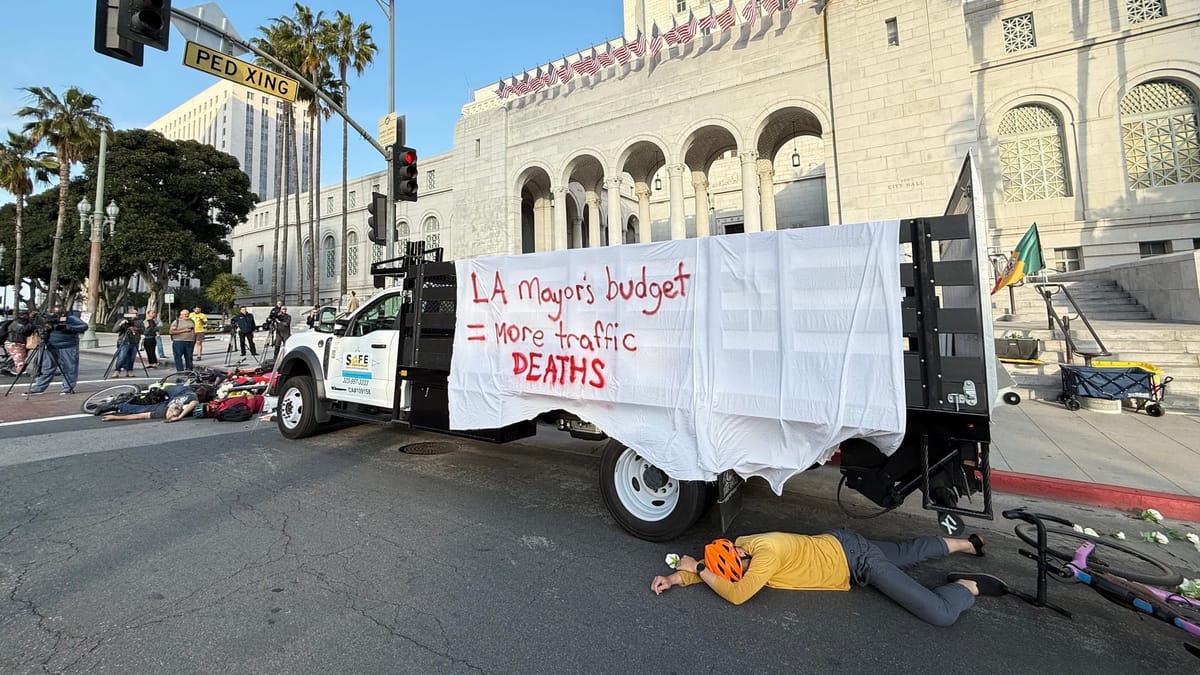
Speaking of prioritizing megaevent improvements over everything else, I had written before about LA's severely misguided $2.5 billion plan to expand its convention center ahead of the Olympics, which the council approved despite the dire warnings of its budget chair. But before I interviewed convention center expert Heywood Sanders, I had no idea just how bad this deal was. I knew I had to publish our entire conversation, which includes me literally banging my head on my desk.
 Alissa Walker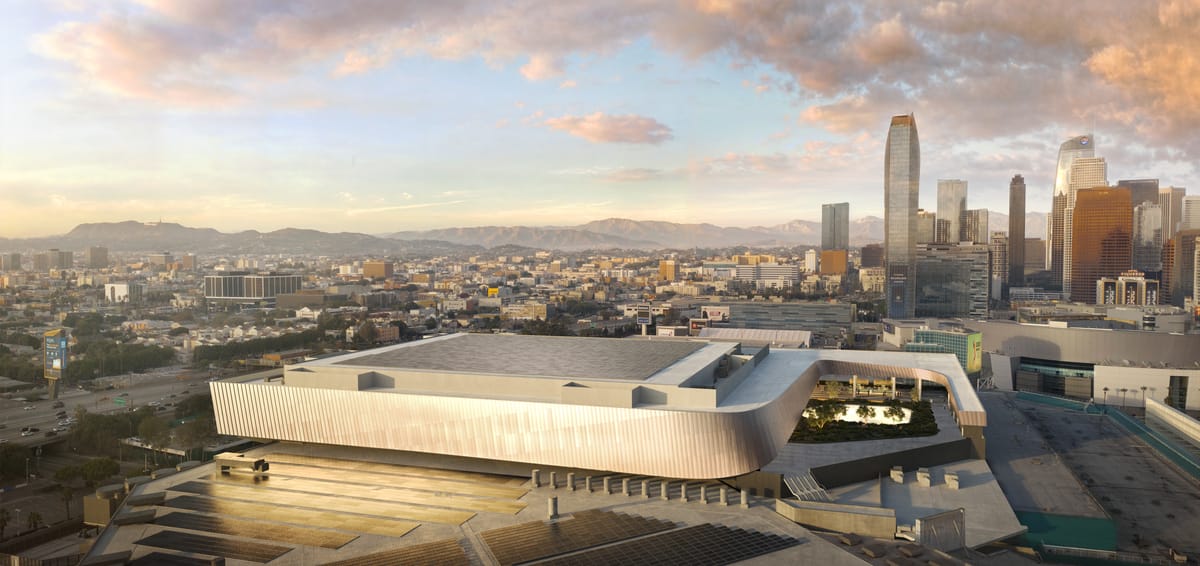
Guys, I'd love to stay we stopped LAX's $1.5-billion new freeway, but alas. Despite the outcry from local residents, and a very well-articulated argument from an actual transit expert for why this is guaranteed to make traffic worse, the plan is moving ahead — even as there's still no plan to open the three-years-late people mover.
 Alissa Walker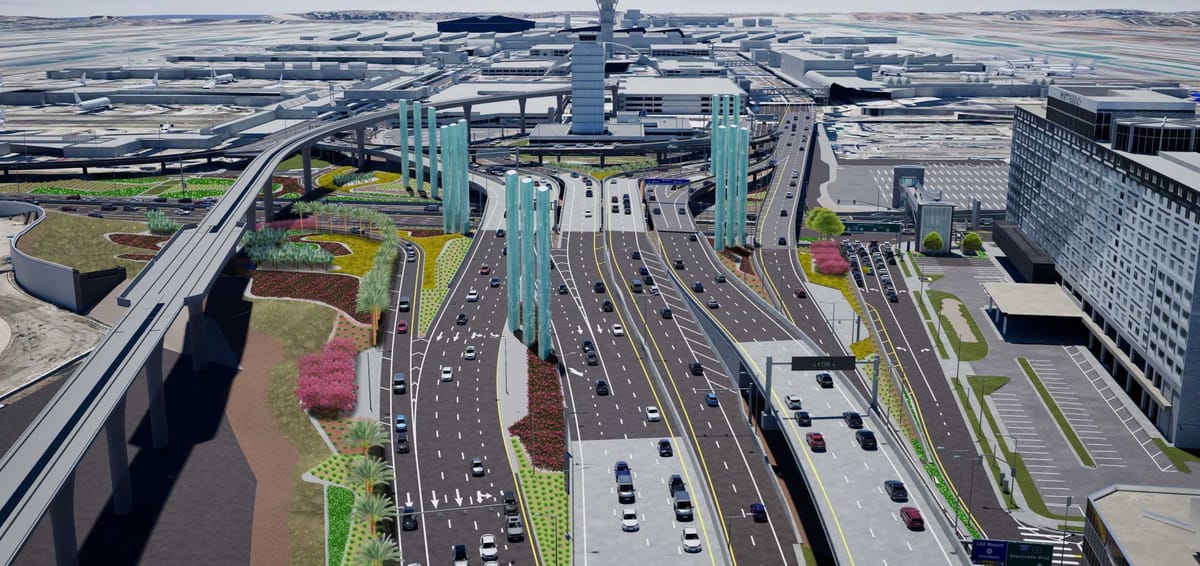
In September, I was the first to report on LA's Park Needs Assessment, a nearly 500-page document charting a new parks and recreation vision for a city that recently dropped to 90th out of 100 U.S. cities in the Trust for Public Land's annual ParkScore index. There are no easy fixes, but a forthcoming ballot measure, charter reforms, plus opening LAUSD schoolyards could change the way LA creates, maintains, and cherishes its green spaces.
 Alissa Walker
Before the 1932 games, up to 40,000 palms were planted along LA streets, sentencing the city to a century of sweat. I broke the news of the brand-new ShadeLA coalition that's trying to undo that legacy with targeted shade-focused strategies for upcoming megaevents. ShadeLA already has its first big policy win: a proposal to create a citywide tree (not palm!) replacement strategy was just approved. It's almost like a unanimous LA City Council endorsement for Torched's new 2025 stickers.
 Alissa Walker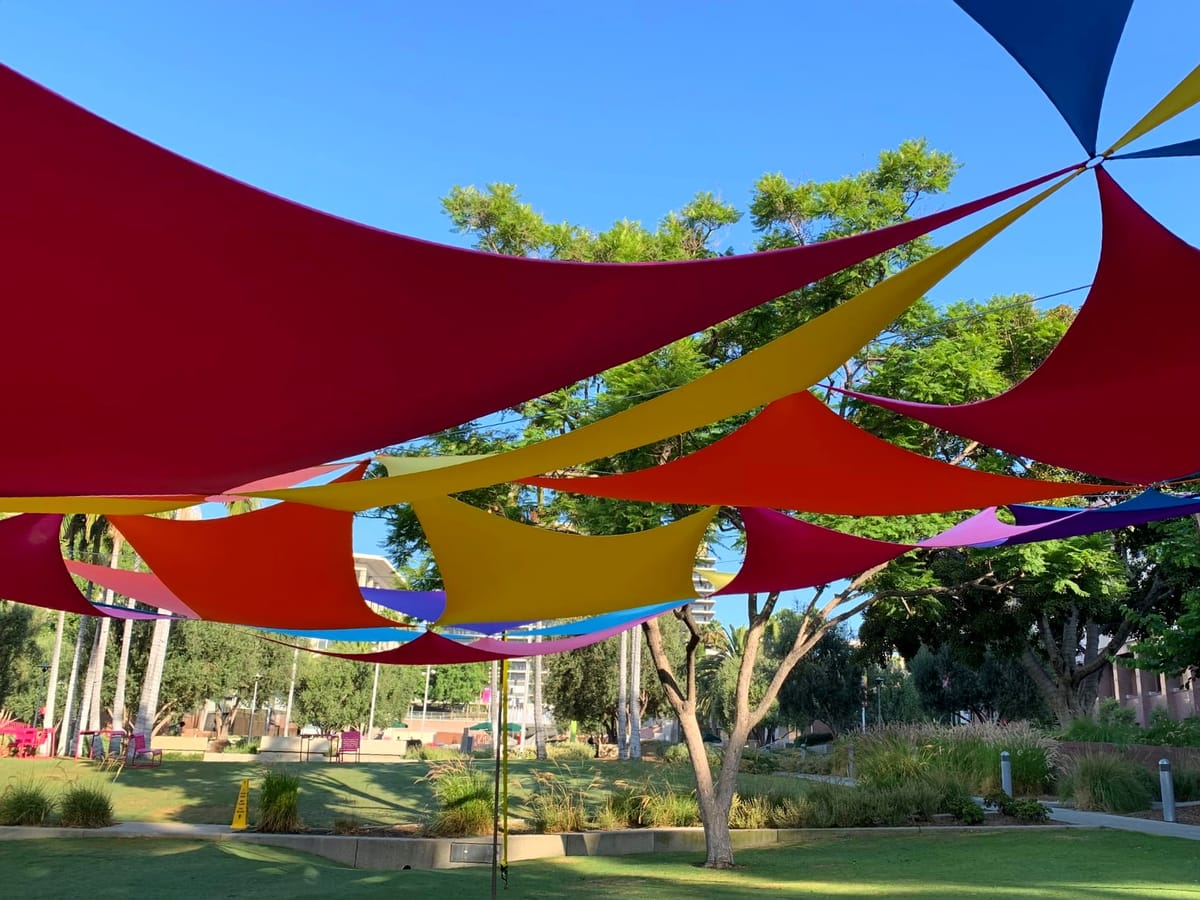
Did you know LA basically invented the contemporary practice of selling broadcast rights in 1984? And it was so successful that the IOC immediately took the ability to make these deals away from host cities? So what do "broadcast rights" even mean in an era where the Trump administration is trying to assert control over ever-consolidating, ever-rightward-leaning media empires? This story wasn't one of my most-read, but it's important because there's more to it than just watching sports on Fox or NBC. Be sure to check out the photos of the electric car built in 1984 to film marathons!
 Alissa Walker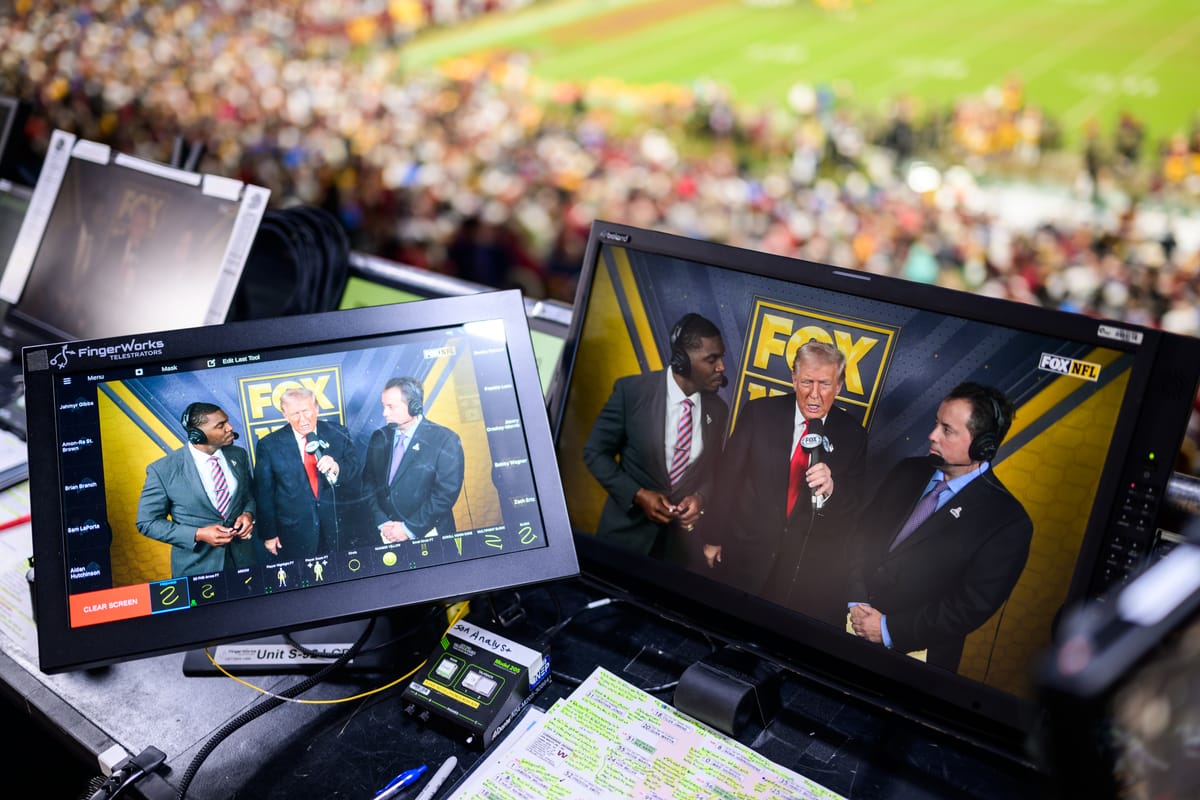

I've published the recordings for you to consume anytime you need a megaevent reality check. (Sorry.)

After speaking with so many people this year who are working so hard to make this place actually work, I'm seeing another way to tell LA's megaevent story