
How to get people excited about transit
"It will literally be your best selling t-shirt, it will get you so much PR, and if anyone interprets this inappropriately that's a them problem"
"It will literally be your best selling t-shirt, it will get you so much PR, and if anyone interprets this inappropriately that's a them problem"

Join a self-described "sports crank" on March 16 at 3 p.m. on Zoom
It's remarkable, given our climate reality, that more neighborhoods were not lost one year ago. But truly engaging with that climate reality means we have to rethink the entire city at once

One year later, I needed perspective. I headed to Griffith Park, 4,310 acres of the mountain range that slices horizontally through the middle of the city of Los Angeles, our very own municipal wildland-urban interface. Little clusters of LADWP-branded cones stood along the fire roads washed out by nearly a year's worth of rain falling over a few months; compare/contrast to last year, when we'd rolled into 2025 without our "first flush." Mini waterfalls stair-stepped beneath the glossy deep-green canopies of oak trees. In the distance, freeways hummed and train horns blared and the rhythmic thwacking from multifamily residential construction sites alternated with the screeches of chimpanzees at the zoo (at least I hope that's what it was). As I ran high above the city, I counted people speaking four different languages. One year later, LA remains LA.
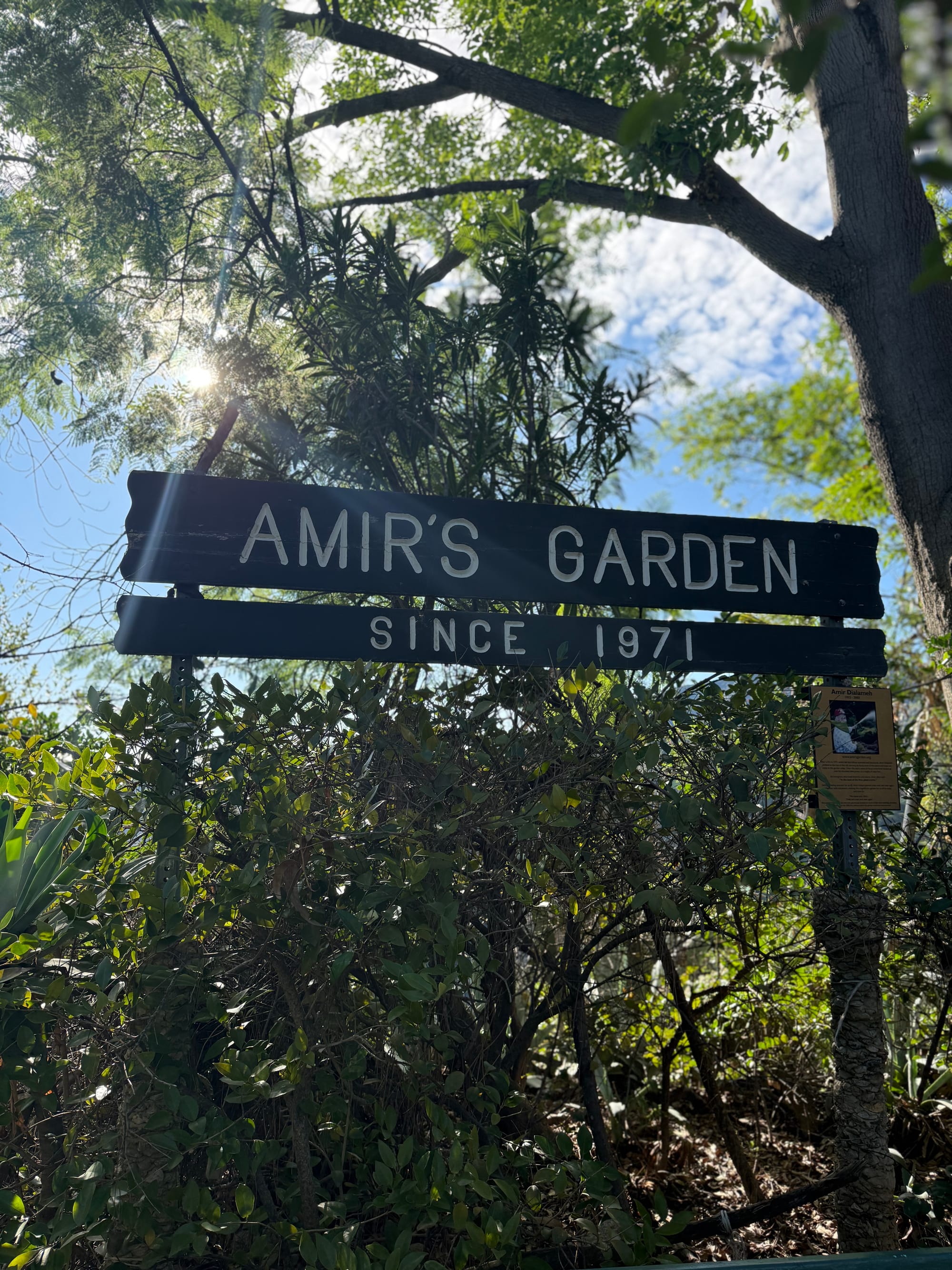
I climbed to Amir's Garden, named for Amir Dialameh, an Iranian immigrant who lugged jacarandas and oleanders atop a ridge to rehabilitate a burn scar after a fire swept through the park in 1971. Now irrigated with a set of sprinklers thanks to Dialameh's tenacity, the plot also serves as a key flame-suppression tool. "I was intrigued by the volunteerism that built this country," reads a quote from Dialameh on the official Amir's Garden website. "People doing things instead of relying on the government." Resting in the shady five-acre grove with over 100 types of plants is a reminder that we're all tenders of this fire-prone landscape. And it's a reminder that we're all just guests. The park still ignites every few years — a 1933 fire here remains the deadliest in LA city history; I clearly remember two particularly terrifying days in 2007 — with publicly inaccessible areas in various stages of recovery checkerboarding across the trails. One of them is from January 20, 2025, when a plume of smoke appeared here as the Palisades and Eaton fires continued to burn. The fire was extinguished before it tore through the homes clinging to the adjacent canyon. But, eventually, one will.
Scientific consensus has formed around the idea that what decimated LA in January 2025 was not wildfire, but a new type of urban fire. On the evening the fires began, as the palms on our street launched fronds like missiles, I remember a wind gust rattling our house with such intensity that it also shook a core belief I'd held: suddenly, it seemed, being way down in the flats did not necessarily make our home any safer. In those conditions, with embers traveling up to two miles, a fire that started literally anywhere in LA could have quickly taken out a large portion of the city. It's remarkable, given our climate reality, that more neighborhoods were not lost one year ago. But truly engaging with that climate reality means we have to rethink the entire city at once.
You would assume a place that was already facing the worst homelessness crisis in the U.S. when a disaster made tens of thousands more people homeless would have used this opportunity to supercharge efforts to build safer housing. We're currently in a production slump that predates the fire; recent data from Hilgard Economics (the full report is here) shows that the number of permitted units in 2025 may not even top the number of permitted units (8,703) in 2024 — and even that is about half the number of permitted units (15,289) in 2022. You might look at the challenges, risks, and dangers of rebuilding in the Palisades, where the city lost approximately 6,000 residential units just in that burn area, and conclude that what we really need are tens of thousands of new homes built everywhere else, designed to the most up-to-date codes, surrounded by parks that could combat extreme heat and act as firebreaks, located closer to jobs and footsteps to transit. LA could have spent the year planning brand-new communities just like this for our new climate refugees that would also end up saving the city billions of dollars. We didn't.
There are many reasons for the slowdown in housing production, some out of the city's control. But LA Mayor Karen Bass — who wasn't seen in public on January 7, 2026, a strange choice when the biggest complaint from her constituents was that she wasn't seen in public on January 7, 2025 — is actively trying to stop safer homes from being built. The mayor, along with City Attorney Hydee Feldstein Soto, has embarked upon a legal crusade to subvert the implementation of SB 79, the state-approved mandate to add more dense housing around high-quality transit. (YOU KNOW, THE STUFF WE'RE BUILDING MORE OF THAN ANY OTHER CITY IN THE U.S.) The city's TAP card-thin argument is that this transit-adjacent housing will illegally strain LA's finances by imposing an estimated $2 billion in costs for additional city services, emergency responders, and infrastructure. This is a classic NIMBY trope, but in truth there's only one type of housing that creates such financial burdens on LA: homes built in areas with extremely high fire risk.
Yet, at the very same time, the mayor and city attorney are happily negotiating a very overdue contract with LA28 to provide additional city services, emergency responders, and infrastructure to host literally millions more people coming here in 2028. And that infrastructure, it should be noted, will see streamlined approvals because, per an ordinance heading through council this week, anything LA28-related will be officially expedited. So we all have this straight: LA's mayor and top lawyer are perfectly happy to tweak city operations to accommodate more people watching sports for a summer, but draw the line at accommodating more people who might dare to live, work, and ride trains here. Priorities!
One year ago, as ash rained from the sky, the only person I wanted to talk to about any of this was Lucy Jones. The seismologist who has spent the last few decades preparing us for a major earthquake — still coming! — started the Dr. Lucy Jones Center for Science and Society to work with governments and nonprofits on disaster resilience plans, and not just for earthquakes. When we finally sat down in March, what she said was difficult to hear: "I’ve been moving more into the climate space because what’s coming from climate change is going to be worse than what earthquakes could do to us."
Do not take this as permission to despair! Because preparing for what's coming tomorrow means we get a better city today. And a resilience plan is disaster-speak for getting to know your neighbors and your neighborhood. "That’s the idea: you are surrounded by community hubs," Jones told me. "That sort of community then connects you back to people, and makes you want to stay with it as you’re trying to deal with all of this. And then it’s easy to figure out who’s helping who." If 2025 showed us anything, it's that this is where LA excels. The way mutual aid groups rallied for fire survivors. The spreadsheet warriors shaming predatory landlords. The block captain system established in burn areas, which should really have been rolled out citywide. The patrols that mobilized to track ICE raids, and now, apparently, to also prevent ICE agents from shooting and killing their neighbors. In 2025, Bass's office launched Shine LA, a new community beautification effort. But in a major messaging misstep — and there've been a lot! — the framing after the worst climate disaster in LA history is that we're tidying up for the megaevents (or shall we start calling them MAGAevents?) not future-proofing the city to ensure our collective survival.
As I'm writing this, I'm watching fallen palm fronds get whipped up once again on our street. This week's wind advisory carries a low risk of fire, but the saturated ground means a high chance of toppled trees, something we know LA has zero money to replace. (Even LA's public-private tree-planting partnership has been temporarily shut down.) We can all become volunteer gardeners — although now maybe we'd plant only natives — but wouldn't it be better to have a government that takes proactive steps before the next big one hits? "One of the things that we like to say is that disasters don’t break systems," Jones said to me. "Rather, they reveal what’s already broken." So if we can't get it together after this, I asked, then what will we get it together for? It was a rhetorical question, but she answered it anyway. "I can imagine a future in which we do this, in which we survive here, and we figure out how to restructure into something more sustainable," she said. "I can also imagine a future in which we don’t." 🔥

When institutions threw up constraints, Melanie Winter's tenacity surged — just like the river she championed


LA28's Impact and Sustainability Plan is a needed and long-overdue start, but omits more than it commits

"We're trying to change the way that we as Angelenos think about our neighborhoods, so that we actually look around and say, where can there be more shade — in the same way that many of us have thought about trees"