
The best seat in town
It's a public bathroom, yes, but it's really a piece of infrastructure that unlocks access to the city
It's a public bathroom, yes, but it's really a piece of infrastructure that unlocks access to the city

It's a public bathroom, yes, but it's really a piece of infrastructure that unlocks access to the city

Taking a tour of a self-cleaning public bathroom requires a bit of self-effacing humor — and I was here for all the potty jokes. But as I stood watching who used JCDecaux's new toilet outside the Jardin du Luxembourg, I realized there's nothing funny about this beacon of civic efficiency. It's a public bathroom, yes, but it's really a piece of infrastructure that unlocks access to the city for seniors walking laps, disabled commuters, moms of lemonade-chugging toddlers, and the club kids at 1 a.m. And everyone benefits, Jean-Dominique Hietin, JCDecaux's Paris director, said proudly. "Each toilet is used 200 times a day."
The French company JCDecaux basically invented the concept of street furniture — benches, bus shelters, and even bike share — starting right here in Paris. But the company's single-greatest contribution to cities is the self-cleaning toilet, launched way back in 1980, and now found in 28 countries worldwide. In the lead up to the Olympics, JCDecaux started replacing Paris's existing aging toilet network at an astonishing rate: 417 brand-new toilets were installed in 18 months. Now there are a total of 435. But in a way, it's double that, as the new design was also meant to dramatically increase capacity; now there's cabin on one side and a urinal on the other. (I cannot vouch for the urinal experience, but the cabin experience is A+.)
Easily the highlight of my trip: a deep dive into Paris’s self-cleaning public toilets 🚽
— Alissa Walker (@awalkerinla.bsky.social) 2026-04-06T16:10:56.546Z
The door slides open to reveal an interior in a lovely shade of peacock blue more akin to what I've seen in a fancy hotel powder room. After you do your business and exit the stall — you can wash your hands inside or at a little station on the exterior that includes potable water spigot — the door closes and the cleaning process commences after each use. It looks a bit like a toilet theme park: the bowl is drawn back into the rear wall, where it's sprayed down and disinfected. Then the floor is "flushed" as well, with sensors that can determine if there's any, um, solids to dispose. I watched in fascination as the jets targeted a tiny scrunch of toilet paper that was soon swept away.
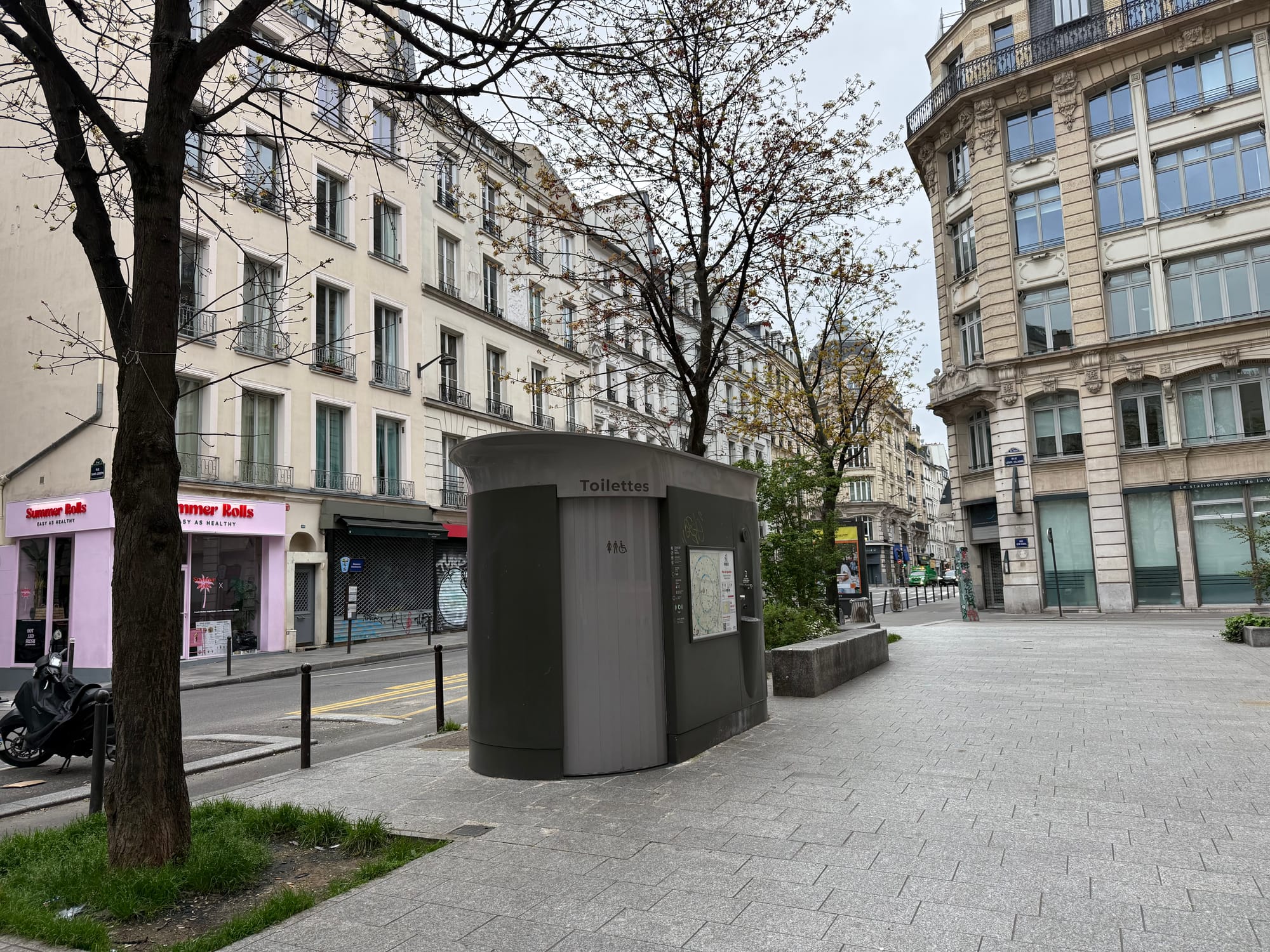
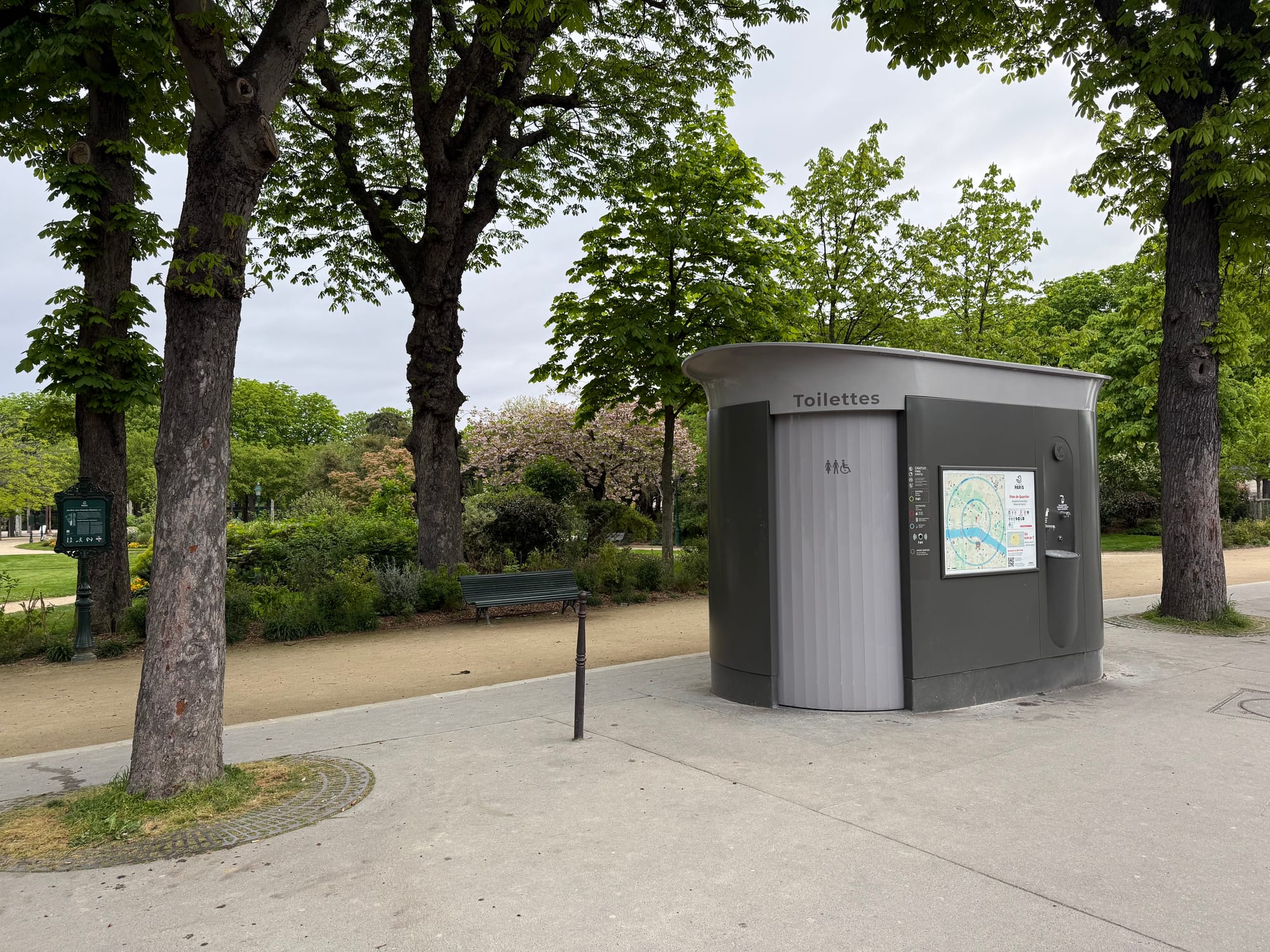
In parks and plazas, Paris's public bathrooms are part of the urban landscape
Sidewalk loos are a decidedly European amenity but some U.S. cities have ushered themselves into the future with their own self-cleaning toilet systems. As I wrote in 2024, San Francisco opted for a customized JCDecaux system and has now installed 25 toilets as part of a 20-year agreement — all at no cost to the city, thanks to the revenue JCDecaux makes on kiosk advertising.
LA used to have a handful of JCDecaux self-cleaning toilets, with a plan to install up to 150 public bathrooms, until our overconfident leaders decided we could handle this shit by ourselves. Unfortunately, we can't. LA's public bathroom program, launched in 2022, has only built 14 free-standing toilets. They are all currently closed, although Councilmember Ysabel Jurado is keeping four downtown toilets temporarily open with her own stop-gap funding. For now, Angelenos have no choice but to hold it.
Just a few steps away from the toilet I surveyed is yet another example of Paris's street furniture superiority while LA keeps trying to reinvent the wheel. The standard city bus shelter, redesigned by Marc Aurel for JCDecaux in 2015, is similar to LA's new design — and it's even the same shade of pale green, weirdly — except now imagine a bus shelter that's well-maintained, trash-free, and with real-time arrivals that actually work. And these particular shelters, which network through the 6th Arrondisement, are laced with greenery as part of a pilot program in alignment with the city's climate goals. A trellis sprouting with clematis was just starting to bloom as it climbed up one side of the shelter. A transit corridor that's also a biodiversity corridor? Paris lets you wait for the bus with butterflies.
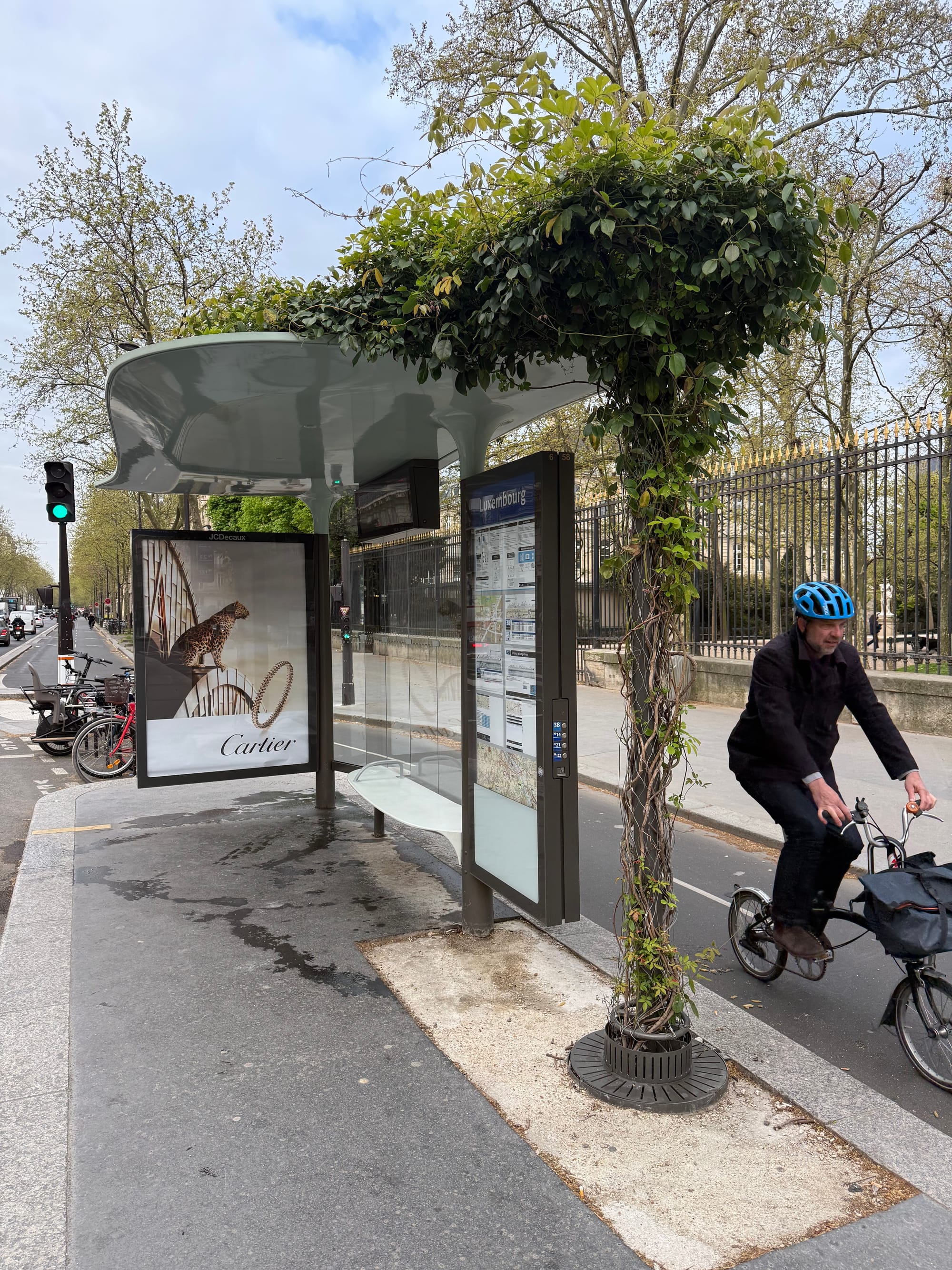
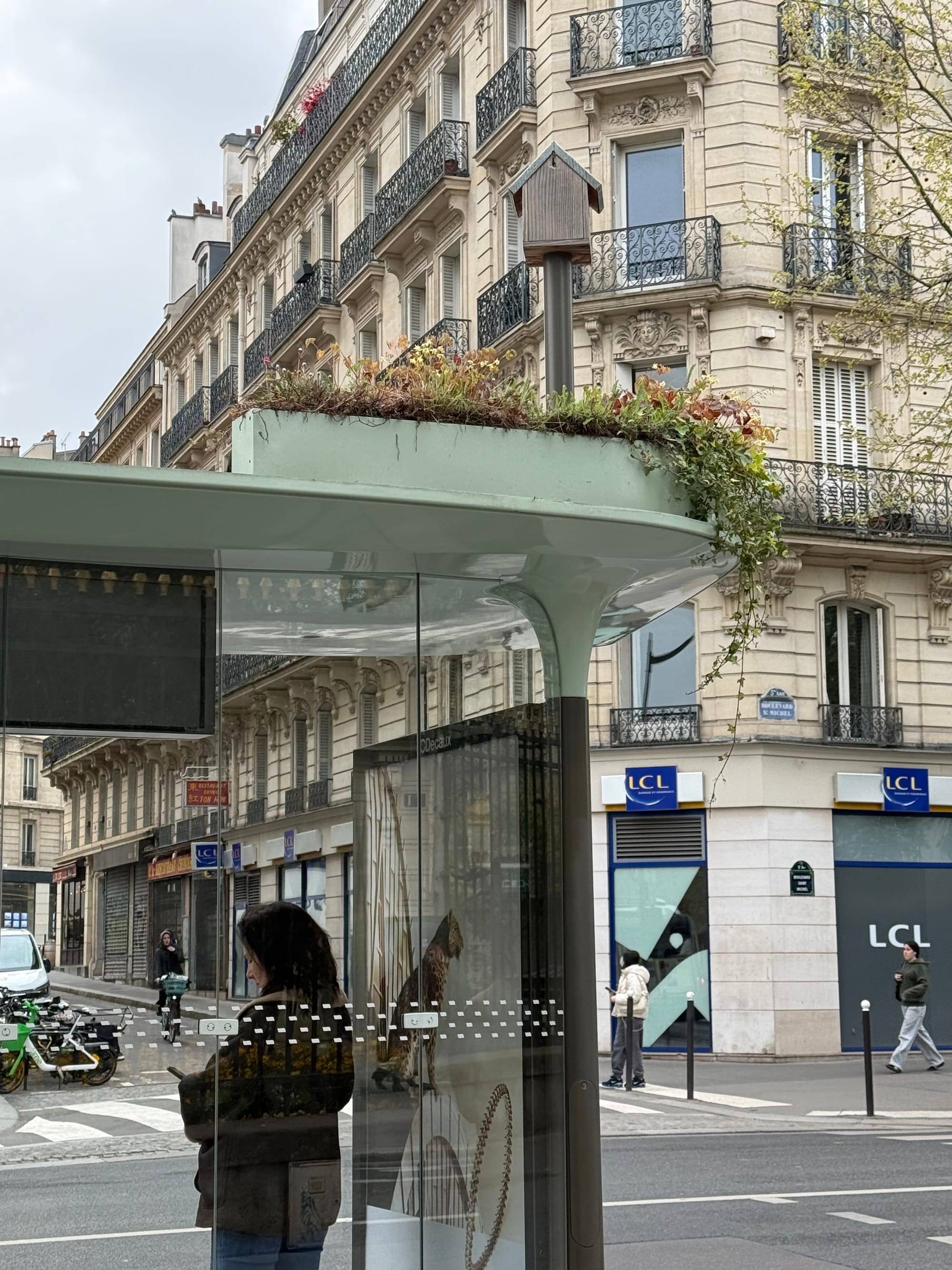
Even the Cartier ad is contributing to the biodiversity. And, yes, that is a birdhouse on top
It's not just the bus shelters, either. Looking around I saw jasmines and ivies curl atop ad kiosks, newsstands, and even the distinctive Morris columns, a European streetscape fixture that JCDecaux rebranded as part of its furniture offerings. Granted, this is just one pilot project happening in one park-adjacent part of the city, and it's easy to dismiss the whole initiative as a bit gimmicky. But it's a hint that JCDecaux is thinking about street furniture beyond each utilitarian application. And that's the whole point, says Isabelle Mari, JCDecaux's director of strategic projects and innovations. "It takes a lot of work to make sure that you fit into the city, but you also have something that's pleasing to the eye and adapted to each place," she told me. "The Morris column is more or less the same design as 1868. The bus shelters are very different. But somehow, they all work together."
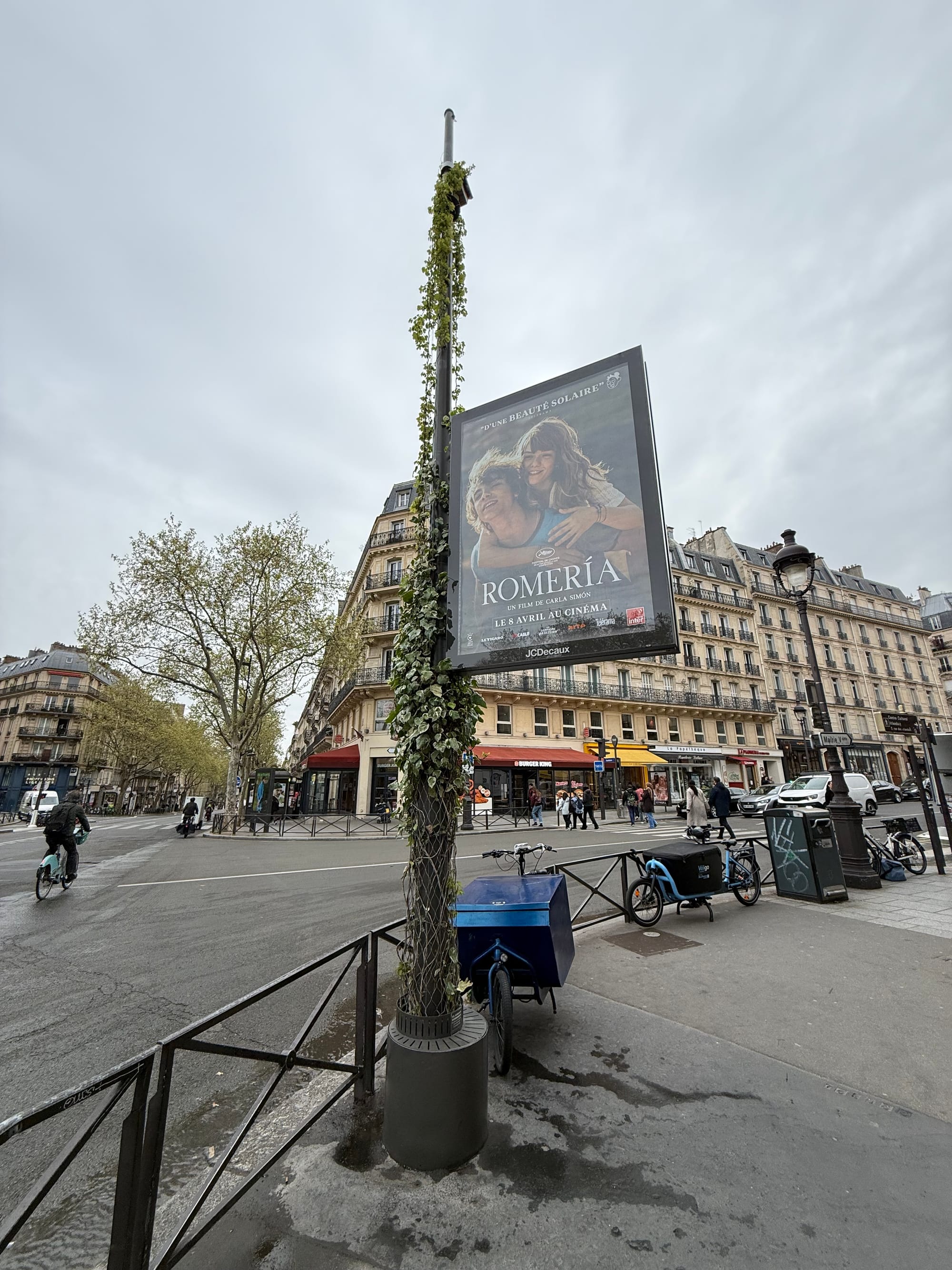
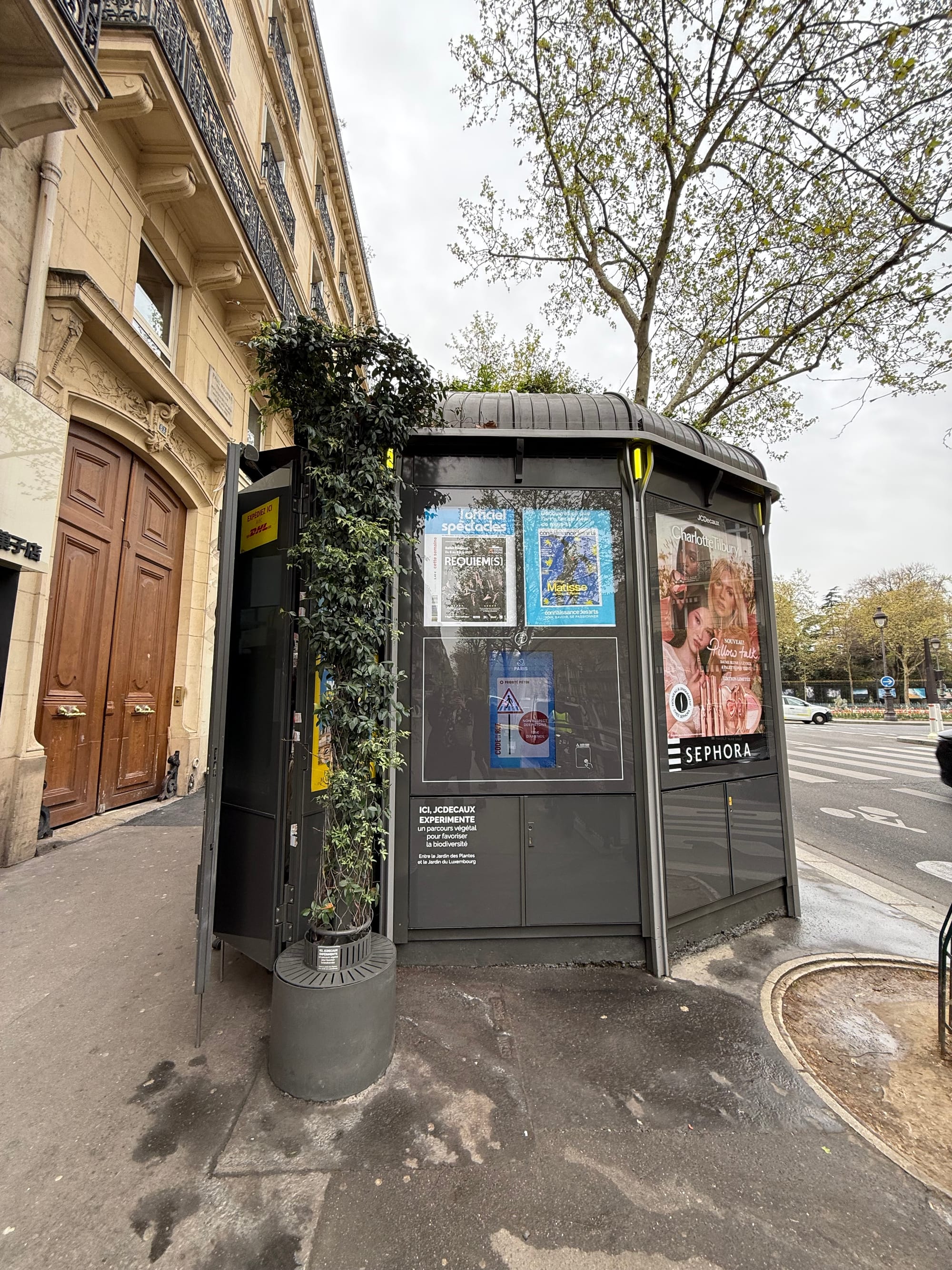
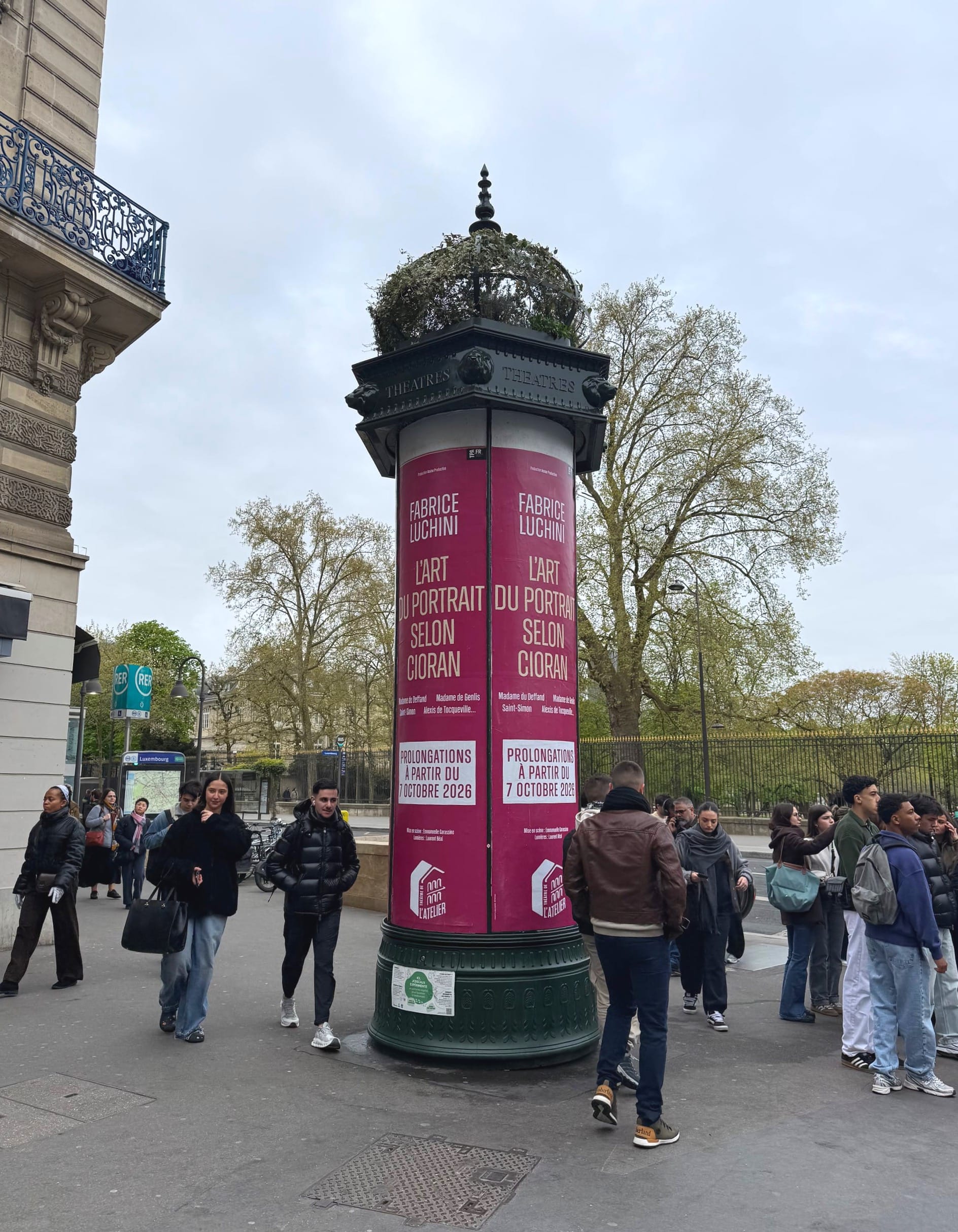
Just saying, this could have been LA28's superbloom
JCDecaux manages over 4,000 sidewalk-installed objects in Paris — and also sells the ads on these surfaces. (Except the toilets, which have no ads, and really seems like a missed opportunity for the right brand partnership.) But what I noticed walking around the city is that putting the ads in these elegant containers makes them feel far less intrusive than they seem in LA's neglected public realm. There are also a lot of regulations that dictate what can be advertised; per 19th-century tradition, the Morris columns only advertise cultural events — see the "theater" lettering up top? — to ensure that the information being shared is more like a public square than a Sephora promotion. Yes, there are also Sephora ads right there on the same sidewalk. But JCDecaux seems to have struck the right balance — and has quite a bit of fun with its advertising as well. The same morning I toured around with JCDecaux, Celine Dion was at the Eiffel Tower announcing a Parisian residency after weeks of cryptic messages — "My heart will go on," etc. — started popping up in what appeared to be vacant JCDecaux ad space all over the city. The grand reveal was a moment of shared civic pride. (And, to critics, a cautionary tale about megaevents.)
Maintaining a cohesive, sparkling clean street furniture system becomes a virtuous circle — benefitting the city and creating better engagement for their advertising clients, says Hietin. "It's very important to understand this model," he said as he gestured to all the physical touchpoints a Parisian encounters on the sidewalk. "The advertising doesn't invent the services. Our model creates the company's ability to communicate in the city, and also makes their communications more useful."
Unfortunately the window for a thoughtful megaevent-focused approach to LA's streetscape is nearly closed. There's no plan for a Paris-style bathroom blitz, although Metro is increasing the number of Throne trailers to empty the bladders of passengers making train transfers. By 2028, the city's new bus shelter program will only have 500 out of 3,000 promised shelters in the ground. There's no plan to deploy iconic permanent bus stop signage to help everyone get where they're going — and create the essential little landmarks that show bus riders they're important.
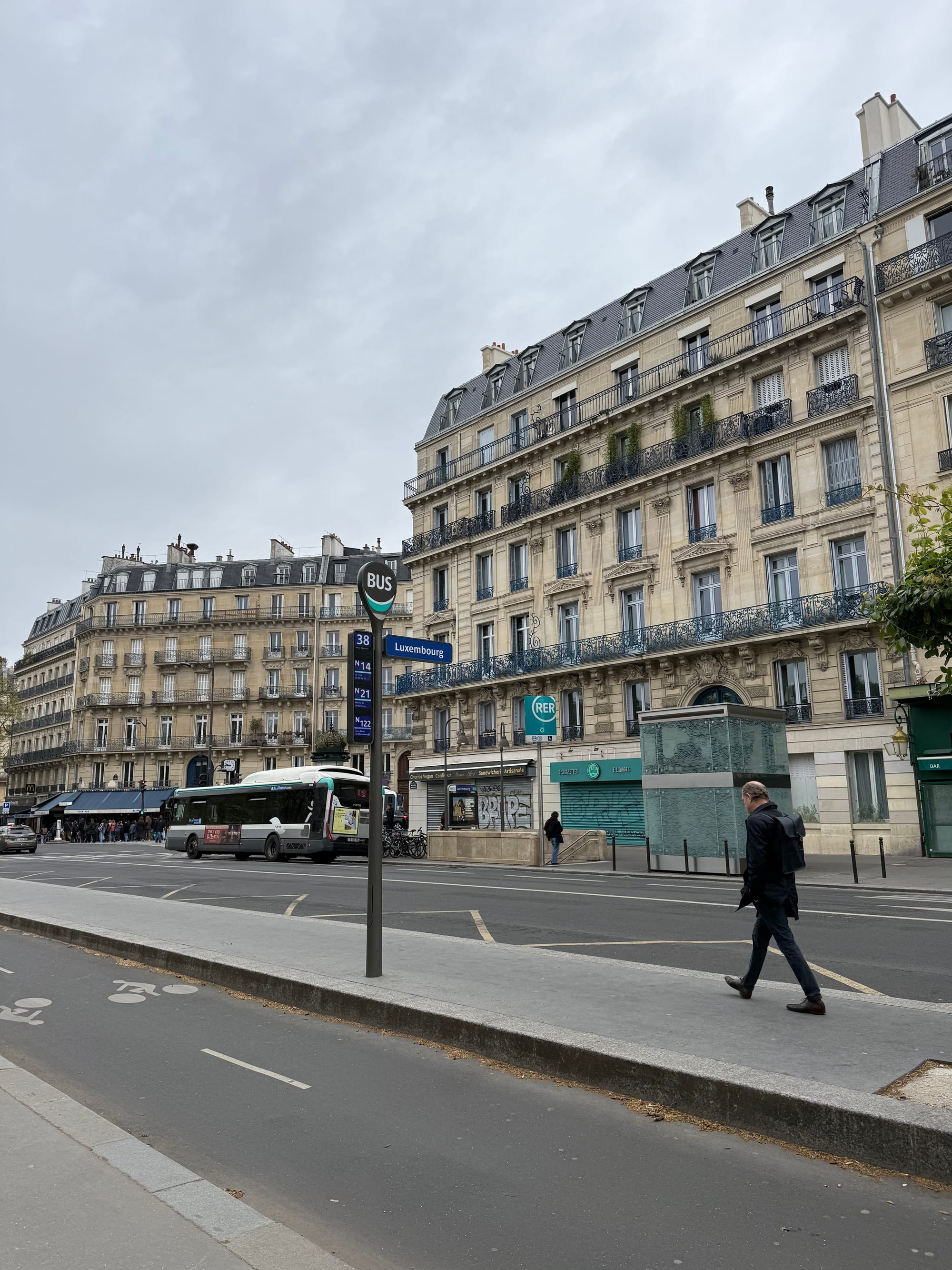
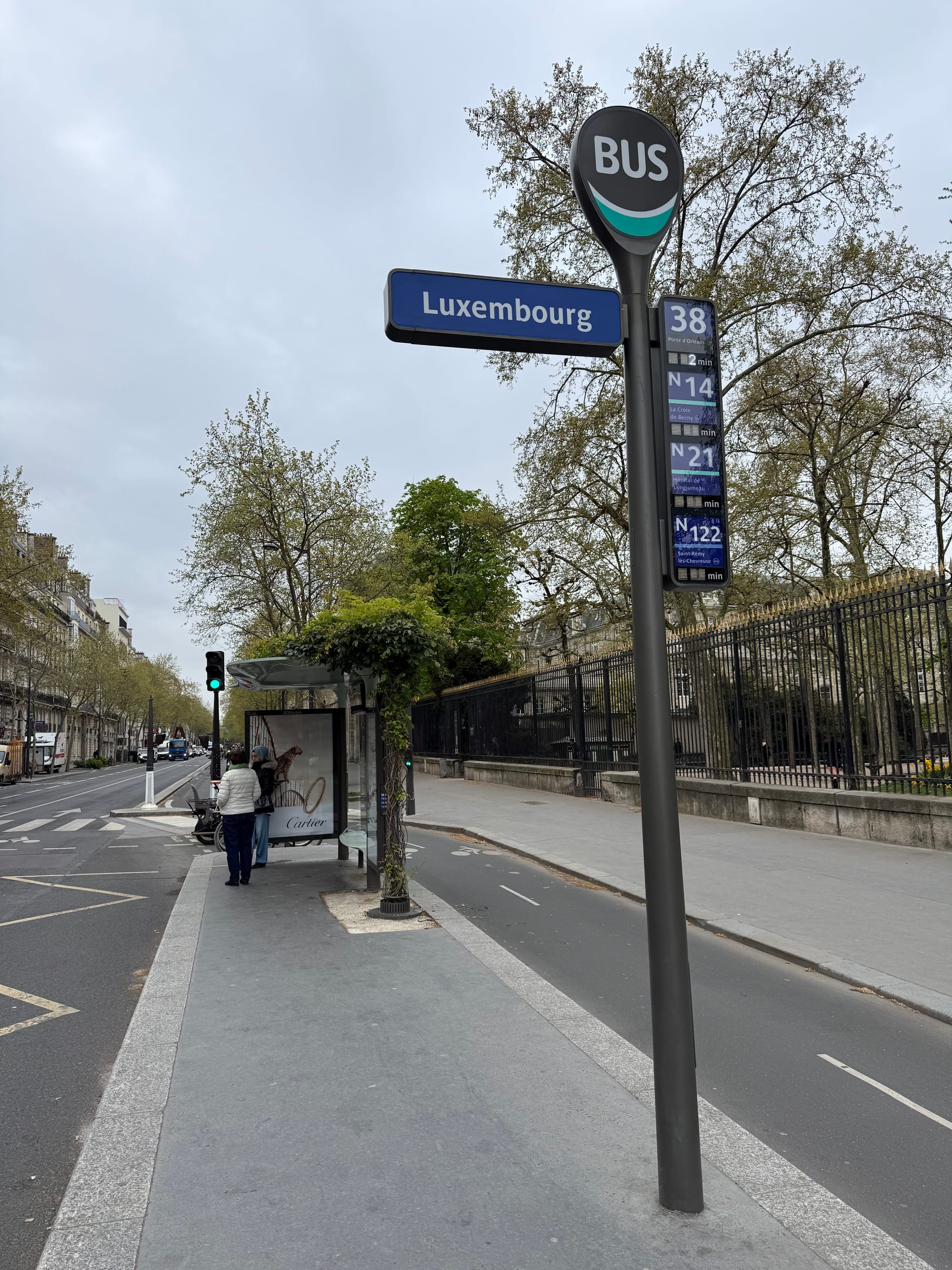
Even the bus stop signs have real-time arrival data, as seen in that tiny digital 2 up top
But there's also a human element that a vibrant street furniture system brings to the sidewalk which shouldn't be dismissed. During the Olympics, for example, the operators of Paris's newsstands were trained to act as ambassadors for the city, giving out directions and information as they dispensed daily necessities. Newsstands have all but disappeared from LA streets, but there's an informal network of strip-mall kiosks, souvenir carts, and street vendors that could use better public infrastructure investments. In an ideal LA, benches and bus shelters would be clustered with clematis and oaks, creating little actually-green oases across the city.
Later that week, I went for a run one morning and, of course, I had to go. It wasn't hard to stumble across a public bathroom, and the one I ducked into was spotless, even on a busy holiday weekend. Somehow the floor was even less sticky than the bar bathroom I'd used the previous night. When I emerged, I marveled at the little sidewalk scene before me. A gaggle of chain-smoking teens who absolutely had not slept were queuing up for the facilities. A family on vacation filled up their water bottles as they checked the neighborhood map. That's how it should be — a clean, convenient toilet as the center of urban life. 🔥
 Alissa Walker
 Alissa Walker


We've got to improve the way we deliver transit information before millions more people get here

A notoriously anti-bike lane councilmember is using the "car-free" games to stop a fully approved 100 percent affordable housing development